


There can be benefits — and potential downsides — to using some of the third-party calibration tools available in the industry. But shops are sharing how they are using them as just part of the pre-repair process, particularly as more insurers are calling for the use of such tools.
Jesse Parks, collision director for Freeman Collision Center in Santa Rosa, Calif., is among those who have found that third-party calibration identification tools aren’t always accurate.
“There’s some procedures that are pretty close, but there can be missing information,” Parks said during a Collision Industry Conference (CIC) “Estimating & Repair Planning Committee” panel discussion late last year. “We just found two recently where the process to identify the ride height was not listed when there’s certain points that you have to measure. Sometimes we see multiple calibrations where there’s been a certain software that’s been updated [and those calibrations] may no longer be needed. So [third-party systems] are not a bad place to start. It does save some time. It does get the ball rolling.”
But it can’t be your only source, Parks said.
Differences among systems
Danny Gredinberg, co-chair of the CIC committee, offered examples of conflicts among the various sources of information about which ADAS calibrations may be necessary on a vehicle. He showed summaries of what three different calibration identification tools showed would be necessary as part of the repair of a 2022 Ford Bronco. (The brands of the tools were not shared.)
“Two of the three captured everything that the auto manufacturer required on that vehicle,” Gredinberg said. “The last one missed a couple of things.”
The third system, for example, did not identify the blind spot radar and parking sensors as needing calibration.
“It wasn’t clearly telling you that you must do these things like the other two [tools] or the OEM requirements called out,” Gredinberg said.
The other example was for the repair of a 2025 Chevrolet Trax with damage to the rear lift gate and a rear body panel that needed to be replaced. The automaker information calls for 11 calibrations and safety system inspections. But neither of two calibration identification tools listed more than four, according to Gredinberg.
“There was a big difference in these two reports, and they may have identified [more] in some sort of general section, but again, not exactly how the manufacturer calls it out in their procedures,” he said. “At the end of the day, if you pulled Company A’s report or Company B’s, you’re still going to have to go back and verify that against the OEM information, right? You’re back to square one.”
James Rodis of OEM Calibration and Woodhouse Collision concurred, pointing to a change in a Honda position statement related to ADAS in March of 2024 that meant fewer calibrations would be required.
“I went to a third-party supplier and asked them, ‘Hey, how often do you update?’ And they felt it was 24 or 48 hours,” Rodis said. “But here we were eight months later. They were shocked. They believe that they’re getting the information quickly and getting it updated. But they can only update what they get. We’re talking eight months of a lot of calibrations getting done that weren’t needed.”
What’s the solution?
So, what should shops be doing to ensure all needed calibrations are identified? Rodis suggests a “divide and conquer” strategy.
“We try to split it up,” he said. “We cover a lot of brands. So, we want guys to be experts in certain brands. Saying, ‘Hey, you’re going to do a Kia now’ and then you’re going to do an Audi later,’ is not the best way. [Each person] follows certain manufacturers. American manufacturers kind of follow the same logic, for example. So, when we want our people to be experts in those fields, they’re not going to dip their toes in the other ones.”
Parks said his advice is to make sure you’re giving the people researching needed calibrations the training and time needed to do it thoroughly.
“Create a safe environment for them to learn,” Parks said. “In my environment, the only dumb question is the one not asked. Give them time to do it and use as many tools as you can. Take tasks away from them that are beneath their skill level, so they can really focus on learning and doing the skill that only they can do. That’s a culture we’ve got to create.”
OEM info still critical
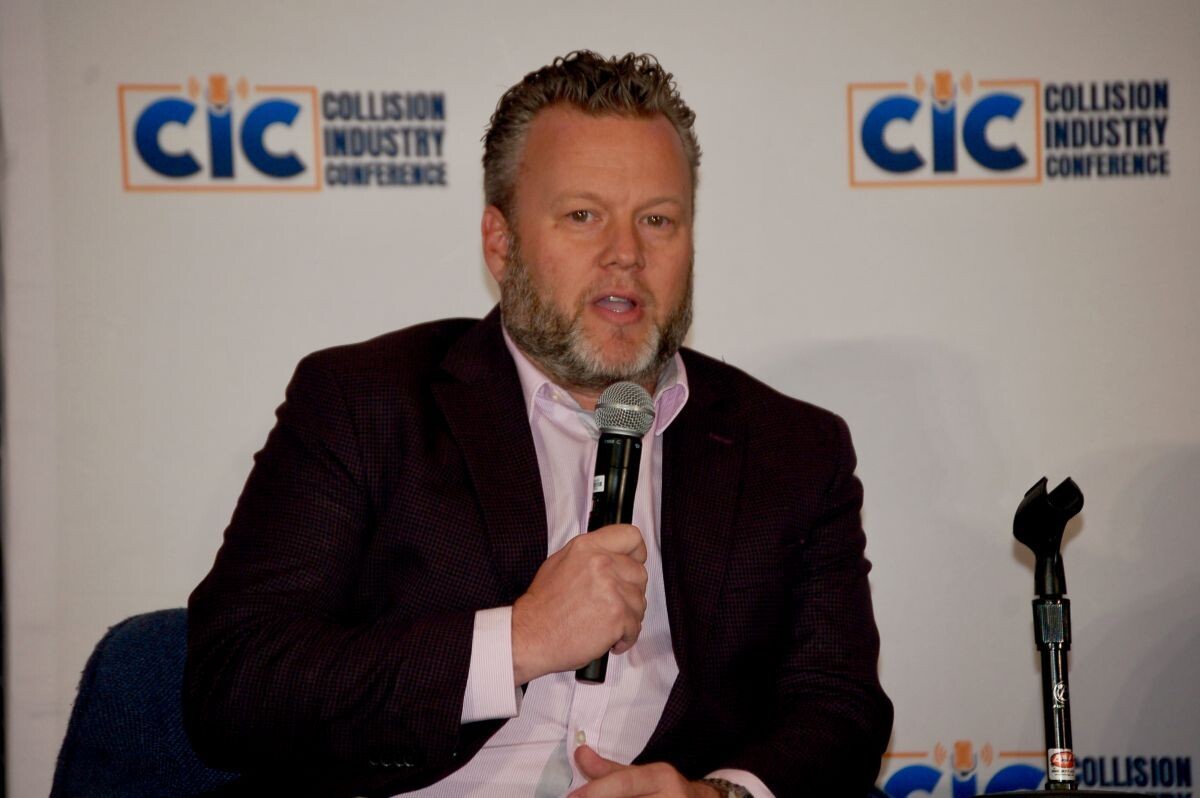 Jake Rodenroth of the Quality Collision Group said automaker information needs to be part of the calibration identification process.Jake Rodenroth of the Quality Collision Group said the automaker information has to be part of the process, even if using a third-party system as well.
“In all situations, whether it’s an oil change or an ADAS calibration, your [automaker] service manual is your friend,” Rodenroth said. “Understanding what that suite of ADAS systems is, and how they all correlate with the vehicle’s control system, is everything.”
There’s also information a shop needs to have about every vehicle even aside from identifying needed calibrations, he said.
“Was that vehicle driven after the loss? Then it might’ve had a set condition that would store a diagnostic trouble code that would be picked up in a scan,” Rodenroth said. “But if it’s been towed from the loss, it hasn’t met the set condition. And that set condition could be wheel speed data, it could be coolant changes, it could be air temperature, it could be all these things that play a role in the ADAS feature. So, I think having an understanding of how the system works to start with, and then the tooling associated to make it sure it works again, is the key.”
That tooling can change as well, he cautioned.
“We’ve seen ADAS tooling change within models within the same OEM,” Rodenroth said. “There’s a Japanese manufacturer out there right now that has three different blind spot targets, and what model you work on will determine which one you use. And so how do I know that proactively when I’m writing the estimate so that I can determine: Can I do this in-house, or am I going to use a sublet provider or a dealer? Repair planning is key. Putting it on the supplement is bad … for everyone. That news doesn’t get any better with time. So, I think by being proactive, you will understand the cost and make sure you prepare correctly.”
Rodis said automaker changes like that demonstrate why it’s important for shops to protect themselves by making sure they save documentation not only of what they did, but also the information they relied upon to make those decisions.
“We put everything on a server…and can go back as far as we want,” he said. “For us, that really started when aluminum box sides came out. They changed the procedure so many times in a year. That was when the light bulb went on for us and we said, ‘OK, we got to start saving this stuff in the files and make sure that we can prove what we did.’”





John Yoswick