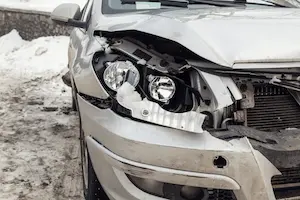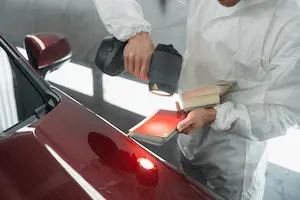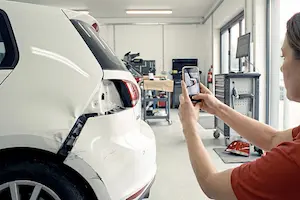
The collision repair industry continues to evolve. Advancements in vehicle design, materials, corrosion protection systems, repair technologies, ADAS systems, and electric vehicles have fundamentally changed how repairs are researched, planned, and performed. As vehicles become increasingly sophisticated, repairers are being challenged to think differently about how damage is corrected and, more importantly, how much of the original vehicle can be preserved during the repair process.
For decades, collision repair focused primarily on restoring appearance and functionality. Today, however, the industry's most progressive repairers are focused on something much greater: preserving vehicle integrity. That shift is transforming how quality repairs are defined.
A new framework for quality
The future of collision repair is no longer centered solely on replacing damaged parts. It is increasingly focused on preserving what can safely and properly be preserved, protecting what remains, restoring what has been disturbed, and documenting every step necessary to return a vehicle to service.
In many ways, these four principles represent the future of collision repair: Preserve, protect, restore, and document. Together, they create a framework that can be applied to every repair, regardless of vehicle manufacturer, repair facility size, or business model.
The rise of glue pull repair
One of the best examples of this evolution is the growing adoption of Glue Pull Repair (GPR).
Years ago, repairs often required aggressive pulling methods, extensive grinding, larger repair areas, and greater disruption of factory corrosion protection. While those methods still have their place when appropriate, modern repair techniques increasingly allow technicians to achieve repair objectives while minimizing intrusion into the vehicle's original construction.
GPR exemplifies this philosophy. By reducing the need for invasive pulling methods, technicians can often preserve more of the original substrate, maintain backside corrosion protection, reduce heat exposure, limit material usage, and create a better foundation for the remainder of the repair process. The result is often a better repair.
What makes this trend particularly significant is that it is being embraced throughout the industry. Independent repair facilities, OEM-certified shops, dealer-owned collision centers, regional operators, and large multi-shop organizations are increasingly recognizing the value of less invasive repair strategies. That should tell us something important.
The industry's direction is becoming increasingly clear. Quality is no longer measured solely by what is repaired or replaced. It is also measured by what is preserved.
Beyond metal movement: Corrosion protection
This philosophy extends far beyond metal movement. Once a technician determines that a repair area must be refinished, the same principle applies. The objective remains the preservation and restoration of the vehicle's protective systems.
This is where corrosion protection becomes part of the discussion. When factory coatings are disturbed, they must be restored. When bare steel or aluminum is exposed, the repair process should include the procedures necessary to protect that substrate for the life of the repair.
Several OEMs, material manufacturers, and industry resources have identified procedures involving epoxy primer and corrosion protection restoration as part of a complete repair process. While recommendations may vary, the objective remains consistent: preserve what can be preserved and properly restore what cannot.
What happens beneath the surface
This discussion is not about body filler; it is about what exists beneath the body filler.
Consumers see the final paint finish. They notice color match, gloss, and panel alignment. What they cannot see are the procedures performed beneath the surface that ultimately determine the durability and longevity of the repair.
Corrosion protection, substrate preparation, material compatibility, OEM research, and repair documentation — these are the invisible operations that often have the greatest impact on long-term repair quality.
Why documentation matters
This is not a discussion about blame. Most repair facilities want to perform proper repairs. Most insurers want to understand what they are paying for. Most consumers simply want their vehicle restored safely and correctly.
The challenge is that many critical repair procedures become invisible once the vehicle leaves the shop. Because they cannot be seen, they often receive less attention than they deserve. That is why documentation matters.
If an OEM procedure, material manufacturer requirement, or accepted industry standard identifies a necessary operation, that operation should be researched, documented, included within the repair plan, and communicated to both the vehicle owner and the responsible payer.
When procedures are properly documented, conversations become less about opinions and more about evidence.
The questions worth asking
The industry often hears statements such as:
"We don't pay for that."
"No other shop charges for that."
"That has always been included."
Those comments present an important question.
If an operation is supported by procedure but is not appearing on repair plans, is it because the operation is unnecessary? Is it being performed but simply not documented? Or has the operation become so commonplace that it is expected without compensation? Perhaps the more important question is whether the operation is being consistently performed at all.
These are legitimate questions worthy of discussion. The goal is to improve repair consistency, not increase repair costs.
When procedures are researched, documented, and communicated properly, everyone benefits. Repairers gain a clearer path to performing complete repairs. Vehicle owners gain confidence that their vehicle is being restored correctly. Payers gain transparency regarding the operations being requested and the reasoning behind them.
Defining the future of quality repair
As collision repair continues to evolve, quality will increasingly be defined not by how much of the vehicle we replace, but by how much of the vehicle we successfully preserve.
The facilities leading the industry forward are recognizing that less invasive repairs, corrosion protection, procedural compliance, and thorough documentation are not competing priorities. Together, they represent the foundation of a quality repair.
The future of collision repair will not be defined by how quickly we move vehicles through production, nor by how many parts we replace. It will be defined by our ability to preserve vehicle integrity, protect critical systems, restore what has been disturbed, document what has been performed, and deliver repairs that meet the expectations of both the manufacturer and the consumer.
The industry's most valuable standard may not be a tool, a material, or a procedure. It may simply be a commitment to doing the right repair for the right reason, every time.
Key takeaways to consider
- Repair quality is being redefined by preservation, not just restoration. The industry is shifting from "replace and refinish" toward minimizing intrusion into the vehicle's original construction wherever safely possible.
- Glue Pull Repair (GPR) is a leading example of less invasive repair. By reducing aggressive pulling and grinding, technicians can preserve more original substrate and maintain factory corrosion protection.
- Corrosion protection doesn't end with body filler. Whatever is disturbed beneath the surface, including coatings on bare steel or aluminum, needs to be properly restored as part of a complete repair.
- Documentation is becoming the bridge between procedure and payment. When OEM and material manufacturer procedures are researched and documented in the repair plan, conversations with payers shift from opinion to evidence.
- "We don't pay for that" deserves a second look. If a procedure is supported by documented standards but isn't appearing on repair plans, shops should examine whether it's being skipped, performed without billing, or simply left undocumented.
- The framework can apply to any shop. Preserve, protect, restore, document — these four principles aren't dependent on shop size, business model, or OEM certification status.