

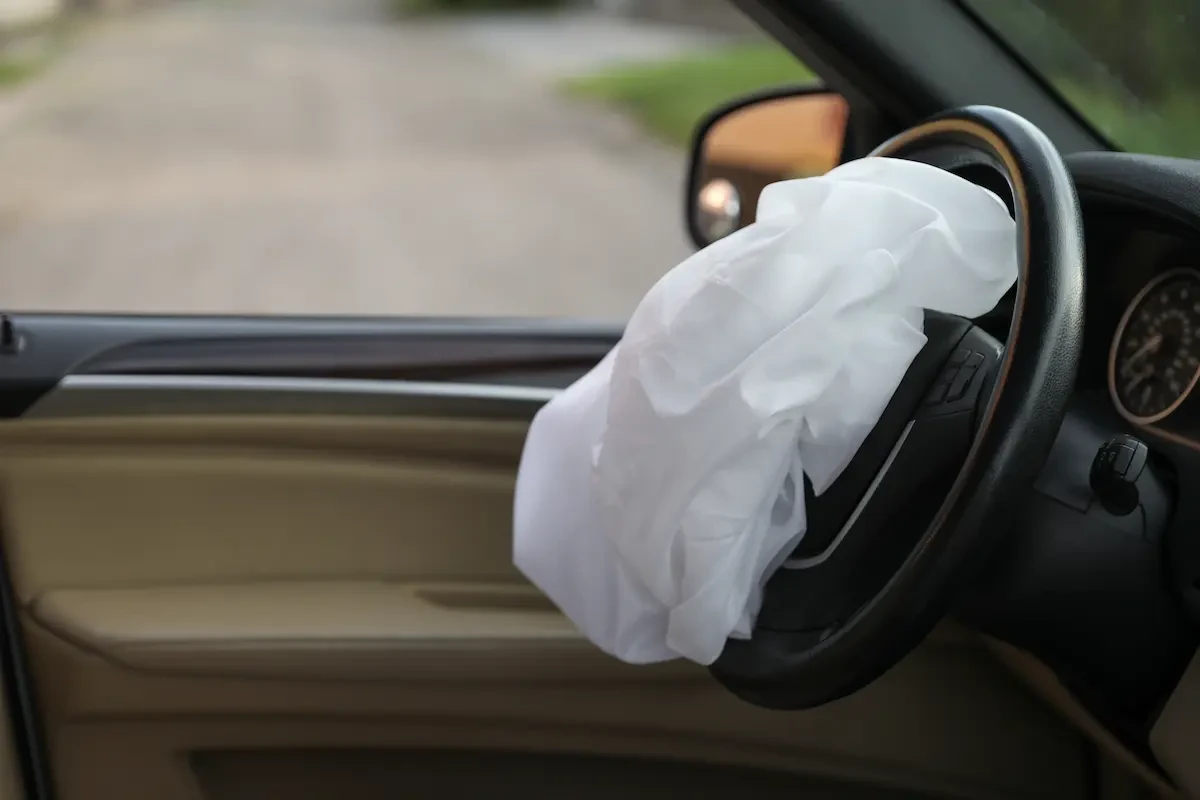
The National Highway Traffic Safety Administration has issued a formal safety defect determination for airbag inflators manufactured by Jilin Province Detiannuo Safety Technology Co., Ltd., known as DTN. It was found that the inflators rupture during deployment and propel metal fragments into the driver's compartment rather than inflating the airbag cushion, according to the NHTSA initial decision document.
The agency is now determining whether to permanently ban their sale in the United States. Federal regulators have identified collision repair facilities as the pathway through which these components have reached American vehicles.
NHTSA's initial decision document found that in at least 10 of the 12 documented fatal and injury crashes, the inflators reached drivers as aftermarket replacements installed following a prior collision. Wrongful death litigation has already named a body shop as a defendant in connection with one of those crashes.
NHTSA opened its investigation into DTN inflators in October 2025. In an April 2 press release and accompanying initial decision document, the agency reported 10 deaths and two severe injuries across 12 crashes involving DTN inflators.
A Formal Ban
DTN inflators are already prohibited from sale in the United States, according to NHTSA, but that prohibition has not stopped illegal importation. A formal NHTSA ban order, which the initial defect determination could trigger, would be a separate and additional enforcement mechanism.
Because the inflators have entered vehicles through the post-collision repair process, shops that handle airbag replacements on prior-crash vehicles carry the most direct exposure to this issue.
NHTSA is accepting public comments on the initial decision through April 17 via regulations.gov, Docket No. NHTSA-2026-0793.
All 12 documented crashes occurred in Chevrolet Malibu and Hyundai Sonata vehicles, according to NHTSA. The agency stated it does not have information confirming the risk is limited to those models. Because DTN inflators are aftermarket replacement components rather than original equipment, a standard VIN lookup will not identify whether a vehicle contains one.
According to the NHTSA, the inflators subject to the defect finding were manufactured by DTN in 2021 and 2022 and were etched or labeled with an identifier beginning “DTN60DB” on the face of the inflator cap. A label on the electrical connector side of the module — visible when the inflator is installed — contains a bar code with the number sequence “666631” or “144415654 666633.”
Two states have enacted criminal penalties for the knowing installation of non-genuine airbags since the federal warnings began. Wisconsin Gov. Tony Evers signed Senate Bill 537 on March 13, establishing penalties that escalate to felony classification when a violation results in bodily harm or death, according to the governor's office. Idaho Gov. Brad Little signed House Bill 688 on March 20; the law takes effect July 1, according to the bill's enrolled text.
What Collision Shops Should Do
Inspect before installing: Any vehicle arriving with evidence of a prior airbag deployment since 2020 that was not repaired at a manufacturer's dealership should be inspected for a DTN inflator before a replacement module is installed. NHTSA's guidance identifies salvage and rebuilt title vehicles as carrying the highest risk. Document the inspection on the repair order.
Do not return a vehicle with a suspect inflator: If a DTN inflator is identified, NHTSA states the vehicle should not be driven until it is replaced with genuine parts. Report the finding to NHTSA's Vehicle Safety Hotline at 888-327-4236 and to Homeland Security Investigations or your local FBI field office.
Source airbag modules through verified channels only: Avoid airbag modules purchased through online marketplaces or priced significantly below market, and consider requesting documentation of part origin from distributors.









Lisa McArdle