


Count Mr. Dent Collision among body shops and collision industry players willing to spend a little money on producing creative content for commercials — and it turns out it’s very little really, or at least less than one could imagine.
Over the last year, with an uptick over the last 90 days, collision repair organizations from larger MSOs to industry groups have professionally produced ads telling thoughtful stories with the emotional punch that drives decisions. Makers are trying new distribution channels for body shops — streaming film and TV, social media influencers — with material traveling transoms previously untapped.
Now Mr. Dent, a Missouri-based, three-unit, family-owned MSO led by co-owner Logan Martin, is into its own approach, with a new ad that dropped in September.
“We want to grow our brand, represent it, show what makes us different,” Martin said. “Convenience and high-quality repairs: the pursuit of excellence.”
As with Quality Collision Group and I-CAR, Martin’s push centers on quality, a term the industry aims to set before clients: customers, employees or shops themselves. Mr. Dent’s tweaks involve first, a series of ads, with fresh content about every six to 12 months; and second, a current hard focus on advertising.
Doing What You Can, Not What You Can’t
Not that they don’t want to do organic social with such content, Martin said. But Mr. Dent does what it can as a smaller industry entity in its smaller market. These are not pejorative and actually speak directly to the place most shops are: solo or small operators trying to compete against national brands.
The little guy vs. the big guy is a common trope. But Martin learned this strengthens focus — Mr. Dent simply can’t do everything, but it can do something. Meanwhile a smaller market means costs on buying ad time or hiring a production company are lower than in major metros. Finally, focused and cheaper for a tinier pond means a larger relative impact in that local market — the only one that matters to an individual shop.
For $5,000 put to production and $6,000 to buying the ad time, Mr. Dent got a slot on the Kansas City Chiefs one week — huge in Missouri to say the least. Nine months earlier, a Mr. Dent ad aired during what’s called the “Big Game” by those who don’t globally sponsor the Super Bowl.
Martin said cost definitely constrains — but it also guides, by forcing choices.
“We’re in a smaller market,” he said, namely “southwest Missouri, northwest Arkansas. We’re advertising to a market we already serve,” along with blurred lines into geographic areas of future growth.
Content: High-End or Complex, Male or Female
“It’s easier to justify that level of spend” — the roughly $11,000 — with three units, but even a solo shop can do something.
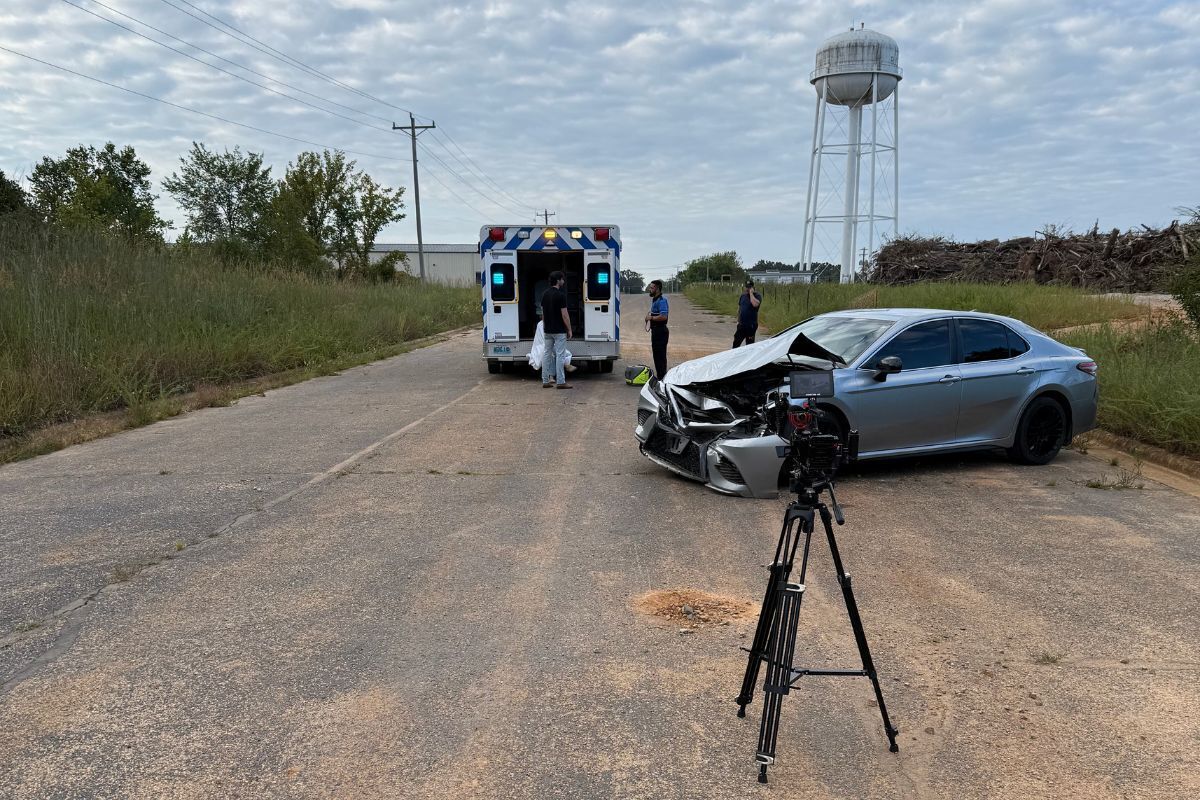
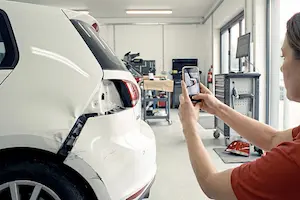
 Production (bottom left to right) and finished ad (top) that aired during the Super Bowl.
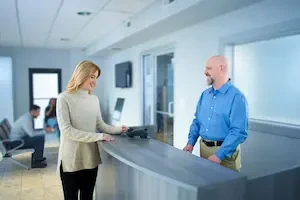
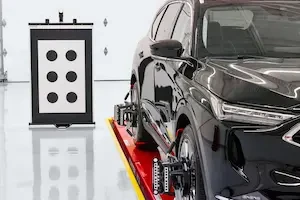
Making it, pardon the pun, a big production also helps: shoot something that will become an ad and shoot a lot of “B-roll” too. This is secondary clips and bits that can run as eight- or 10-second bites: guy in the middle of a repair, the ADAS set-up in use, friendly front office staff, a guy dropping off his keys and being served well — and then a woman doing the same.
“You spend a whole day and shoot a bunch of content” for multiple uses, Martin said.
Mr. Dent’s most recent commercial featured a female character who’d just been in a collision; it packed a feel-good pull at the heartstrings, as the driver who’s had a difficult day is helped by a friendly shop while her car is fixed by skilled technicians. The February spot followed a funnier vibe, with a man in a recliner, drinking tea and reading a book in the middle of a body shop. Relax, the ad said, we’ve got you.
“This [recent] one was more about emotions, going for Volvo or Subaru-style safety feel,” Martin said. “Others were more informational.”
The current one even has a bit of commercial movies’ professional practice: product placement. Look for that Snap-on tool about midway through. Mr. Dent has also done ads for specific needs, such as hail damage.
The goal is “impactful, so they’ll remember it. You want the consumer to trust you,” and that can be done in various ways: “high-quality repair, nice storefront, high production quality.”
Others? Yep. Mr. Dent’s been doing this a few years — “we try for every six to 12 months, depending on what else is going on.”
Distribution Strategy: Live Audience
As even smaller operations can do high-quality stuff, the question is where to put it.
 The actor on the set of Mr. Dent's latest ad.
Mr. Dent doesn’t put videos on the website or in emails or signature lines — “never been a big fan of email” video, Martin said — and doesn’t have a YouTube channel yet. He said the shop would like one, but it does what it can.
I-CAR told Autobody News earlier this month it doesn’t stress on the reach of its personal YouTube. QCG is big on organic social, but QCG has nearly 100 shops in a dozen or so states.
Mr. Dent’s focus is ads, but that’s hardly limiting: Facebook, TikTok and YouTube on others’ channels. Cycle ads out monthly for freshness, target by ZIP code, income (higher income are more likely to carry full coverage). LinkedIn for professionalism and recruiting staff.
Use the B-roll or “chop a 30-second ad and make a couple reels,” Martin said. This also gets more precision in targeting, for instance, “higher-end certification, Mercedes or Rivian.”
He also likes live sports: football, NASCAR, a bit of baseball, the Olympics. “You know people are tuned in at that time,” he said. Local affiliates get a half-dozen or so slots to sell at different times on a national broadcast. Mr. Dent has also participated more directly in some cases.
Broadcast TV with some streaming, but not too much of the latter. (Good call: on streamers, this reporter mutes the ads or switches to a blank tab.)
Then track everything, to learn what works, try different tacks, adjust over time.
The question is where do people watch — “TikTok or America’s Got Talent?” — and how can you get to them?
“Market where people spend their attention,” Martin said. “Make sure you’re targeting them over and over.”
He said, “You’re not going to see [results] overnight. It’s months or even years.”




Paul Hughes