


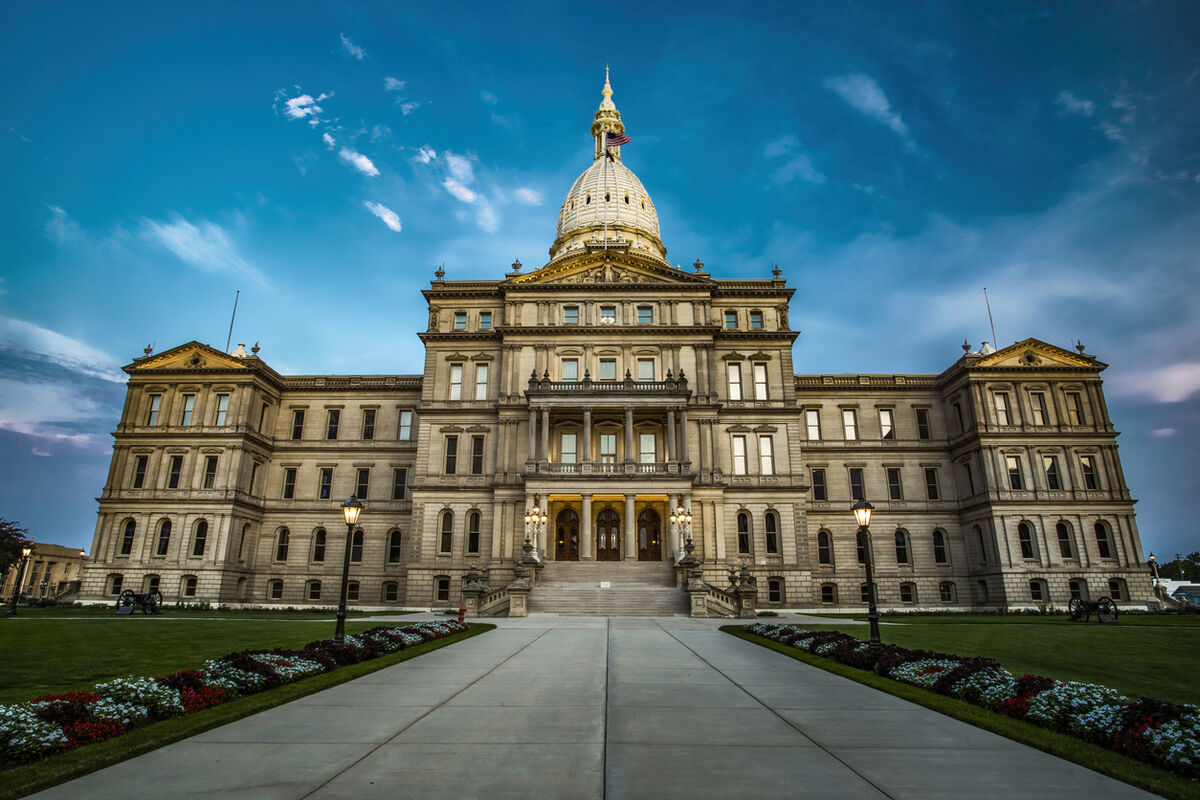
The Michigan House of Representatives in September passed a bill that would allow automotive repair shops in the state to operate auxiliary facilities under the same banner as the main business location without incurring additional shop registration fees.
The state legislature is currently considering the legislation under the committee of the whole, a process to ostensibly enable swift passage of state bills, though ongoing state budget deliberations may prolong the process to pass House Bill 4549.
“In some communities, [shops have] bought a shop two doors down or maybe a mile around the corner on another busy street,” Michigan Automobile Dealers Association (MADA) Executive Vice President James Fackler told Autobody News. “Depending on how close your second building is, you have the state of Michigan saying, ‘You need to get a separate license for that other facility.’”
The vast majority of MADA members have some sort of repair operation as part of their dealership business, so this bill directly affects them, according to Fackler. MADA testified in support of the bill during a June 12 meeting of the Michigan House Regulatory Reform Committee.
In the leadup to the bill’s introduction by Republican state Rep. Joseph Aragona, some MADA members reported they had paid for separate licenses for their main repair locations and auxiliary shops, while others only had one license covering the main location.
MADA saw these unequal experiences as a “legitimate concern,” Fackler said. Even though no businesses have been fined yet, according to Fackler, Michigan law currently holds that repair businesses should have a license for every separate location.
“The public has a reasonable expectation to understand, when it comes to a facility, what their rights are,” Fackler said.
The bill would also expand the registration renewal time frame for repair businesses from an annual cycle to a four-year cycle, though companies could renew more frequently if they desire, according to a legislative summary of the bill.
In addition to MADA, Automotive Recyclers of Michigan (ARM) expressed support for the bill. “While this legislation is not aimed specifically at the automotive recycling industry, many of our members stand to gain from the streamlined facility licensing it proposes,” ARM Executive Director Jacquelen Timm wrote in an email to Autobody News. “Backing this bill supports business flexibility and smoother growth opportunities for Michigan’s automotive recyclers.”
To qualify for the bill’s proposed one-registration-for-multiple-facilities rule, auxiliary locations would have to be within one mile of the primary facility; share the primary facility’s hours of operation, vehicle types serviced, and repairs performed; and conduct all in-person customer interactions at the primary facility, according to the summary.
In addition to streamlining the registration process for repair businesses, the bill would slightly change the state’s registration fee structure for repair businesses, lowering the revenue threshold for the highest registration fees. Currently, Michigan repair shops collecting more than $340,000 in annual revenue must pay a yearly $500 registration fee. House Bill 4549 would lower that revenue level to $300,000, while keeping the $500 registration fee intact.
The legislation also proposes to create a state Mechanic Certification Examination Fund to update the content of the mechanic certification exam and administer the test, and would increase the certification exam fee from $6 to $18 — $12 of which would go to the exam fund and $6 of which would flow to the state general fund, according to the legislative summary.
“Sometimes we don't like getting a fee increased, but if the fee is utilized to the benefit of our customers and our dealerships and repair facilities, then that's something that we can look at and support,” Fackler said. “In this case, it's going to making sure those tests are current and that the mechanics doing the work on our vehicles are the best they can be, and have the highest skillset.”
Michigan has spent money to update the tests over the last five years, but a dedicated fund will ensure they can stably strike contracts with vendors to ensure the tests stay current and “up to standards,” Fackler said.
House Bill 4549 is similar to legislation introduced in the state legislature last year, which ultimately did not pass.
The current Michigan legislative session runs through 2026.





Brian Bradley