


The inaugural Music City Collision Conference in September brought together body shop representatives, vendors and industry experts for two days of education and a trade show. Hosted by the Tennessee Collision Repairers Association (TCRA), the two-day event was held in Nashville, TN.
“TCRA wanted to plan something for the local shops and bring training to the state,” said Josh Kent, TCRA executive director and trade show manager. “They also wanted to bring awareness to TCRA.”
Comprehensive training, designed for every role in a modern repair facility, was held during the conference. The goal was to inform, engage and challenge attendees.
“I think it's important to have classes that are targeted to the level of knowledge of shops in your state,” noted Kent.
Insights on Safety Inspections
Mike Anderson, owner of Collision Advice, shared information at the Music City Collision Conference about safety inspections and led a panel with shop owners who discussed how they get reimbursed for these procedures and the options available if an insurer refuses to pay. Panelists included Kyle Bradshaw, director of fixed operations at K&M Collision in North Carolina, and Bud Center, director of technical products and curriculum at I-CAR.
“Most OEMs, if not all, will have a variety of safety inspections for vehicles that have been involved in a collision,” explained Anderson. “These OEM procedures vary based on year, make and model.”
Anderson said safety inspections are the single biggest friction point between shops and insurers and stressed the importance of making them a priority in the repair planning process.
“It is the right thing to do and crucial for consumer safety,” he emphasized. “The liability is on YOU if you do not perform the safety inspections.”
During his presentation, Anderson highlighted some procedures for safety inspections from more than a dozen OEMs. Of all the procedures, Anderson said, seat belt inspections keep him awake at night.
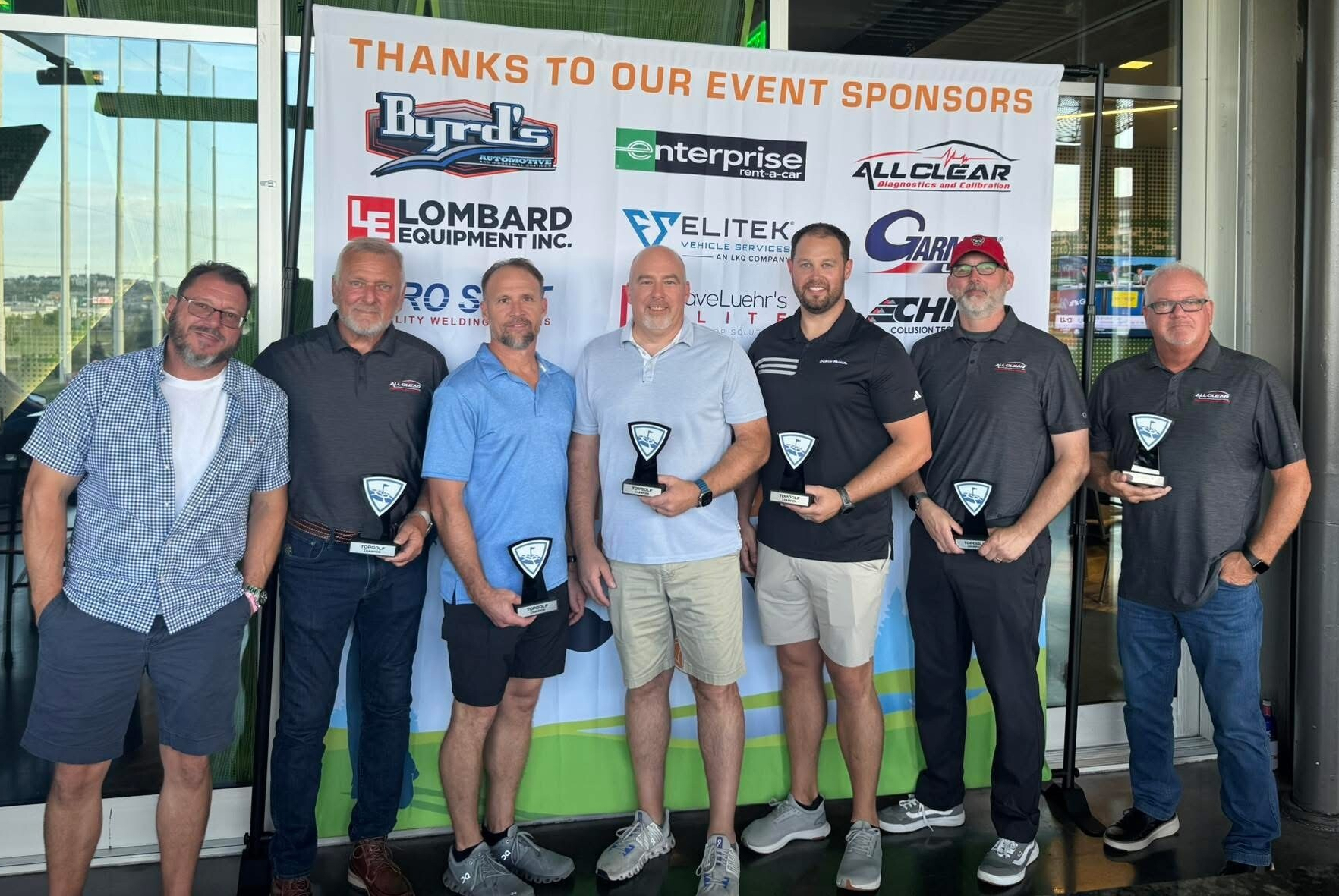 The evening before the conference, the Tee Up for Techs Fundraiser was held at Top Golf in Nashville to raise money for technician initiatives.
He said every OEM has a specific procedure for inspecting seat belts. “It’s not as simple as just jerking on the seat belt to see if locks,” he noted. In some cases, the inspection procedure may require the use of a diagnostic scan tool to check the pre-tensioners.
On some Honda and Acura vehicles, for example, a deployed pre-tensioner does not trigger a DTC. Therefore, “live data” from the scan must be checked, as well as doing a visual inspection. There may also be additional steps if a seat belt is reinstalled.
According to the “Who Pays for What?” survey, of those shops that negotiate for seat belt inspections, Anderson said 44% are paid “always” or “most of the time.”
“You often can use the vehicle owner’s manual to prove that it is a necessary procedure,” advised Anderson. “Those manuals often indicate that a seat belt inspection is needed after a collision.”
I-CAR’s Repairability Technical Support (RTS) site allows users to search by year, make and model to identify OEM-required replacement and inspection criteria, particularly for Supplemental Restraint System (SRS) components following deployment.
While RTS does not currently include guidance on post-collision safety inspections, Center said those with questions are encouraged to submit an ASK I-CAR inquiry for support and clarification.
I-CAR is currently seeking feedback from collision repairers about the damage found during inspections of collision-damaged vehicles with or without an SRS deployment. Center said these submissions will help guide future development and understanding in this area, enabling the development of industry-vetted best practices and standardization related to inspections.
Shops can fill out this form to report on the inspections they perform, what triggered the inspections and what was found.
Mastering Insurance Relations
A presentation at the Music City Collision Conference focused on mastering insurance relations and advocating for customers to receive full payment and promote lasting trust was given by Sean Preston, managing attorney at Coverall Law. Preston also took part in a panel during the conference.
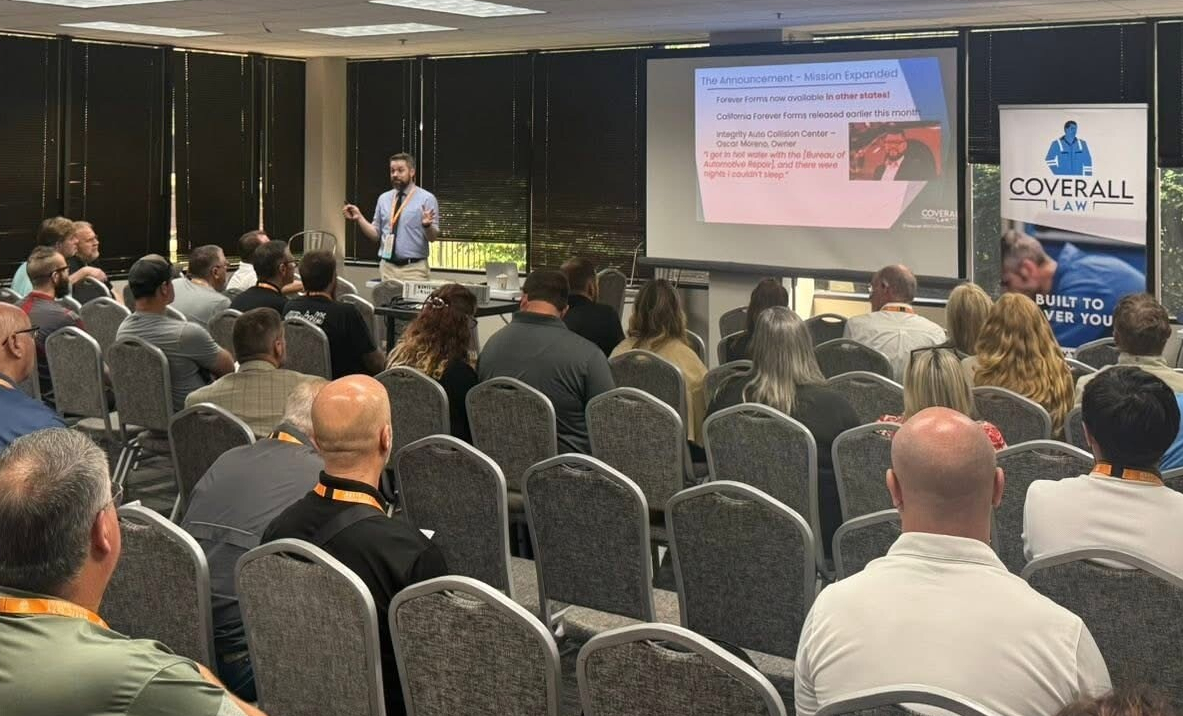 Sean Preston of Coverall Law.
“The collision repair industry continues to face pressure from insurers, leaving shop owners navigating tough conversations around payment, policy and repair decisions,” said Preston. “While there’s no quick fix, there are proven frameworks that help shops position themselves more effectively in negotiations.”
In Preston’s session, he introduced practical tools from “The Shop Freedom Formula,” a framework developed by Coverall Law to solve every problem in a body shop. He said the system helps independent shops strengthen communication with insurers, clarify customer expectations, and protect the business’s right to fair compensation.
It involves the “Ultimate Legal High Ground,” which includes customer forms, certifying pricing, etc.; “Stakeholder Management” to ensure insurers, customers and staff are “singing the same song;” and “Cash Collection,” a shop-specific policy on how shops track and collect on every invoice.
Participants learned repeatable strategies for approaching insurer interactions with more confidence, supporting customer trust through clear messaging, and minimizing underpayment risk using available legal and financial tools.
Preston said the starting place for the law firm’s member shops is customer paperwork. “This is our flagship product, ‘Forever Forms,’” he explained. “With that in place, shops can own the terms and conditions around every dollar that comes through their doors.”
When companies own that “Legal High-Ground,” Preston explained the negotiation process is much less contentious.
“I often say I have the easiest job in the world because my clients are simply right,” he emphasized.
Trust Costs of Contamination
A workshop focused on the true costs of contamination was led by Rick Selover, national account manager for Garmat. Selover presented the three root sources of refinish work contamination that can slow shop production and provided attendees with a plan to minimize those risks.
Tips on Getting Paid
Veco Experts/Future Forensics owner Mark Olson discussed various ways to get reimbursed.
“Getting what you need to properly repair a vehicle has become difficult and is only going to get worse,” Olson told attendees at the Music City Collision Conference. “The old methods of getting paid are not working and you cannot work harder at doing things that are not working.”
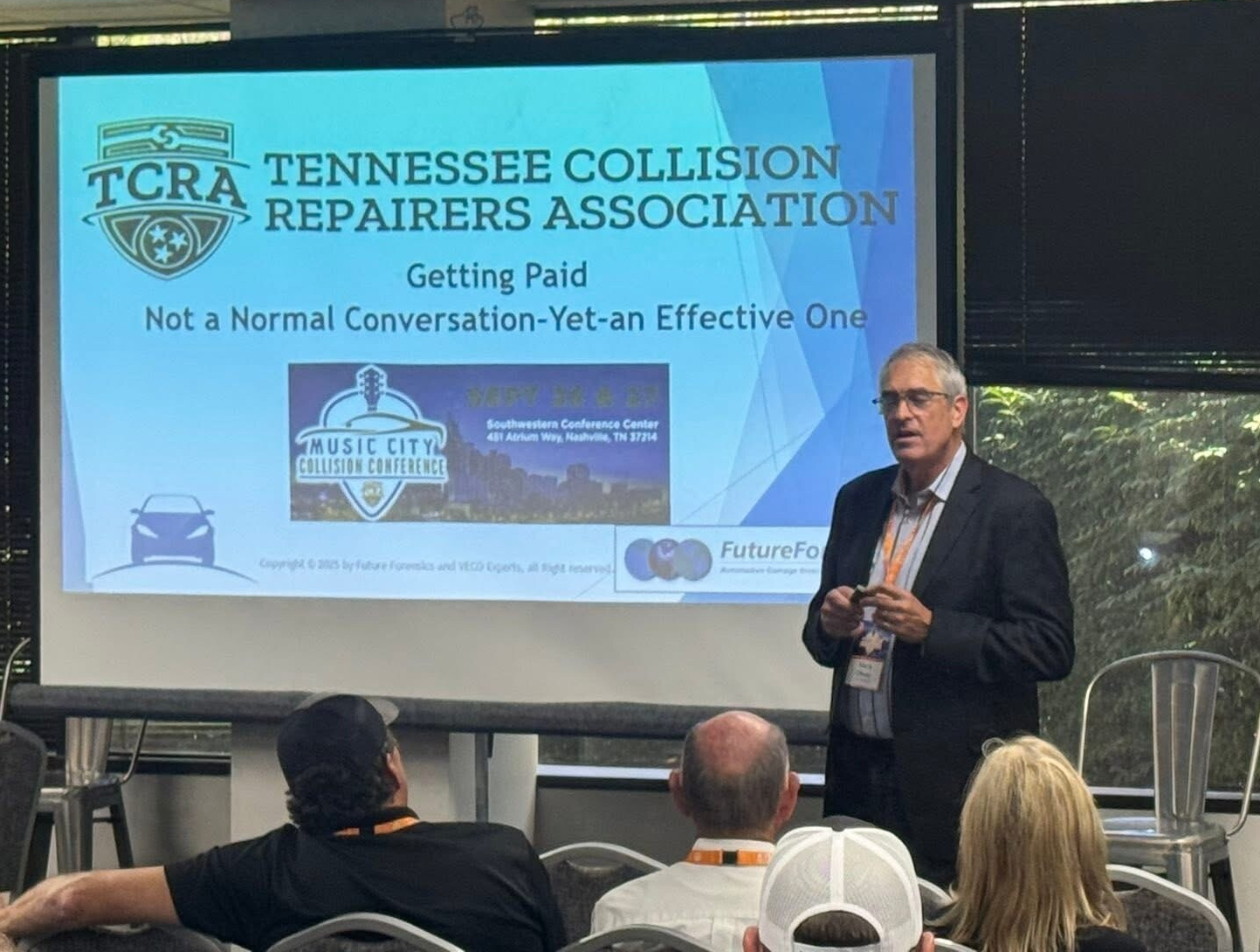 Mark Olson, VECO Experts.
Instead, he encouraged attendees to take a fresh approach, one that includes agreement and catering to what matters most, and compile a to-do list of simple, effective strategies.
To help shops navigate this process, he shared tips that are not typically part of the “normal conversation” but can be effective. This included how to get along better with adjusters to get paid.
First, he recommended finding common ground and determining what you agree on and what you do not. “Understanding the other side and their challenges is very important,” he stressed.
Typically, Olson said, there are only a few items that are in disagreement. “This is a negotiation and therefore, like any negotiation, there is give and take,” he said. “Do you want to fight or simply do business?”
Olson advised writing the estimate with everything needed. “Most estimates we look at are deficient by 30-40%,” he mentioned. “Add everything and negotiate from there.”
Starting with the other person as the enemy is usually a losing proposition, Olson emphasized. “There are many books on negotiation and I have never seen one that teaches ‘My way or the highway,’” he said.
Olson said using age demographics and understanding an individual’s personality style (Amiable, Expressive, Driver and/or Analytical) can help with communication.
“Every interaction is a communication,” he said. “Being stuck in treating others how you want to be treated is outdated and does not work in 2025.”
Understanding that different generations have a different mindset and applying the Platinum Rule — “Treat others as they want to be treated” — goes a long way, Olson said.
When it comes to repairing vehicles the right way, Olson pointed out that many customers don’t know what “right” is. He suggested using diminished value and the appraisal clause to help customers pay for repairs.
“Staying ahead of the changes and thriving is the name of the game,” said Olson. “Doing things that others are not will keep things moving in the right direction for you and your shop.”
Building Business Value
Laura Gay, founder and CEO at Consolidation Coach, and Matt DiFrancesco, founder and principal of High Lift Financial & Consulting, teamed up at the Music City Collision Conference to talk about “Building the Value of Your Collision Shop to Exit on Your Terms.”
They stressed that every shop owner will exit eventually, whether due to retirement, disability, death, divorce, dispute or bankruptcy.
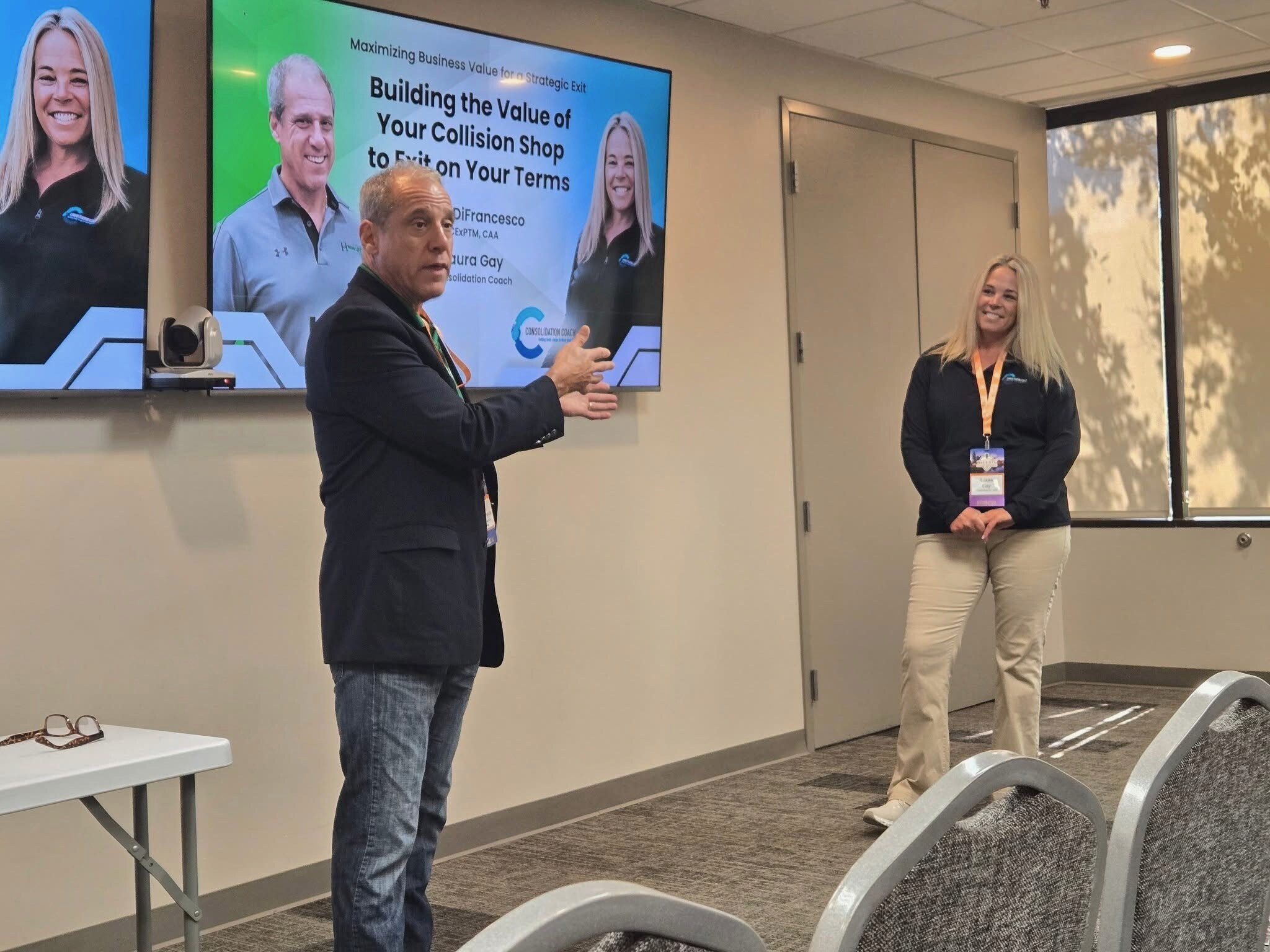 Matt DiFrancesco, left, and Laura Gay, right.
“An exit is inevitable,” DiFrancesco said. “Yet many owners get stuck in the revolving five-year plan of procrastination.”
During their presentation, Gay and DiFranceso shared recommendations on how to prepare for the ultimate transition.
This included the importance of understanding business value. “It’s more than revenue and profit,” said Gay. “True value includes reputation, operational efficiency, growth potential and risk minimization.”
They also explained how to become an “incidental owner.” “Transition from being essential — the shop depends on you — to incidental — the shop runs independently of you,” advised DiFrancesco. “This shift enhances business value and transferability.”
They discussed key areas to build value:
Owner-Based Planning: Creating continuity instructions, buy-sell agreements, estate and tax planning, and key person protection.
Cash Flow & Profitability: Increasing margins through service optimization, vendor negotiations and expense management.
Employee Incentive Planning: Offering bonuses, equity-based compensation or profit-sharing.
Tax Minimization: Leveraging credits, retirement plans, depreciation strategies and optimal corporate structures.
Technology & Systems: Improving workflows using estimating software, CRM, DVI tools and advanced repair equipment.
Successor Development: Implementing mentorship, hands-on experience and personal development.
Risk Management: Using proper legal agreements, cybersecurity measures and P&C insurance to mitigate threats.
Creating an Action Plan: Working with a multidisciplinary team, including a financial planner, CPA, business attorney, insurance and merger and acquisition professionals, valuation and industry specialists, and a family counselor.
“Building value isn’t just about preparing for a sale,” said Gay. “It’s about creating a resilient business that can thrive with or without you, while supporting your long-term personal and financial goals.”
Standing Out from the Competition
During his presentation at the Music City Collision Conference, “Don’t Be Swept Away,” Dave Luehr, owner of Elite Body Shop Solutions, offered advice to those who are tired of the grind and seeking freedom and prosperity.
“2025 is another year of massive industry change,” noted Luehr. “You can either be swept away by it or REV UP Your Business!”
Luehr highlighted some of the secrets used by the world’s best body shops and encouraged repairers to take advantage of the opportunities coming their way.
His presentation included strategies on how to stand out from the competition, deliver consistency to meet customer promises and build a roadmap of success. Luehr discussed the importance of shop owners creating a compelling vision for their company and provided examples of how to align organizations with their vision statements. He also talked about the benefits of establishing goal-setting methods and high-performance daily habits, enabling shops to consistently reach their goals and become more productive.
Collision Engineering Career Alliance Program
Mary Mahoney, vice president, Global Replacement and Leisure Division at Enterprise Mobility, talked about “Driving the Future: The Evolution and Impact of the Collision Engineering Career Alliance.”
Mahoney explained how the Collision Engineering Career Alliance began as a response to workforce needs and is shaping the future of collision repair education. She provided insight into how the program is bridging the talent gap and preparing the next generation of skilled collision professionals. Students, schools and shop partners also shared success stories.
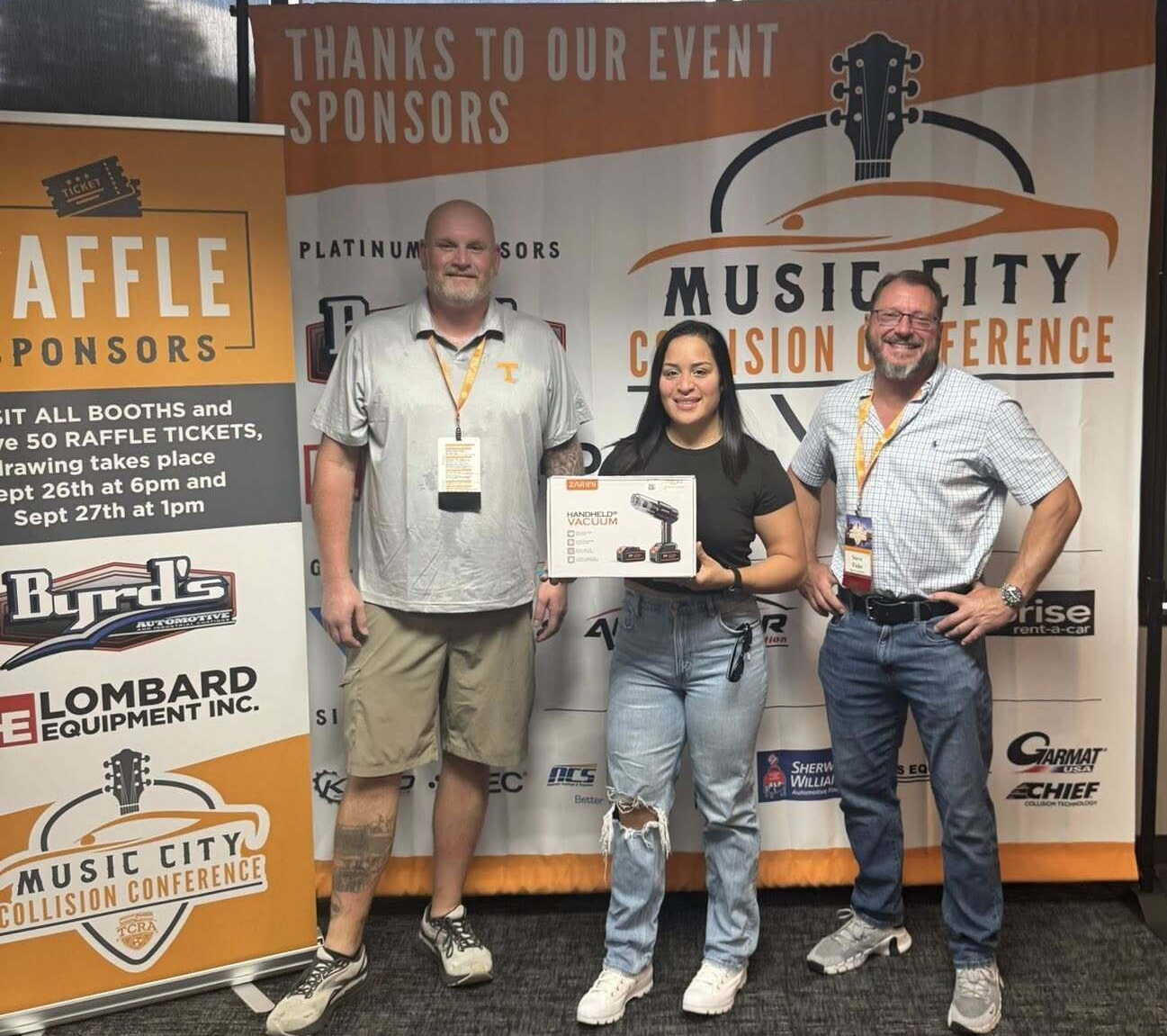 Raffle prizes were awarded at the show.
During her presentation, Mahoney offered advice on how shops can get involved and make a difference in their communities. “Collision repair professionals have an incredible opportunity to shape the next generation of technicians — and it doesn’t take much to get started,” she said.
• Join advisory boards and share feedback that helps shape curriculum.
• Open your doors: offer shop tours, participate in career fairs, and arrange classroom visits that make a lasting impression.
• Sponsor resources that remove barriers for students, such as tools, uniforms or transportation assistance.
• Offer real-world experience through apprenticeships, job shadowing or mock interviews.
• Support local events and competitions that inspire students and connect them with potential employers.
To get started, Mahoney offered the following guidance:
• Reach out to a local collision program or connect with the Collision Engineering Career Alliance for introductions.
• Build relationships with instructors and show up consistently.
• Start small: host a field trip, join an advisory meeting, or welcome a student for a job shadow. Every small step helps build the future workforce.
Performing ADAS Calibrations Properly
Greg Peeters, CEO of Car ADAS Solutions, stressed the importance of completing ADAS calibrations properly in his Music City Collision Conference presentation, “ADAS Calibrations—Getting it Right!” Peeters shared tips on how to ensure vendors are performing calibrations to OEM standards.
“Most body shops still consider restoring vehicle safety systems as a function that occurs after the vehicle is repaired,” explained Peeters, who said this thought process leads to 70% of required calibrations not getting completed and excessive cycle time when one or more calibrations are required.
He said that integrating the restoration of ADAS throughout the vehicle’s repair process begins with a physical inspection during the initial stage of the estimate. This includes:
• Identifying the sensors on the vehicle
• Identifying which sensors are affected by the accident
• Identifying which sensors will be affected by the repair process
• Identifying the OEM position statement regarding calibration after an accident
Peeters said verifying all diagnostic trouble codes (DTCs) that are safety system-related must be completed as part of the estimate. He used the example of a current DTC with a power or communication failure code on a safety sensor that must be further diagnosed to determine if it is due to a fuse, broken wire or connector.
 Greg Peeters, CEO of Car ADAS Solutions.
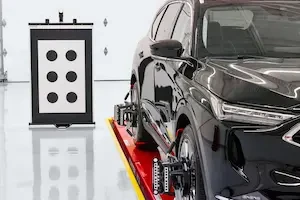
One of the most critical — and often overlooked — steps in the ADAS calibration process, according to Peeters, is the physical leveling and aiming of radar sensors.
“This step is no longer optional; it is rapidly becoming the industry standard, especially as radar sensors take on more complex functions like pedestrian alert and cross traffic alert, both of which may trigger emergency braking,” he noted.
To avoid costly rework, Peeters said radar alignment should be completed before the vehicle is sent to paint or reassembled.
“If this step is delayed until final calibration, technicians may need to remove freshly installed bumpers — wasting time and increasing cycle time unnecessarily,” he said.
Due to the high precision required for proper radar function, Peeters recommended several factors be controlled during this step:
• The vehicle must be parked on a level plane
• Correct tire pressure must be confirmed
• Fuel weight must be considered
• Leveling targets and tools must be properly aligned and verified
“Skipping or rushing this step risks misalignment, which can result in missed detections, false alerts or even system failure in critical driving situations,” Peeters emphasized.


Stacey Phillips Ronak