



An AirPro Diagnostics webinar audience recently heard from Automotive Management Institute Executive Director Mark Claypool on the power of learning in a business setting. He led with a quote from American philosopher Eric Hoffer: “In times of change, learners inherit the earth, while the learned find themselves beautifully equipped to deal with a world that no longer exists.”
The statement, Claypool said, lines up with environments where learning is “continuous, embraced and valued,” resulting in a competitive edge.
A History of Learning in the Workforce
“Learning isn't anything that's new; it's been around since the Garden of Eden,” Claypool said. “Learning is a means of growth. From a skilled trades perspective, it's how knowledge and skill has been passed from generation to generation through apprenticeships and guilds and other means.”
Although the concept of learning has been around a long time, he pointed out, the pace at which companies must collectively learn in order to stay competitive has ramped up significantly. Competitive advantage and the role training and learning play has evolved from a time when labor was required over knowledge in dominating industries like ship building and agriculture, he said.
The industrial age meant more of a need for knowledge, but just a few attained it, and lots of labor was still necessary, although more management came with the times. Processes like railroad management and manufacturing and entities like the Ford Motor Company, Claypool said, embodied this new need for knowledge.
Next came a need for people who were skilled and knowledgeable, and knowledge development and traditional education began to factor in.
“Knowledge then became intellectual capital, and you pair that with skilled workers and their knowledge, and you could become viable and competitive if you could keep up with the changes that were happening faster and faster,” he said.
Learning became essential to picking up an increasingly complex knowledge base, and workers, Claypool said, needed to begin learning both individually and organizationally. The shift toward “intellectual and learning capital” was official.
A Transformative Process
Learning speed then became an important consideration, Claypool pointed out.
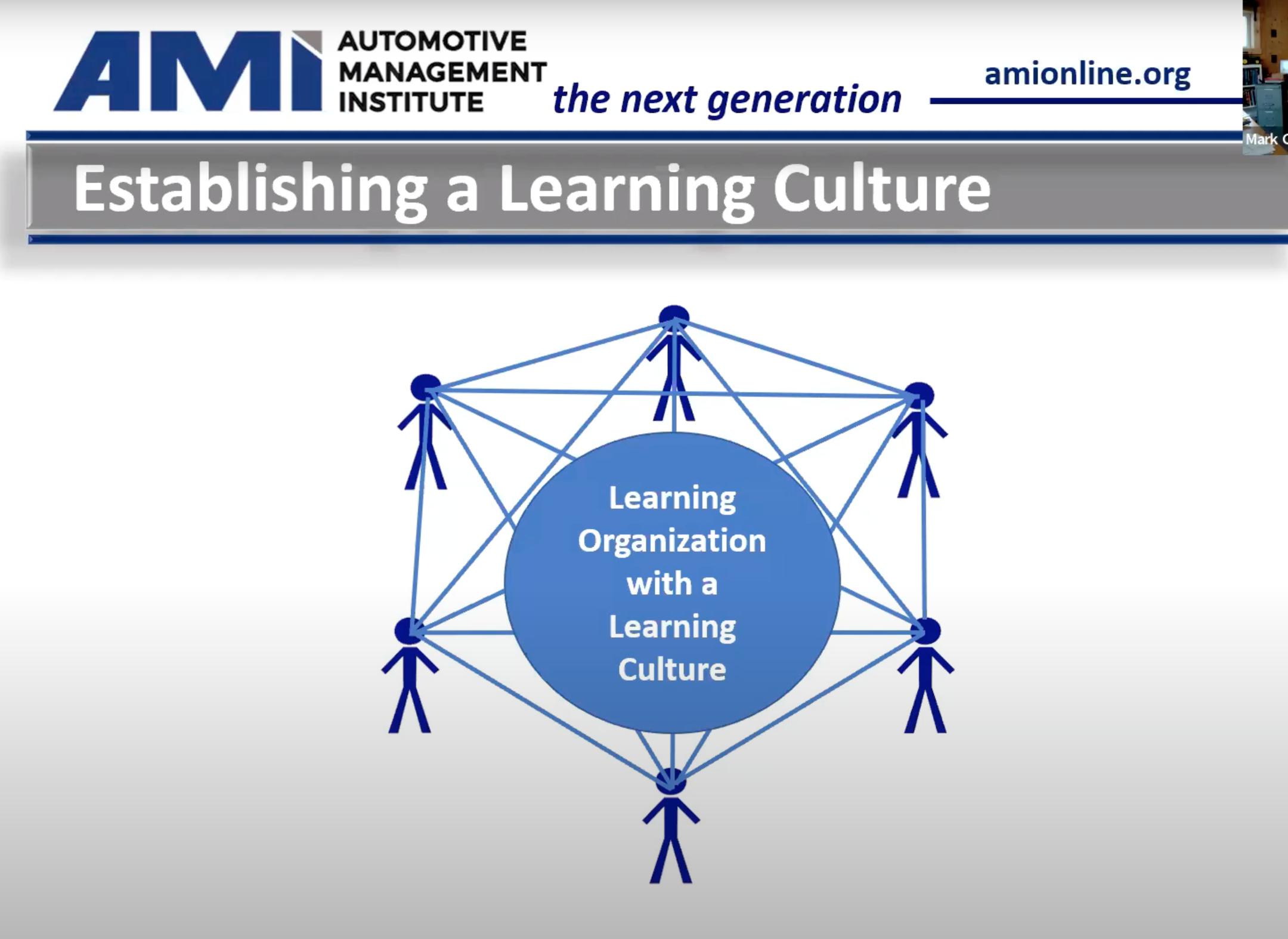 Establishment of a learning culture means setting aside dedicated time for education, getting all employees on board for new ideas and fostering buy-in among younger generations. Screenshots via Automotive Management Institute.
“We need to be able to have the ability to learn what we need to learn quickly because again, if we don't keep up, we will lag behind those top performers,” he said.
In the collision repair industry, he said, learning comes up in a plethora of different areas: where to access repair data, how to weld different types of high-strength steels, which temperatures to run in spray booths, an understanding of calibration and estimating.
Modern-day training has moved beyond taking in information to transformation of understanding and behavior. Learning can be defined as a transformative process that encompasses absorption of information and allowing it to integrate with what a person already knows in order to build on what they do.
“Input, process and reflection” are the basis, Claypool said. On an organizational level, this process can put companies ahead of the curve.
Training might be passive, but learning is active and transformative, and it’s what makes training effective, he said. Learning increases capabilities and makes those who embark on it more self-aware and valuable to the workforce.
Building a Culture
A learning culture is important. Claypool defined culture as “a pattern” of assumptions people have learned and which has worked effectively enough to be held as valid and passed along to new individuals entering an organization as the correct way to feel and think when approaching problems of integration and survival.
Perspectives on the “right way” of doing things that move beyond cultural norms must be examined, he said, in order to bring about a real learning culture. Underlying assumptions of staff dictate an organization’s ability to put new services and programs in place designed to foster growth.
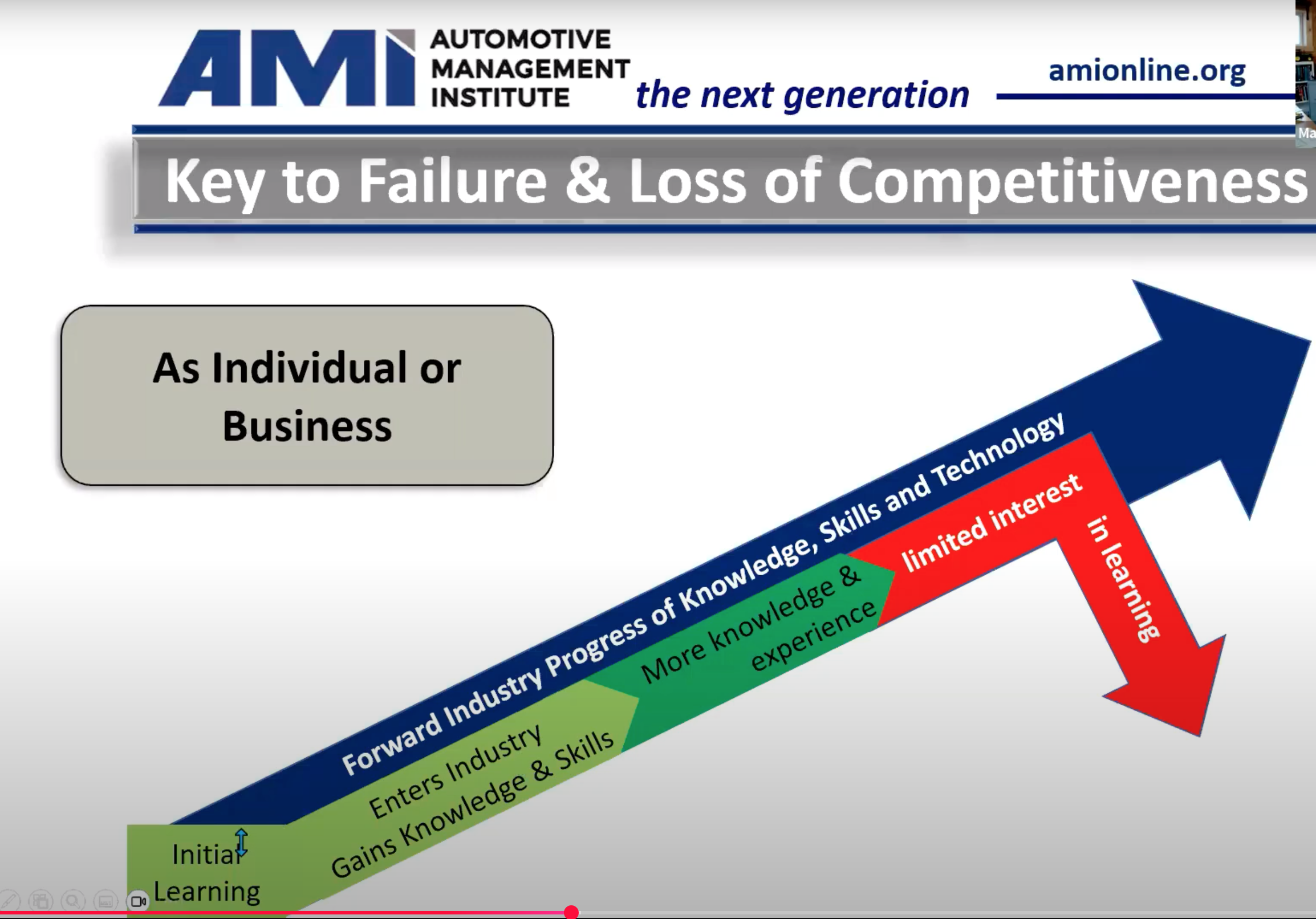 Individuals interested in continued learning move entire industries forward, but it’s up to organizations to foster learning cultures.
This is why leaders must choose a learning culture over a training culture, Claypool said. Training brings opportunities as scheduled events that are often instructor-centered and led, while learning cultures mean “continual growth and shared ownership of learning” through decentralized learning shared with others, and these are learner-centered.
Yet, some structure is still important for learning environments.
“Ultimately, a learning culture cannot be a bunch of individuals on their own journey within your organization,” he said.
Teamwork, which is increasingly popular among younger workforce generations, he said, is the answer to finding a balance here. Rewarding learning and knowledge sharing, hiring for potential and creating a shared vision are all part of creating a learning culture with teamwork as a centerpiece.
“Culture isn't just another program to implement. It's based on actual human behavior and beliefs,” Claypool said. “So, it's your job as an owner or a manager to set the expectation to learn continuously, lead by example, hold your staff accountable for learning, test them, ask them to share what they've learned and you do the same yourself.”
Setting Up for Learning
In this process, it’s important to recognize that learning is not an interruption, he said. Courses prolonged by constant day-to-day work interruptions are less effective, and it conveys that learning isn’t important to management. Uninterrupted time for courses and testing is essential.
Shop know-it-alls can be another stumbling block in the learning process when it comes to knowledge sharing. Some individual communication may be necessary.
“You need to counsel them, get them to drop the ego and open up to the fact that they don't know everything and they won't fit into the organization if they continue in that way,” Claypool said. “If ego gets in the way of sharing with others, especially new people, then these people, these know-it-alls, are a liability to your learning culture, and it's time to find their replacement.”
A shared team vision is also crucial in establishing a learning culture, he contended. Work is not the entirety of life for Gen Z employees now, he pointed out, so their employers’ focus has to extend beyond money.
“They must see a higher calling,” he said. “Work must make the world a better place and must have some element of community. These generations are more transient because many businesses don't get that fact. But they will stay with you longer if you keep all of this in mind and practice it and involve them. You are truly a team.”
A functioning apprenticeship program with a structured system, he said, is another integral part of learning culture. Within this concept, qualified apprentice candidates must receive mentoring from qualified teachers with a road map and accountability for learning proficiency and progress with rewards factored in.
A learning culture must also be protected, Clayppol said. Putting value on accreditations and certifications and rewarding behavior shops want to see are ways to do that. Interviewing carefully is also important, so organizations are hiring based on learning aptitude and attitude.
Ultimately, learning goes far beyond programming or events, Claypool said. It must pervade organizations in order to be effective, and it must support shops in moving with inevitable change.
“Learning is not a one-time event or a program; it's a mindset of a cultural foundation,” he said. “In a world where the only constant is change, the ability to learn is the most sustainable competitive advantage. And once you see a true learning culture, you cannot unsee it. And it's going to be hard to ever envision yourself going back.”









Elizabeth Green