

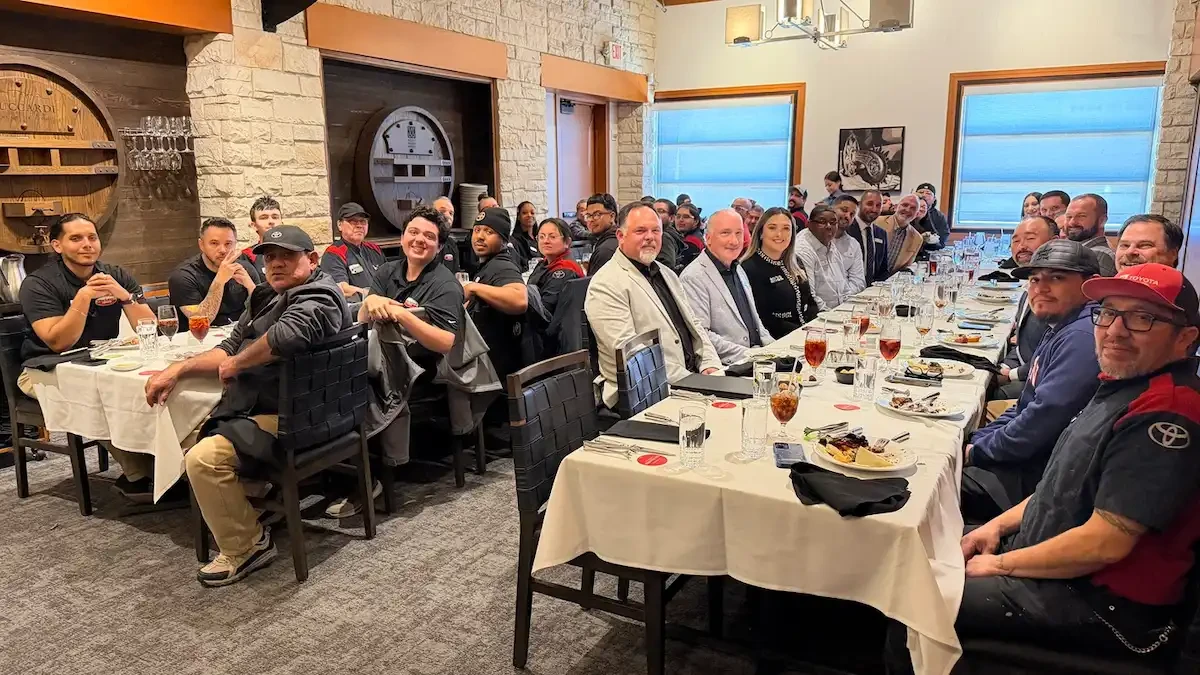
Nobody hands you a road map when you inherit a broken shop. Chuck Baldridge learned that firsthand when he took the reins of Mike Calvert Toyota’s Collision Center in Houston. The department had been running on autopilot for too long, and it showed. The Toyota certification the facility had carried for two decades was close to lapsing.
“The certified program was kind of in shambles,” Baldridge said simply.
He didn’t panic. He got to work.
Today, that same shop is the Toyota Certified Collision Center of the Year for the Gulf States region for the second year in a row.
What happened in between is a story about more than compliance checklists and OEM tooling. It’s about what Baldridge calls the real engine of a high-performing shop: culture that employees own, a process obsession rooted in blueprinting, and a financial philosophy that trades insurer concessions for long-term investment in people and equipment.
Rebuilding from the Ground Up
Baldridge came to Mike Calvert Toyota when the dealership was in the midst of a transition under new owner Shawn Vaughan of Vaughan Automotive. The collision center was the last department to be overhauled and was in desperate need of it.
“I had no idea what a Toyota certification was,” Baldridge said. “I’d never worked at a dealership before. So I had to learn it real quick because I didn’t want to lose it.”
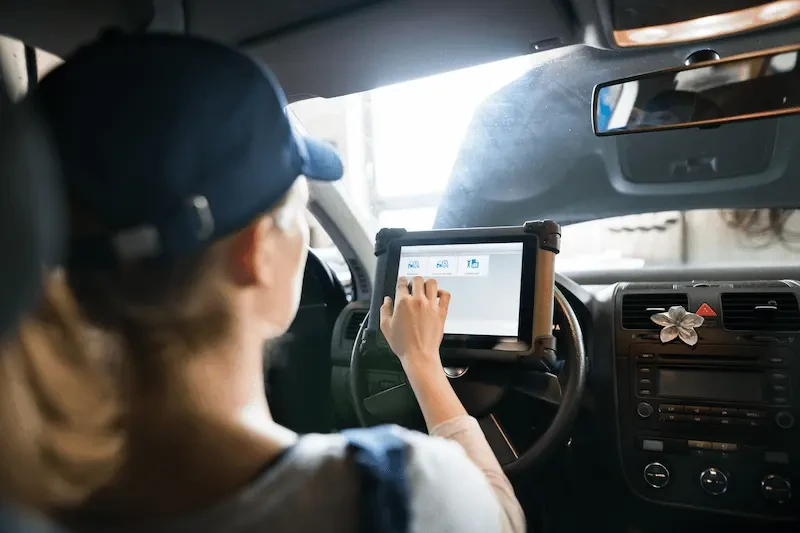
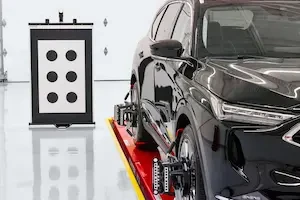
He credits the shop’s Gulf States Toyota Regional Program Manager, Stephen Lea, a longtime contact, with shortening a painful learning curve. Together, they worked through the certification requirements: facility upgrades, OEM-approved tooling, technician training, and getting the team subscribed to Toyota’s repair-procedure database.
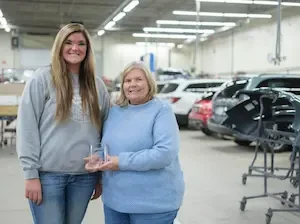
“He was kind enough to tell the story to our team at our CCOY award luncheon,” Baldridge said. “I’d honestly forgotten about it. Having him in my corner made the whole process a lot less painful.”
The foundation took roughly two years to build. By that point, the shop had stopped playing catch-up and started setting the pace.
The Culture Breakthrough
Around the year-and-a-half mark, owner Shawn Vaughan introduced a laminated pocket card with the company’s mission statement and eight core values he’d written himself — traits like respect, teamwork, quality, accountability, and integrity.
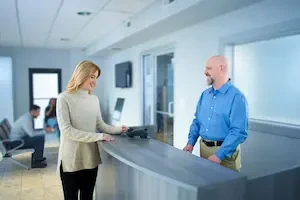
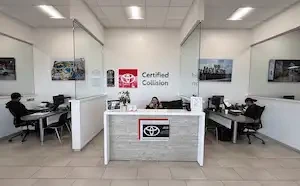 Front office operations at Mike Calvert Toyota’s Collision Center reflect the shop’s commitment to process, professionalism, and a customer-first experience. For Baldridge, the whole concept of “culture” had always felt like noise. “It was almost annoying to hear everybody talk about culture all the time,” he says. “I just never had a good understanding of what it meant in my world.”
That changed at an industry seminar when the word came up one too many times. Back at his hotel, frustrated and curious, Baldridge spent three hours on Google trying to crack the concept. Six pages of notes later, he had his answer, and it surprised him.
“What I found in going through that exercise is that culture isn’t a “me” thing … it’s not what I tell employees it is. It’s not a corporate thing; culture isn’t what the corporate office tells employees it is. Culture is a people thing.
“It’s your people’s perception and understanding of your mission statement, your vision, your values, your processes, your standards, and their ability to use those things to guide their daily work lives in a positive and productive direction,” he said.
He brought that realization back home and called a two-hour all-hands meeting in the shop, and everything shut down. He walked the team through what culture meant to him, then turned it over to them.
“Once that started happening, you could feel it. You could see the shift,” he said. “Things started coming together. Better repairs. Better customer service. Record sales months, practically every month. My team is the culture, and that culture does some incredible things.”
Now, every new-hire interview starts with the pocket card. And daily “little deposits” such as morning high-fives, public praise for good work, asking techs how their families are doing, to keep the values from becoming wallpaper.
“It’s a living, breathing thing,” Baldridge said. “That’s our secret sauce.”
Blueprinting: The Non-Negotiable
Ask Baldridge which shop-floor process moves the needle most, and he doesn’t pause: blueprinting.
“When we nail the blueprint, everything downstream is easier. When we don’t, you can trace almost every problem back to it,” he said. “Miss a damage line or a parts call-out and that delay shows up later, whether in cycle time, rework or a customer satisfaction score.”
The team ties every KPI review back to blueprint accuracy. It’s the diagnostic for almost any downstream problem. Fix the blueprint, cycle time, and first-time quality, and Toyota audit scores all tend to follow.
Dropping DRP and What Replaced It
One of Baldridge’s most consequential early decisions was to eliminate all direct-repair-program agreements: no more insurer discounts, no concessions, no rate cuts in exchange for referral volume.
“When you’re on a DRP, you’re essentially paying to get work in your door,” he said. “My thought was: if I’m going to spend money to attract customers, I’d rather put that money into something that benefits us long-term, not a third party.”
That money went into OEM tooling, software subscriptions, and recurring training. He constantly monitors the tech stack: every subscription, every equipment lease, and replaces anything that stops generating value.
His advice to independent shops weighing certification: run the actual numbers. “Break down what you give away in DRP concessions versus what you’d spend promoting and supporting a certification. At 180 to 200 cars a month, the difference was substantial for us.”
He’s careful to note that certification isn’t the only path to quality repairs. But for shops that want a full support ecosystem, such as equipment guidance, procedure libraries, and responsive field reps who will come out and look at a new model with you, it’s hard to replicate. “It’s not on a brochure. It’s not on a price sheet. But it’s pretty priceless,” he said.
Staying Ahead of the Annual Audit
Toyota’s certification standards evolve every year, such as new scan requirements, updated ADAS calibration specs, and revised training modules. Staying ahead of the checklist requires two feedback channels for Baldridge.
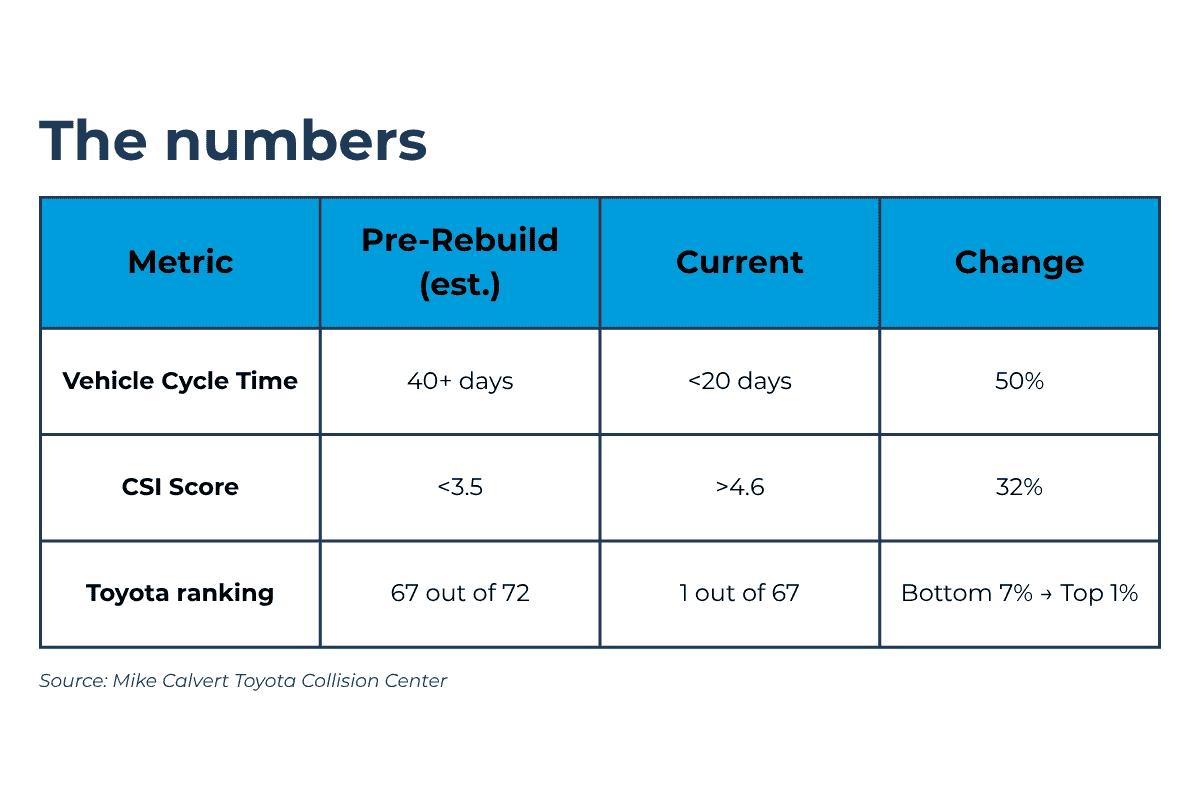 The first is the Toyota Certified Collision Council, formed after the 2024 award cycle. The council pairs Toyota Collision North America staff with the 13 regional Collision Center of the Year winners. Members might preview certification requirement changes, beta-test new training classes, and relay frontline pain points from the shop level up to the people in Toyota who can help remedy them.
“We got a front-row seat,” Baldridge said. “We can provide feedback before things get rolled out publicly.”
The second channel is broader industry intelligence: podcasts, 20 groups, trade publications.
“Certification programs can sometimes be behind the national curve when they update requirements,” he observed. “If you can spot the trend before it hits the checklist, you’re already ahead of the game.”
What’s Next
Back-to-back regional titles haven’t slowed the pace at Mike Calvert Toyota. The shop recently joined a pilot program that identifies operational deficiencies and any opportunities to improve internal processes, and Baldridge is exploring further process automation to protect blueprint quality as volume grows.
“We’ve built the foundation,” he said. “The goal now is to keep setting the standard so the certification becomes the minimum, not the finish line.”



Leona Scott