I recently was training at a certified Toyota collision center in the Bay Area in California. The manager showed me some pictures of a rail section on a 2020 Toyota RAV4. The insurance company — one of the shop’s DRP partners — specified an aftermarket replacement rail section instead of the OEM factory part. The manager bought the aftermarket part, but after receiving it, he placed an order for the OEM part. He had to take multiple pictures of both parts and explain why he was using the OEM part, a process that added four days.
 The 2010 Honda Fit following the second collision.
The reality of what is happening in the collision process in a body shop sale is a cost to the insurance company. Body shops want to increase their sales, while the insurance companies want to reduce their costs. And that is where the problem occurs.
I understand the shops will make concessions on parts, materials and certain operations, but they should never deviate from OEM procedures when it comes to the safety of the occupants of that vehicle.
Let’s look at the John Eagle Collision Center case.
In 2012, the roof was replaced on a 2010 Honda Fit at John Eagle Collision Center. Honda specifies in the repair procedures to weld bond the roof. The insurance company would only pay for adhesive bonding.
The repaired vehicle was sold to a couple. In 2014, they T-boned a truck. Adhesive does not have shear strength, so spot welds or rivets are used in conjunction with glue to prevent the panels from shearing. Since the roof was only installed with adhesive, the frontal impact sent all the forces rearward and the roof did not absorb any of the energy. The rearward forces caused the quarter panels to buckle and puncture the gas tank. The escaping gas hit the muffler and the whole vehicle was engulfed in flames.
The picture tells the story. The roof is mostly intact whereas the rest of the vehicle is destroyed. I was told that adding spot welds would have added about $3,000. We — body shops, insurance carriers and adhesive manufacturers — destroyed this young couple’s lives for $3,000.
Let’s look at the Toyota rail sectioning part.

I purchased both the Toyota part and the aftermarket part to make a side-by-side comparison.

Note the OEM part’s cut out (yellow arrow), while the aftermarket part is solid (red arrow.) The height of the bolt receiver is longer — 12 mm — on the OEM replacement part (yellow arrow) compared to the aftermarket part (red arrow).

The OEM part has no welds at this location (yellow arrow) whereas the aftermarket part was welded (red arrow.)
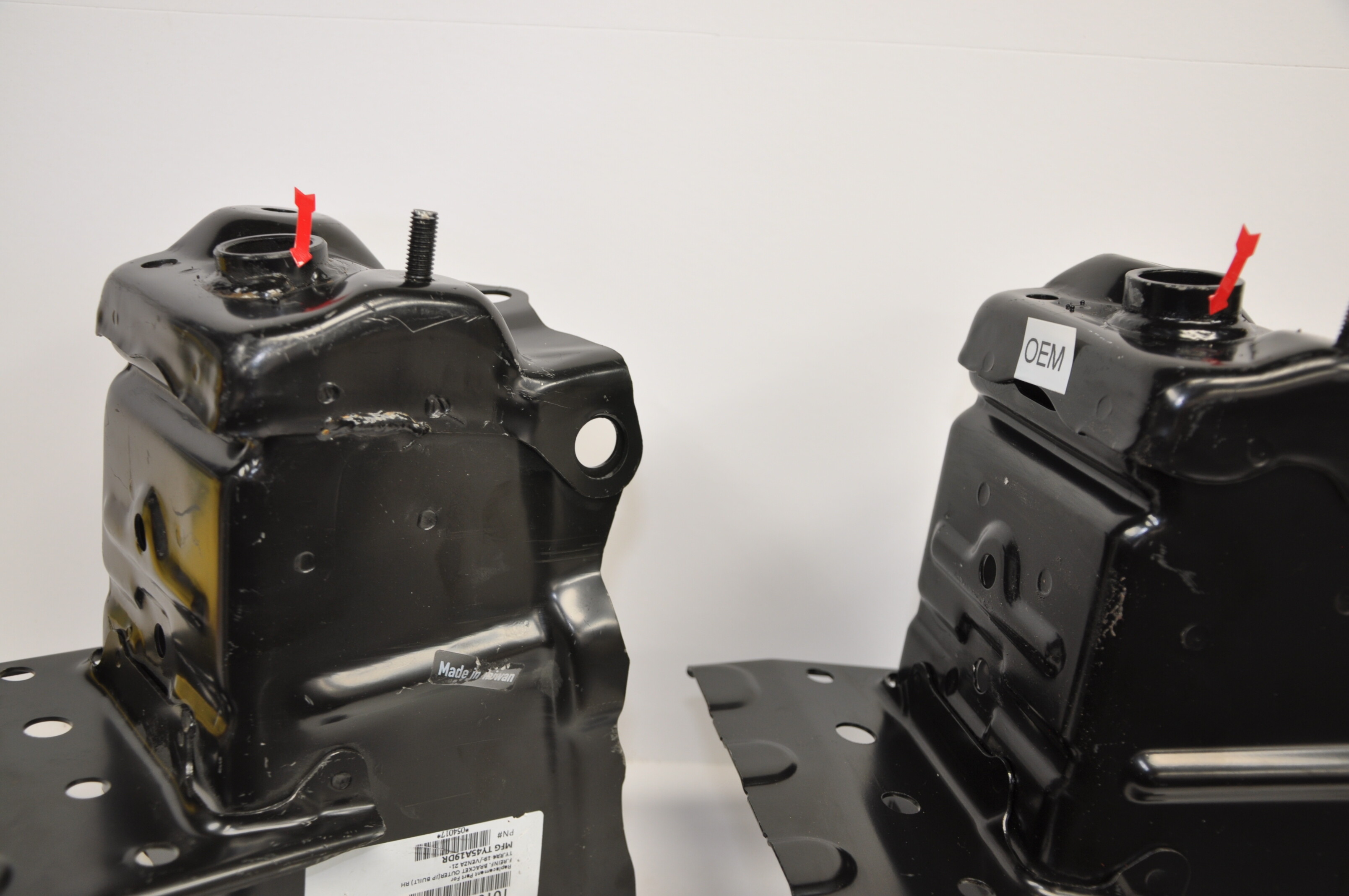
The weld around the threaded receiver on the OEM part was continuous; the aftermarket is not (see arrows).
I set up the two parts so they were level to the bottom surface.
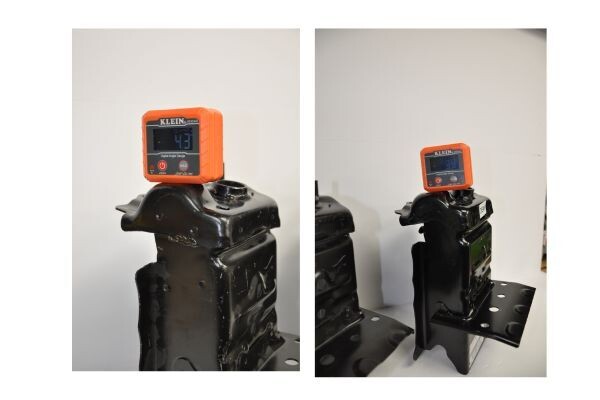
The front of the rail section on the aftermarket part angle is 4.3 degrees, while the OE part is 9.4 degrees.

The first spot weld failed, so a second spot weld was added. Two more spots also failed.

The aftermarket had an additional weld (arrow), while the OEM part had no welds in that location.

The threaded insert on the OEM part (yellow arrow) is 15 mm longer than the aftermarket part (red arrow). The upper left corner of the bracket has a stamped indentation for strength, while the aftermarket part does not. Additionally, the shape where the insert was welded was different. The weld around the threaded insert on the OEM was continuous; the aftermarket part was just tack welded. The length of the threaded insert on the aftermarket part is about ¾ inch shorter that the OEM part.

One corner of the aftermarket part is shorter when compared to the crease. The corners on the OEM part are parallel to the crease. Notice the stampings on the OEM part are much sharper than aftermarket part, which could have an effect on energy movement.
I have a Rockwell hardness tester and used it to check the strength of both parts. The aftermarket rail section had a reading of 28 (900 MPa) and the OEM part had a reading of 29 (930 MPa). The two parts are nearly identical in strength. The thickness of both test pieces was also nearly identical.
Even though the two parts were the same hardness and thickness, there were too many other items that could lead to major problems in the event of another accident, if the area that was repaired with an aftermarket part instead of the factory replacement part.
The owner of collision repair facility said that a 2021 Ram 1500 arrived at his shop a few years ago with severe damage to both doors and B-posts. Upon examination, it was determined the B-pillar reinforcement was damaged and needed to be replaced. For access to the replacement part, the roof panel would have needed to be removed. Upon completion of the repair blueprint, the vehicle became a total loss.
The repair document from Ram states, “Due to the usage of the type of metal and/or the tensile strength involved on the inner components and reinforcements sectioning of these parts is not allowed. Complete replacement of the components or reinforcement is the only acceptable repair.”
The insurance company picked up the vehicle and towed it to one of their DRP shops, where it was repaired.
The owner of the original shop contacted the vehicle owner and asked if he would bring the vehicle to his shop for a post-repair inspection. The truck owner was disgusted with everything, declined the inspection and said he was going to get rid of the truck.
Let’s take a look at what heat does to Ultra High Strength Steel (UHHS).
I cut a sample piece from a B-reinforcement (1,300 MPa) on a Rivian vehicle and tested the strength.
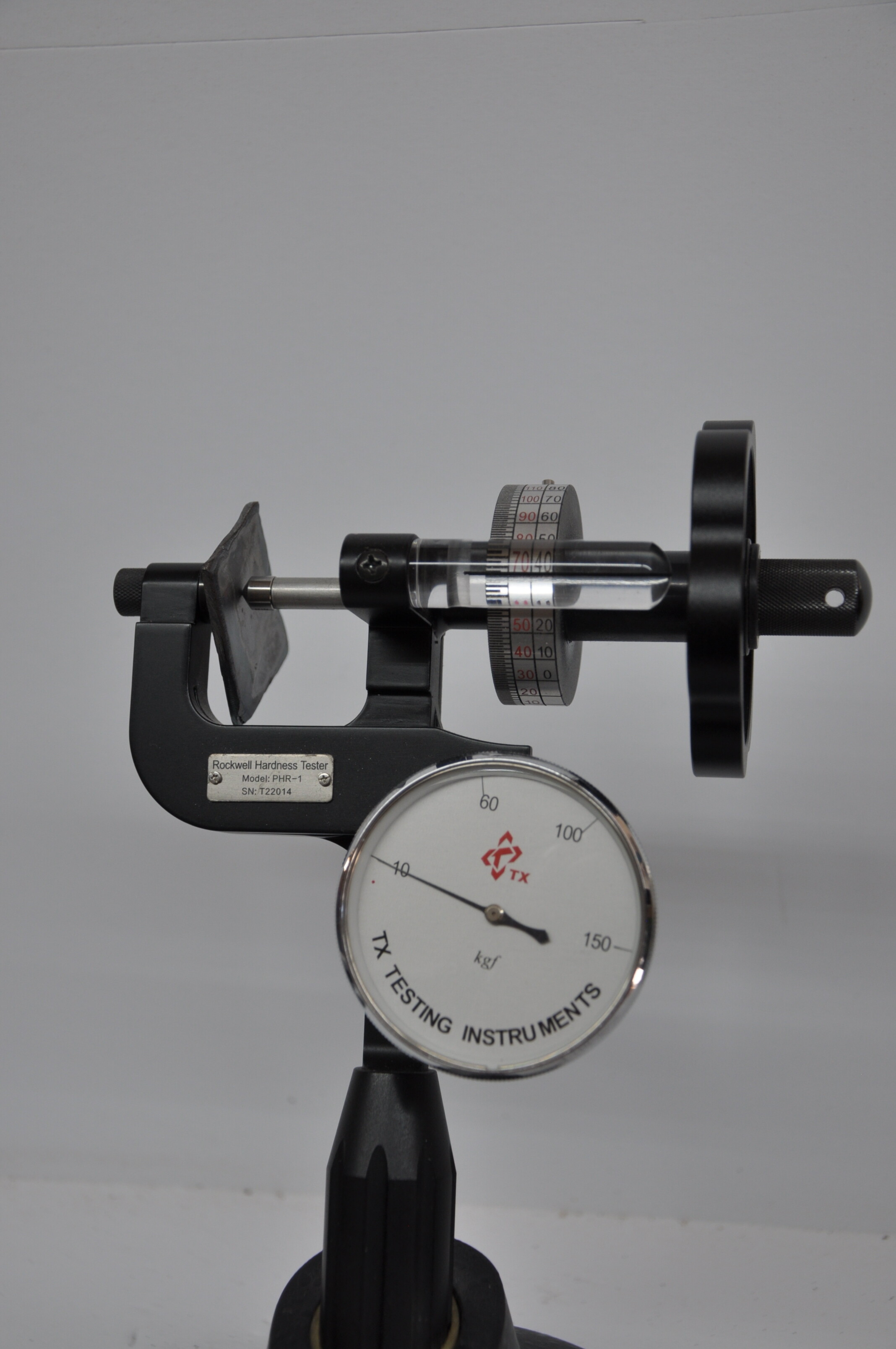
The reading was 40 on the HRC scale, which translates to 1,250 MPa. I heated the sample with MAP gas. There was no color change, so I think the temperature was below 900 degrees Fahrenheit. (I took a piece of 1.4 mm galvanized metal, heated it up, and there was no zinc residue at 950 degrees.

The hardness reading after heating was HRC 33 or 1,000 MPa.
I next took a sample from a Honda rocker reinforcement (1,500 MPa) to test how welding would affect the strength. Honda states there is no MIG/MAG welding on 1,500 MPa parts except where a MIG plug weld is required.
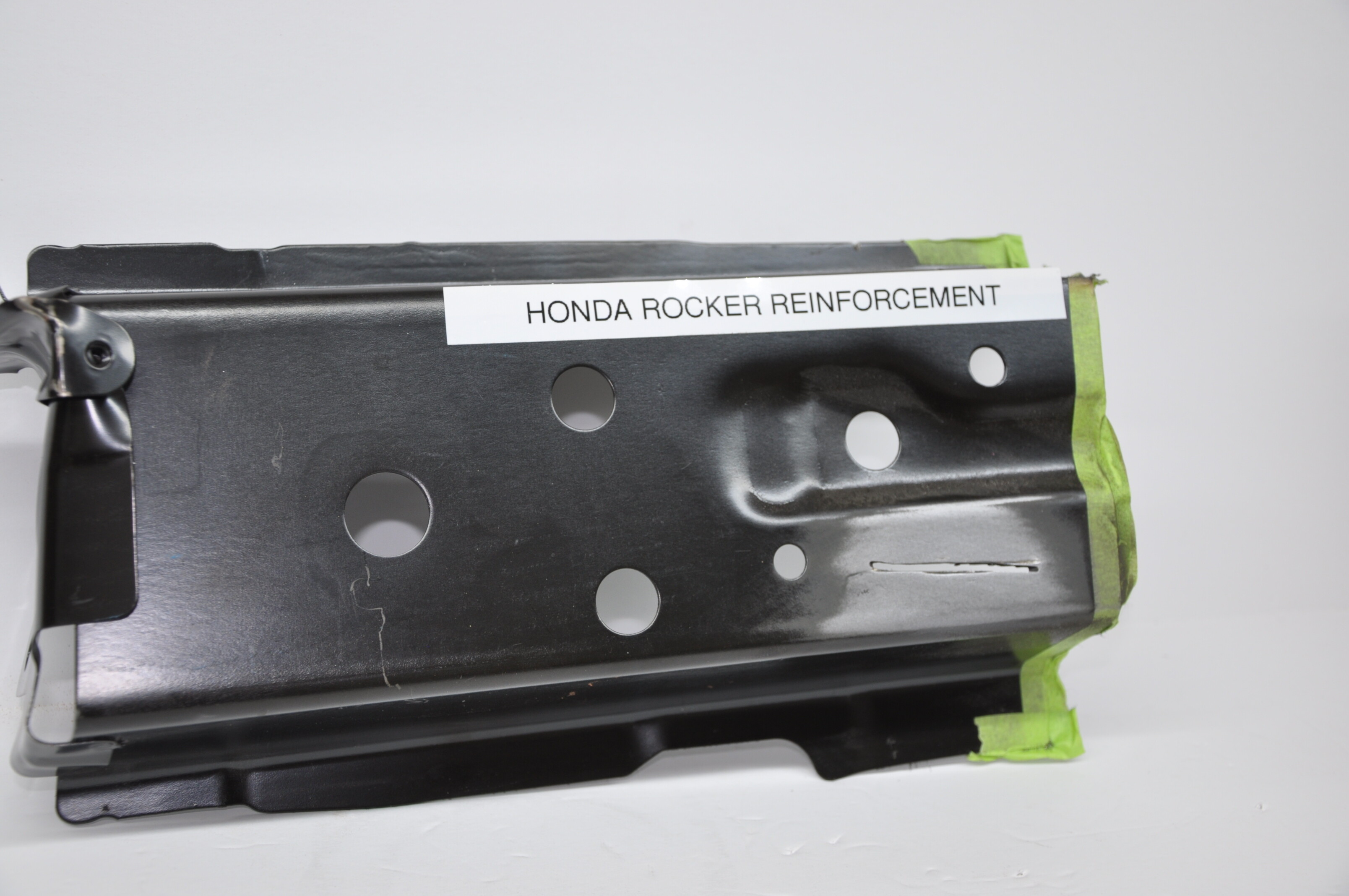
I put two slits into the reinforcement to simulate a sectioning weld.

Just a side note: I made this with a cut off wheel from Millner-Haufen, a Kool Tools of SEMA a couple of years ago. I have used it for cutting mild steel, aluminum and concrete over the last three years and it has worked as advertised. I wanted to see if it would work on UHHS materials, and it sliced through with no problem. On the outside surface of the cutoff wheel is a grinder, which allowed me to clean all of the edges without getting another tool or changing the disc. It has a lifetime guarantee and with the cost of cutoff wheels today, a lot of money can be saved.
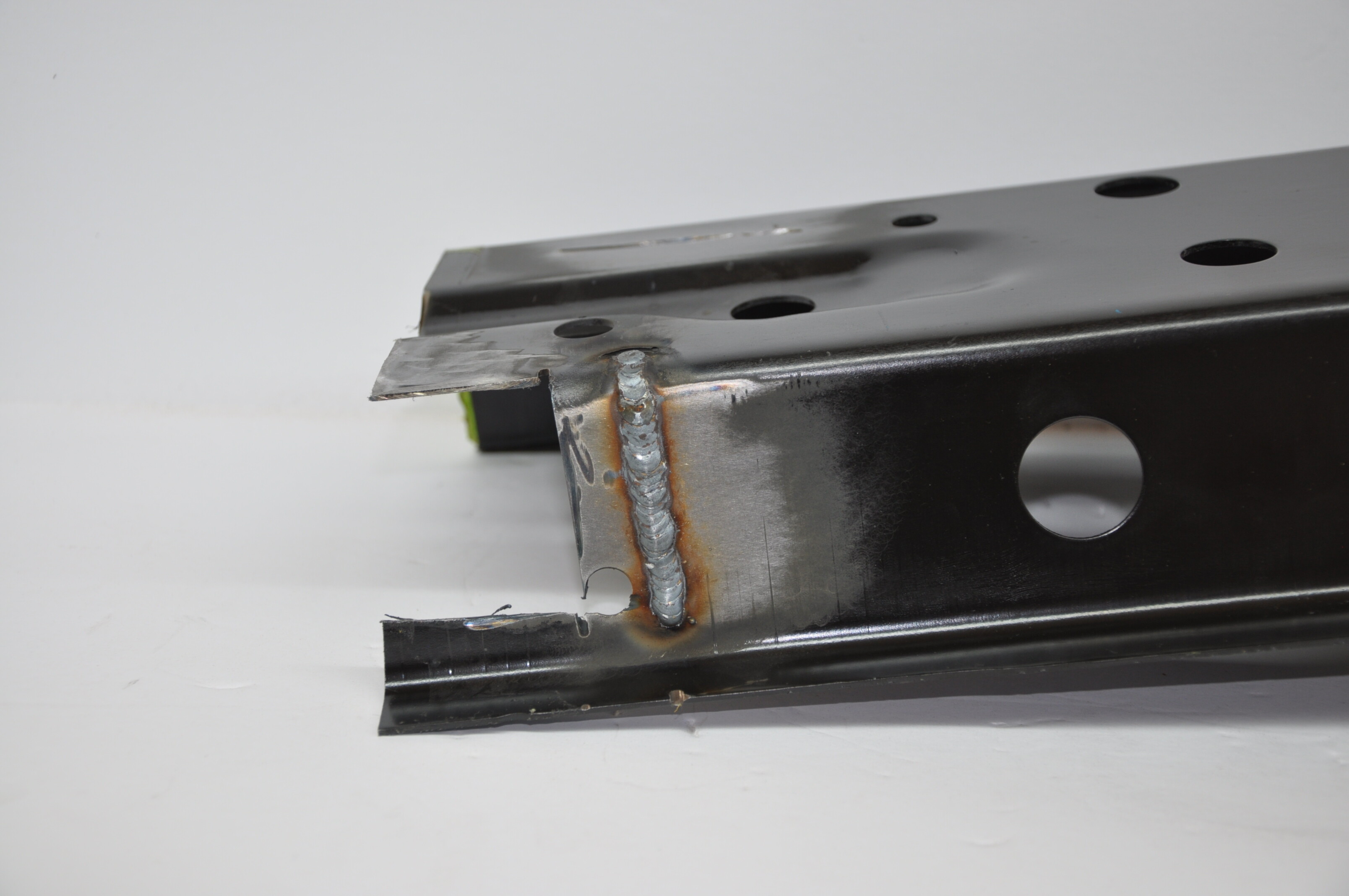
I welded up one of the slits using stitch welds and not a continuous weld. A continuous weld produces more heat than stitch welding. I cut a sample out before it was welded and tested its strength.
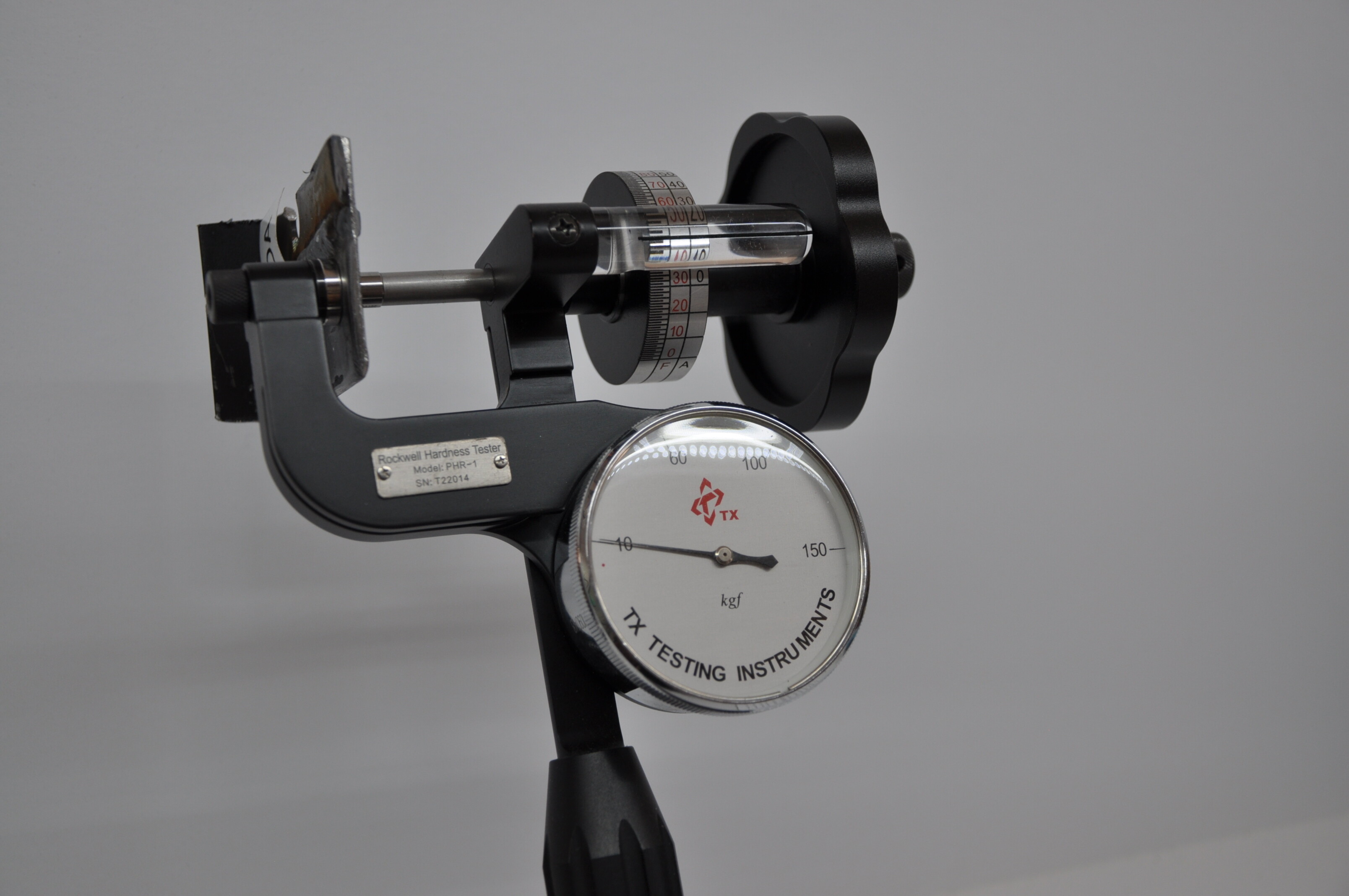
I got a reading of 45 HRC scale, which is 1,480 MPa. I then tested the welded sample.

The HRC reading was 20, but the test chart for the anvil and diamond indenter starts at 24. To get a correct reading, I would have needed a different anvil and indenter, which I do not have. The reading of 24 translates into an MPa reading of 515 MPa. High strength steel starts about 300 MPa. Honda states in its repair manual that “MAG plug welding is allowed on 1,500 MPa (hot stamp) steel parts in select locations only as specified in the model specific body repair manual.” Second, Honda states, “Any parts that had heat applied above 1,100°F (600°C) degrees must be replaced with new parts.”
At the area that was welded, the steel went from energy transfer to near mild steel. If another collision occurred at that location at future date, the energy would send the part into the vehicle instead of transferring the energy throughout the vehicle.
I want to go back to the Eagle Collision lawsuit. The jury awarded the couple $42 million from the dealership collision group.
Matthew and Marcia Seebachan’s lives are ruined. He has brain damage, and she had many operations since the accident. Why? We allowed the insurance company to dictate the repairs.
Remember this! Collision shops are solely liable — not the insurance companies. Many insurance companies have a clause in their DRP agreements that indemnifies them. When it comes to structural repairs, first and foremost, you need to follow the proper repair procedures that OEMs spell out — period. In the Eagle Collision case, the collision manager could have approached the owner of the vehicle to make up the difference, he could have done the recommended procedures at the company’s expense or just refused the job.
If you don’t want to follow the OEM procedures for structural repairs, are you prepared to get involved with a multi-million-dollar lawsuit? Why are collision shops still required to use aftermarket structural parts that have never been crash tested? Why are today’s body shops fixing cars with 10- to 15-year-old technology? Why do the OEMs charge for repair data? It should be free.
We can keep asking why, but nothing will change until the collision repair shops, insurance companies and outside suppliers realize we all work for the consumer and no one else.