

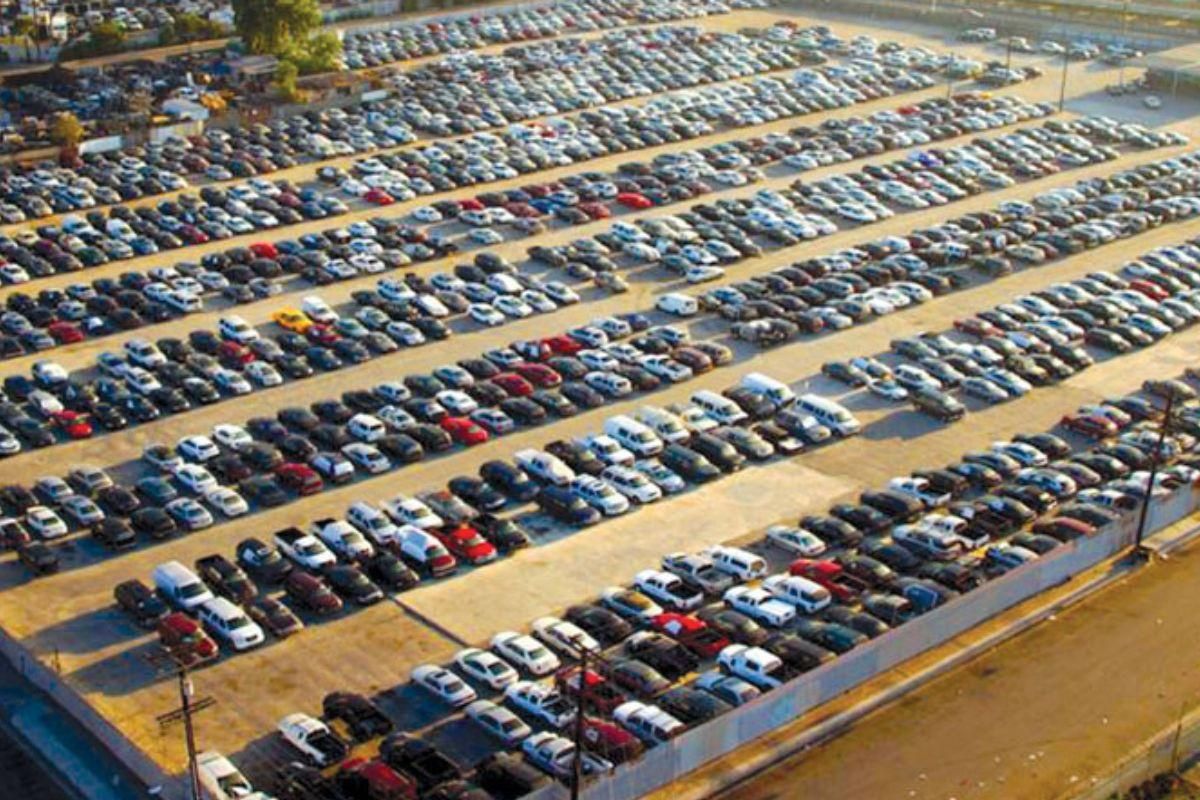
Dallas-based Copart Inc. (Nasdaq: CPRT) said Sept. 4 its quarterly and annual revenue, gross profit and net income rose compared with the same periods last year. Five of six metrics grew by double digits from roughly 10% to as much as 23% higher.
Its Q4 2025 saw revenue of $1.1 billion, gross profit of $510 million, and net income of $396 million.
Full year results were $4.6 billion, $2.1 billion and $1.6 billion, respectively. Its 2025 fiscal year ended July 31.
Fully diluted earnings per share were 41 cents in the quarter, up 24%; annually they were $1.59, up about 14%.
Some numbers, like EPS, topped projections; others functionally met or glancingly missed them by less than 1%, suggesting the global vehicle reseller is running about as analysts expect, idling slightly above or below their forecasts, as in Q3 and Q2.
MarketWatch tracking shows 14 ratings from analysts, with an average recommendation of “overweight” and average one-year target price of $59.71. Copart shares closed regular trading 3.8% higher Sept. 4, at $49.97, and trended slightly higher after hours. HSBC on Sept. 4 upgraded its shares to “buy.”
Copart operates online and at 250 sites in 11 countries; buyers of 3 million vehicles a year are in 190 countries.
Earnings Call Call-Out: Insurance, Complexity, Total Loss
Copart CEO Jeff Liaw opened the earnings call by commenting on its insurance business. He said, “for the full fiscal year 2025, Copart grew its global insurance volume by 4.5% and our U.S. insurance volume by 4.2%,” though these numbers declined by about 2% apiece in Q4.
He cited the long-term upward growth in claims resulting in total losses, coupled with declining accident rates, also in line with historical trends. Liaw and a recent CCC Intelligent Solutions Crash Course Report currently peg total losses in the mid-22% range, up about 1 percentage point from last year.
Add vehicle complexity — Liaw, citing CCC data, noted more calibrations on DRP work — and higher repair costs accompanying this, and total losses grow.
“We’ve also talked at length about how total loss itself becomes more attractive as growing economies seek more and more U.S. salvage vehicles to satisfy their demand for more mobility,” Liaw said. Its international members buy about 40% of all vehicles at U.S. auctions, producing half the receipts, because they often buy pricier vehicles than domestic shoppers — such as increasingly complex ones being totaled out more often.
Copart’s average selling prices on insurance vehicles grew 5.7% in the quarter for U.S. insurance clients and 5.4% globally, Liaw said.
Complexity and total loss trends and numbers inversely and potentially adversely affect collision repair.
“In many respects, we compete with the repair shops,” Liaw said. “The higher the returns we generate, the more we can win the rights to resolve that claim versus the repair industry. The lower the returns we generate, the more we lose head-to-head against the repair shops.”










Paul Hughes