



Jason Patterson raised some eyebrows at an industry meeting earlier this year when he offered his assessment of welding work being done in the industry.
“In my opinion, probably 2 percent of the cars on the road that were repaired and welded at repair facilities are probably welded correctly,” Patterson said during a discussion on the topic at the Collision Industry Conference in January.
Patterson conducts welding training for Southern California Collision Equipment, so he has an opportunity to see the welding being done by technicians in a variety of shops. He said some of the poor quality welding done in the industry comes down to something pretty basic: the technician’s vision.
“Many of us in the industry who are working on cars are getting a little bit older,” Patterson said. “There’s a little bit of pride, and we don’t want to admit to the fact that we can’t see it as well as we once did. So, as I’m training people going for some of these higher-line OEM certifications, one of the first things I’ll do is try to figure out if someone I’m helping train can actually see [well].
“I’ve seen a grown man cry, I’m not lying, after spending close to two weeks struggling to get an overhead weld, but not being willing to tell anyone that he can’t see. I drove 15 minutes down the road to a welding supply place, picked up three cheater lenses, and we were able to see which one worked best for him. And within six welds, he was able to pass that test.
He continued, mentioning that eyesight degrades over time, which can have an affect. “You just don’t always even know that you can’t see very well. And unfortunately, these cars are missiles going down the roads now, and if these welds aren’t performed correctly, you’re putting someone's life in danger. So it’s unbelievably important to be able to see well.”
Other causes of poor welding
Toby Chess has conducted more than 7,000 mobile welding tests for I-CAR since 2005. The issues he sees is that too often technicians aren’t taught “the why.”
“Why do you hold your gun like this or like this?” Chess cited as an example. “When you teach a technician why to hold the gun properly, it makes all the sense in the world.”
 Kye Yeung suggests more weld-related auditing of certified shops by automakers could be one way to improve repair quality. Kye Yeung, a California shop owner who moderated the panel discussion at CIC, said part of the problem he sees is a lack of auditing of welding as part of some OEM shop certification programs.
“The situation that we have is a lot of the shops that get audited, the auditors that come out, go through and make sure your booth has the right airflow, that you’ve got the right lighting, you’ve got the right equipment,” Yeung said. “But they never ask, ‘Hey, is there anybody here in the shop that knows how to weld? Can we see a weld? Can we destroy a weld?’ We have auditors who don’t have the capacity to be able to make that judgment. So how is the consumer protected? The people doing the audit are looking to check a box, but it really doesn’t get down to: Are you performing safe repairs?”
Proper welding is a key part of the training and testing required as part of the Mercedes-Benz collision shop certification program, but a representative of the automaker said checking welds isn’t part of its audit process for certified shops.
“So, the onsite audit is literally just checking the equipment, making sure people do the training they need to do,” Ben Cid, collision manager for Mercedes-Benz USA, said. “That’s because of our welding certification requires the welder to come back every six months. That's the welding confirmation for our program.”
But Yeung pointed to a number of other factors that can lead to poor welding, including inadequate lighting in shops, a lack of welder maintenance, and contamination from old paint, primer, seam sealer, undercoating or sound-deadening foam.
Technicians are often compensated based on labor hours completed, but proper welds can require more time. And many body techs only weld occasionally, he said, so they may not really hone and maintain their skill.
“It isn’t really their forte,” Yeung said.
Solutions suggested
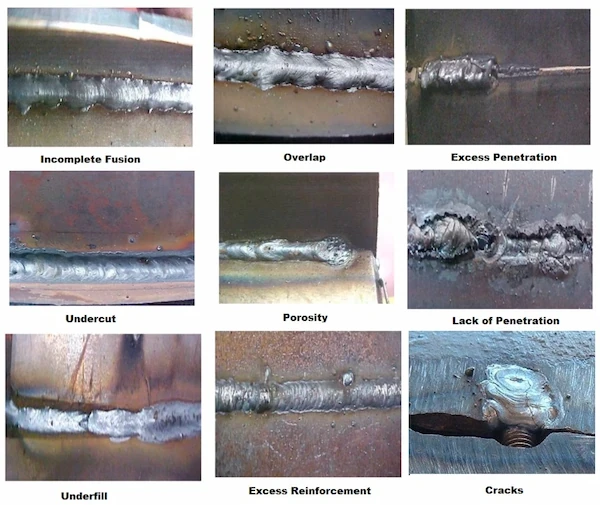 A CIC committee shared a compilation of photos showing issues with welding done in the industry. But he and the CIC also offered some potential solutions, returning again to the idea of more auditing by automakers.
“We’ll have one that comes in and says, ‘Hey, your torque wrench has to be recalibrated every year. Your two-post lift has to have recalibration,’” Yeung said. “But they don’t check the voltage to make sure I have enough for that welder. They don’t check the consumables that that welder needs, or that we have the right wire, or that the technician knows how to change the wire.”
He suggested that more in-process photo documentation could reduce the number of poor welds covered in seam sealer or hidden behind trim or adjacent panels.
“This is what it looked like before we caulked it, before we painted, before we put a sound-deadener pad on it, before we put the interior trim back on,” Yeung said.
Another proposal he suggested: “What if no structural weld was accepted without an OEM procedure match, photo proof, and verification of the destructive test on file?” he said. “I think that would really help; if we just go through that extra step to make sure that we’re doing a good job.”


John Yoswick