


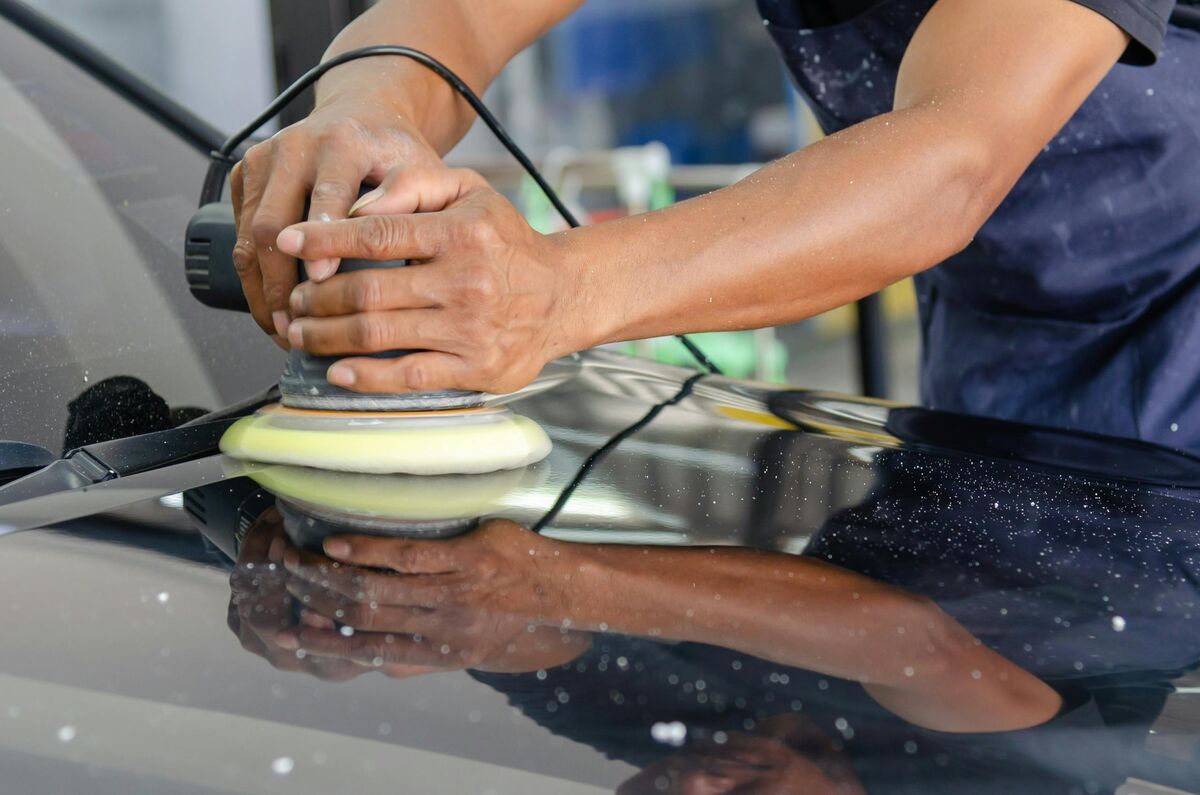
With many collision repair shops seeing reduced revenues this year, owners are once again looking for upsell opportunities, and one shop manager says ceramic coatings have proven to be one.
Andrew Batenhorst, manager of Pacific BMW’s dealership body shop in Glendale, CA, said about 2 in 5 of the shop’s customers choose to have such a coating applied.
“We’ll do some post-repair marketing where we’ll send out a menu with the services we offer and give them an incentive, like 20% off, if you book an appointment within the next two weeks,” Batenhorst said. “It keeps us fresh in their mind.
“We also market to our [dealership’s] sales department, so there’s an incentive for the customer to come to the collision center after they purchased their vehicle — not because of an accident, but for something pleasant,” he said. “So then when they do have a claim or an accident, they’ve seen what our facility looks like, they’ve walked through, and we know they’re coming to us.”
Batenhorst said he previously spent seven years as a professional detailer, which led him to become an early adopter of ceramic coatings. But he said he’s also seen a lot of misinformation out there about the coatings, so it’s important to do some research and get the facts. The coatings are certainly not a cure-all, he said.
“Probably the No. 1 thing that I see happening is people wash their car and think because there’s hydrophobic properties to the coating, that will eliminate the risk of getting mineral deposits,” Batenhorst said. “Mineral deposits are still going to occur as the water evaporates off the panel. And those things will remain and can actually damage the coating to the point where if it has sat on the surface for too long, you’ll no longer be able to extract them chemically. And now you’ll have to abrade them in order to remove them, which will take the coating off at the same time.
“Poor washing habits are another thing,” he said. “A lot of people think just because the coating has been applied, you can go for longer intervals without having to wash the vehicle, which is definitely not true. And a lot of customers have a belief that a ceramic coating can stop rock chips, which unfortunately it can’t.”
 Andrew Batenhorst.
Batenhorst said he also sees ceramic coatings being marketed as having graphene, which “sounds exotic,” but he doesn’t believe the minimal amount of graphene being added is “adding any protection.”
“It is a strong compound, but it’s not really meant for use inside of ceramic coatings,” he said.
The graphene coatings are one of three types of ceramic coatings on the market. Unlike graphene coatings, silicon dioxide coatings form a bond on top of the existing clearcoat. They are popular because they are affordable and easy to apply without a lot of training for the user.
“But they only last one to two years,” Batenhorst said. “The strongest coatings on the market now are silicon carbide, and some of those can last over 10 years. They actually form a chemical bonding process with the clearcoat.”
Working It Into Your Process
Batenhorst is a fan of creating processes for everything that happens in his shop, and that includes the ceramic coating sales process. During check-in of a vehicle for collision repairs, he suggested, ask customers if they’ve had a ceramic coating applied, and if so, ask about the brand, when it was applied, and if they have a receipt.
“The last item is really important if you’re looking toward an insurance company for some type of reimbursement for that,” Batenhorst said. “And then you as a repairer have to decide if this is something you’re going to offer in-house, and if not, who you are going to sublet to and is the product they are using compatible with the warranty of the product that’s already been applied.”
If the customer doesn’t have much information about the ceramic coating applied to their vehicle, check for a warranty sticker near a VIN label or in the door jamb, Batenhorst suggested. You can’t also make a determination using a mil gauge. Because lower-end coatings may only be one or two microns — higher-end coatings may be in the 3-5 micron range — it may require an ultrasonic mil thickness gauge to determine if there’s been a ceramic coating applied.
If you offer ceramic coatings, the upfront conversation is a good time to talk to a customer who hasn’t had such a coating applied to see if they are interested, he said.
Pricing and Billing Considerations
In terms of pricing and billing for replacement or installation of ceramic coatings, Batenhorst cautioned that material costs can vary.
“Depending on how many panels you’re going to be coating, you need to determine if you will be using more than one container, or is it going to be a partial,” he said. “How the product is sold to you is really important, because you may end up having to buy a kit that includes a primer polish or some special applicator. These are other materials that are going to get consumed during that application process.”
A customer seeking insurer reimbursement for replacement of ceramic coating may need the invoice they received when the coating was applied, so the shop may need to assist the customer in getting that from a dealer or vendor.
“We have found in many cases, many insurance policies won’t cover it,” Batenhorst said. “It depends on whether they have custom parts and equipment coverage. Some adjusters I have found refuse, whether or not [the customer] has that coverage, so it may turn into a co-pay situation for the customer.”
Batenhorst was asked if using the coating product in the shop can lead to fisheye or other refinish problems because of contamination.
“The coating I use is applied by hand, and it’s actually done in a separate area,” he said, noting some ceramic coatings may alternatively be sprayed inside the booth, which can be faster but tends to use more product because of overspray. “But I am not aware of any contamination concerns from the product.”
In terms of wait time, he’s heard some people say three or four weeks need to pass before applying ceramic coatings over freshly-refinished panels. But the manufacturer of the product he uses says it can be applied after a week or 10 days.
“That works out great because usually by the time a car is coming out of reassembly and moving into detail, you can get [the coating] installed for the customer without a second visit,” he said.
The upsell doesn’t necessarily stop at the time of application.
“In terms of aftercare, there are a lot of great products on the market that you can either sell in your lobby, or maybe give them a small bottle of the ceramic booster as a thank you for having the service done in your facility,” Batenhorst said.
Depending on the warranty level that you’re offering, there may need to be a warranty inspection done down the road to confirm that the coating is performing as it should.
“Usually that’s going to involve a decontamination wash,” Batenhorst said. “You can’t use a clay bar on a ceramic coating. You can’t polish it, you can’t abrade it. The decon wash uses a strong chemical solution to strip off any of the bonded contaminants that are staying on the paint. That way the coating can start to function again as it’s designed.”






John Yoswick