The federal electric vehicle tax credit, designed to encourage EV purchases by making them more affordable, is set to expire Sept. 30. While it was initially due to expire in 2032, its brief run helped new-car buyers save $3.3 billion in tax year 2023 alone.
A recent analysis by LendingTree looked at where consumers will miss out the most when the credit ends.
In tax year 2023, Americans filed 487,990 returns claiming the new EV tax credit, totaling $3.3 billion, and 28,180 for the preowned EV credit, totaling another $95.6 million. The average credit was $6,709 for new EVs, which are eligible for up to $7,500, and $3,392 for used EVs, eligible for up to $4,000.
Based on results from tax year 2023, California stands to take the biggest hit when the credit ends.
LendingTree analysts predict Californians could miss out on an estimated $1.1 billion in EV tax credits in the tax year following the end of the credits. That includes credits for new and used EVs. Californians submitted 157,360 claims for the new EV tax credit in tax year 2023, or 32.2% of U.S. claims. For used EV credits, California also led, accounting for 23.2% of U.S. claims.
California accounts for 857 EV tax credit claims (new and used) per 100,000 returns — far above the U.S. average of 320.
Behind California, Texans could lose an estimated $272.7 million in potential savings, and Floridians stand to lose $201.4 million. Texas and Florida were also next in claims at a far lower 38,870 and 30,090.
Washington (571) and New Jersey (506) also have high per-capita claim rates. Conversely, Mississippi (44), North Dakota (51) and Louisiana (57) have the fewest claims compared to the number of individual tax returns.
Matt Schulz, LendingTree chief consumer finance analyst, said those credits are big, especially when considering how expensive vehicles are today.
“That these credits could often be taken at the point of sale makes them even more significant,” he said. “It’s one thing to have to wait until the following spring to get a rebate with your tax refund. It’s something else to be able to knock thousands of dollars off the price of a vehicle from the start. I have no doubt that those credits inspired people who may not otherwise have considered an electric vehicle to at least think about them.”
Schulz said the end of the credits means “an awful lot of potential buying power will go away for consumers.”
However, while the federal EV tax credit is phasing out, many states offer substantial incentives for EVs, including the top-ranking California and Texas.
Nationwide, only 1.7% of light-duty vehicles registered in 2023 were electric — an increase from 1.2% in 2022. California leads again, with EVs comprising 4.5% of registered vehicles. The District of Columbia (3.8%) and Hawaii (3.0%) follow. Meanwhile, just 0.2% of light-duty vehicles in Mississippi and North Dakota are electric.
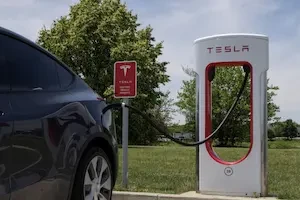
New EV sales totaled 310,839 in Q2 2025, a 6.3% decrease from Q2 2024. The top three EVs sold in Q2 2025 were the Tesla Model Y (86,120), Tesla Model 3 (48,803) and Chevrolet Equinox EV (17,420). However, year-to-date Q1 and Q2 sales reached 607,089 — up 1.5% from the same period last year.