



If you’ve heard me speak at industry events, you know I often voice concerns that not enough shops are repairing vehicles properly. And while I say this with love for this industry, I’m convinced of that now more than ever. And here is one of the reasons why.
Once a year, I update a data slide that shows for the past several years the average number of mechanical labor hours on estimates by state. The data is not limited to just DRP or just non-DRP claims, and is not limited to estimates processed by any one of the estimating system providers.
You can see that the numbers may move up or down in a given state over time. The average was under one hour in Alabama in 2021, for example, but had risen to 1.2 hours last year. It went from 1.8 hours in Michigan in 2021, to two hours last year. In Hawaii, the average has remained virtually unchanged at about half an hour.
But here’s the deal: even in Georgia, the state with the highest average last year, it was still just 2.3 hours. When I look at that data, I see an industry that at best is not writing accurate repair plans, and at worst likely isn’t performing safe and proper repairs.
I mean, when you think about all the mechanical labor operations that must be done as part of a proper repair after an accident, how is the average in any state not closer to five to six hours? The automakers have specific requirements for battery disconnection and reconnection, for example. Those are mechanical operations.
You can’t weld within 12 or 18 or 20 inches — depending on the automaker — of electrical components. Removing and reinstalling those components as necessary are mechanical operations.
You’ve got post-accident safety inspections. Measuring a steering column or inspecting sensors are mechanical operations.
 Collision Advice provides an annual update on the number of mechanical labor hours per job for each state.
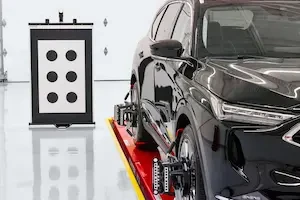
You’ve got alignments, tire run-out tests, hooking up battery support. All mechanical operations.
When you think about all those operations required in order to diagnose or repair a vehicle properly, there’s no way the average number of mechanical labor hours should be as low as they are.
Now, I know some people will say they sublet out their calibration work or safety inspections to a dealer or other vendor, and that accounts for the low number of mechanical hours. But there’s still all the other items I’ve mentioned above, and dozens more asked about in our “Who Pays for What?” survey focused on frame and mechanical operations.
In a few markets, some shops tell me their mechanical labor rate is the same as their body labor rate. Even when that’s the case, mechanical labor on estimates should still be characterized as mechanical, not body labor.
But my concern is that too often, those items aren’t making it onto the estimate or repair plan because they’re not being done, thus my concern it’s also an indication that cars aren’t being fixed correctly. You’re missing critically important procedures.
Download the “Who Pays for What” report on frame and mechanical labor hour procedures. It’s free. Look through the not-included labor operations listed. Hopefully you will recognize they are often procedures you are doing regularly, or at least should be doing regularly. You’ll also find all sorts of resources in the report — links to SCRS videos, DEG inquiries, other articles of mine, OEM or supplier information — to help you explain the need for these operations and negotiate to be paid for them.
The bottom line: There’s no way the average number of mechanical labor hours should be below one or even below two. It should be much higher. And until it is, it only validates my concern that estimates and repair plans aren’t being written well — or worse yet, that cars aren’t being repaired properly.









Mike Anderson