


This year, 3M is celebrating the 100th anniversary of Scotch® Tape. Its origin dates back to 1925, when a young 3M engineer named Richard Drew invented Scotch® Tape after recognizing the need to help automotive technicians detail cars without damaging existing paint jobs.
What began as a solution for auto body painters has evolved into a portfolio of 3M products that support a diverse range of industries, including automotive, industrial manufacturing, design and construction, electronics and medical.
“3M has had 100 years of experience to develop the right tape for the right job,” said Mark Howlett, global portfolio director at 3M. “Whatever the application, wherever you are in the world, we have the specialized tape to help you get the job done.”
In the early days, Howlett said the Scotch® tape brand was known to speed up the repair process, particularly on the painting side.
The tapes are now all branded 3M, or are in the process of being changed as a result of a global insight study conducted in 2022.
“The collision repair market has come to recognize 3M as the preferred tape brand versus Scotch,” said Howlett.
Over the years, 3M has applied its adhesive technology to other materials to develop a wide range of tapes and tape-related products for the collision repair industry.
Today’s tape products include bonding, mounting and transfer tapes, foam tapes, masking and paper tapes, pinstriping tapes, reclosable fasteners, sealing tapes, specialty application tapes, tape applicators, dispensers and kits, as well as vinyl tapes.
3M’s masking tape products have continued to evolve over the years as vehicles have become increasingly complex.
“If we were using the same tape from 100 years ago, we could have problems on a vehicle today,” Howlett emphasized. “3M Standard Operating Procedures guide technicians to use recommended procedures for greater job efficiency.”
With different jobs and needs for tape, Howlett said 3M ensures its products help meet customers’ needs, with the goal of assisting technicians, painters and preppers move through the repair process more efficiently.
Masking Solutions
One of 3M’s widely used products is 3M™ Automotive Yellow Masking Tape. Known for its versatility, it is considered a mid- to upper-tier level and is manufactured solvent-free.
“Our highest-grade tape, commonly known as 3M™ Performance Green Masking Tape or 233+, is solvent-free and it’s making its way throughout all corners of the collision world, used throughout North America, Europe and Asia Pacific,” said Howlett.
By adding foam to its masking tape, 3M created a product that could be applied to door jambs.
“Soft-edge foam masking tape can be laid down in between the doors to allow you to feather in paint,” Howlett shared. “This protects the jamb gap using a very similar adhesive technology.” A couple of varieties of soft-edge foam tape have been developed over the years.
 Mark Howlett, right, global portfolio director at 3M, is pictured with Cameron Sloan, global application engineer for 3M’s Automotive Aftermarket Division.
Wider masking tape was created to pull back the rubber seals on a windshield, for example, to feather in paint. The tape is perforated to make it easier for technicians to tear.
To meet the needs of the Asian market, varieties of washi masking tape have been created. “It’s a completely different type of tape,” said Howlett. “It provides a very sharp finish line, which is what the Asian market likes.”
A similar technology was used in North America to create 3M™ Precision Masking Tape. “It allows you to have a very thin level of tape to produce nice, sharp lines,” explained Howlett.
With changes in vehicle technology, 3M’s innovation teams are constantly looking at the progression of paint technology and its impact on the development of adhesives.
“The tape and masking solutions should be free of silicone that may interact with paint,” said Howlett. “This is a significant consideration in the development of new masking products.”
The company has prioritized removing solvents from its products for many decades, including adhesives, partly due to the coarseness they may have on paint coatings. As a result, the majority of 3M’s collision aftermarket tapes are solvent-free.
Howlett highlighted a product called 3M™ Dirt Trap™, which is used globally. Available in several styles, Dirt Trap uses the company’s adhesive technology from masking tape and includes a non-woven film that allows technicians to coat the inside walls of paint booths to capture overspray and provide cleaner paint jobs by capturing dust and other contaminants in the air.
“Dirt Trap reduces the dust nibs that could contribute to additional refinishing work after you finish painting,” he said.
Available in several styles, it features a waterproof version known as 3M™ Self Stick Liquid Protection Fabric.
“What's really interesting is taking a technology developed 100 years ago and applying it to substrates like Dirt Trap and other foams,” Howlett said.
He also talked about a 3M masking product called Smooth Transition Tape. “It’s similar to foam tape, but it's more elegant; it's thinner and you can put it into smaller gaps on a vehicle,” he explained. “One side is coated with adhesive, and the other side allows it to feather through as you paint in.”
In addition, 3M introduced an overspray film that complements its masking category and can be placed onto a vehicle, with the edges adhered using tape. It is available in different grades and varieties.
“Some have moisture protection, designed to reduce moisture staining in higher-temp drying applications, and most have been developed with a light static cling to keep the sheeting in place without the use of adhesive,” he said.
Future Development
3M has a team of experts specializing in the development of masking products. New applications continue to be developed at 3M’s specialized innovation hubs and tested and reviewed at 3M technical training centers throughout the Americas, Europe and Asia Pacific.
“3M has a very solid manufacturing footprint with a high-quality supply chain network,” Howlett said. “They are experts in what they do.”
As technicians become more sophisticated in their repair processes, Howlett emphasized that the industry needs collision supplies to meet their needs. “3M has been a frontrunner in most of these technologies,” he said.
By sharing ideas among the labs and technical facilities, Howlett said, it illustrates the innovation cycle the company continues to foster.
“3M has been making tape and providing masking solutions for a long time, 100 years in fact, and our reputation is on display every day,” said Howlett. “That is what we do, and we do it well.”
Masking Best Practices to Consider
Cost and Quality
Jerry Dalton is president of Dalton Collision Inc., which has two locations in Knoxville, TN. The masking product used the most at his shops is the Green tape, which he describes as a premium product. Dalton has found the tape might be more expensive than some other products on the market, but he and his team can depend on its quality and durability. Due to the volume the company purchases, he said they receive good deals.
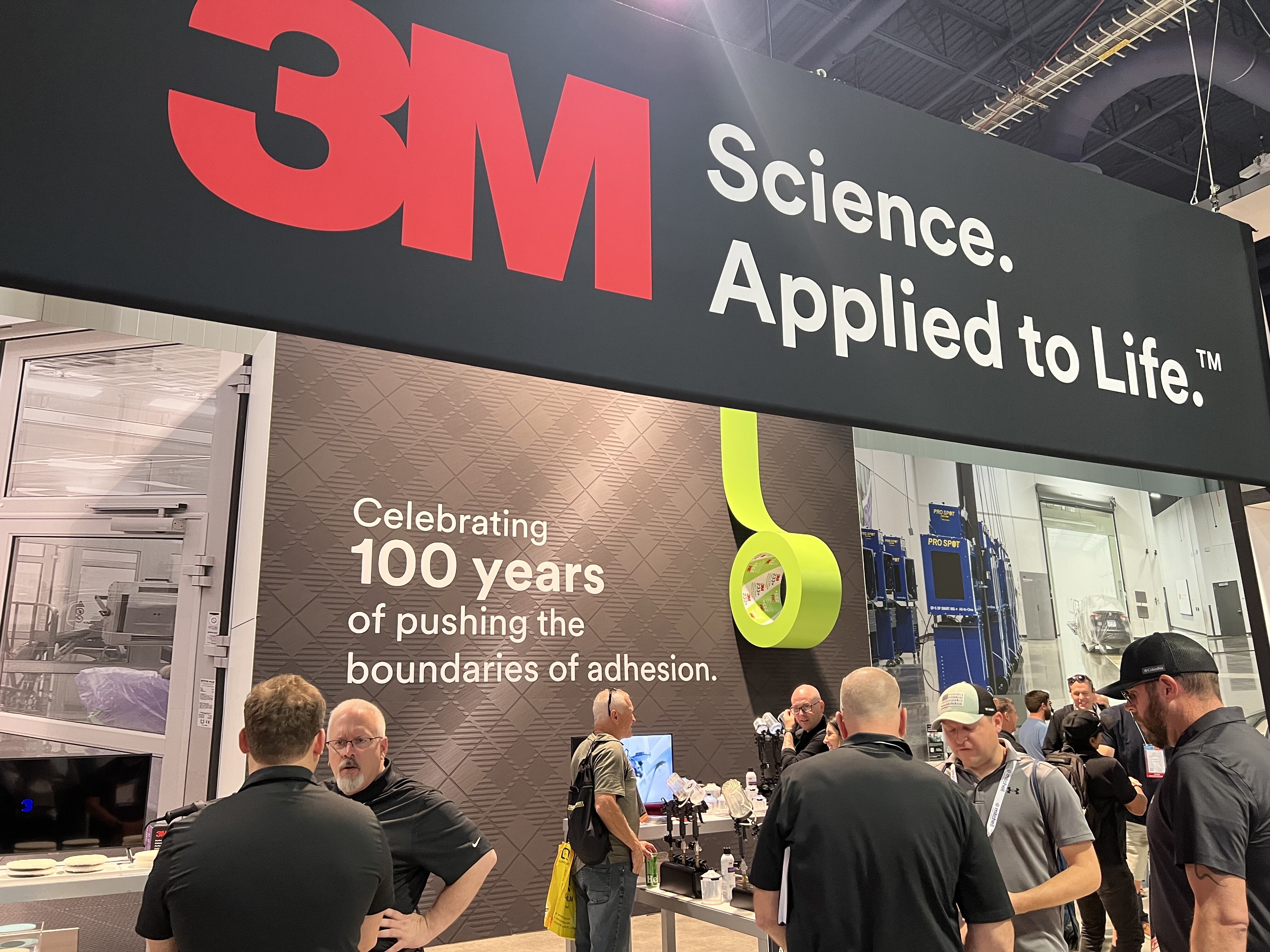 3M celebrated the anniversary at this year's SEMA Show.
“It is user-friendly and makes the technician’s life who has to use it more productive,” he said. “You're saving money in the long run.”
He also finds they use less of the product due to its quality, whereas a less expensive tape doesn't stick as well. “The cheapest might not always be the best,” he added.
Bill King, owner of King Collision Repair in Knoxville for 36 years, has used a variety of masking products over his career. Although some of the other masking products may have been similar to 3M products or lower in price, King said they didn’t last as long or weren’t of the same quality. “I look more for quality than the lowest price,” he explained.
Atmospheric Conditions
While some tapes are designed for high humidity in states like Florida or Texas, others are specifically created for areas with drier weather. “You need to have a tape that is going to stick and stay; otherwise, it will literally lift as you’re laying down body paint spray,” Howlett explained. “If you have an adhesive that's too strong, you'll have adhesive transfer and a silvering of the tape.”
Training
Howlett stressed the importance of having skilled workers prepped and trained to ensure every job is completed quickly and effectively. “The running joke is that masking is so simple, it's just about placing the sticky side down,” he said. “However, there is a lot more to it.” This includes ensuring that taping around curves, gaps and over plastic sheeting is done correctly.
3M’s training program, available both online and in-person, was designed to help technicians learn how to properly mask materials and select the right product for the job.
Brian Davies, owner and founder of Body Works Plus in Charlotte, NC, agreed: “3M training centers are very specific, and they do a great job at helping younger people get into the industry and learn how to use some of the products.”
Davies’ employees regularly attend classes at the 3M Skills Development Center in Minnesota and have also found it helpful to access online classes, including videos on masking.







Stacey Phillips Ronak