


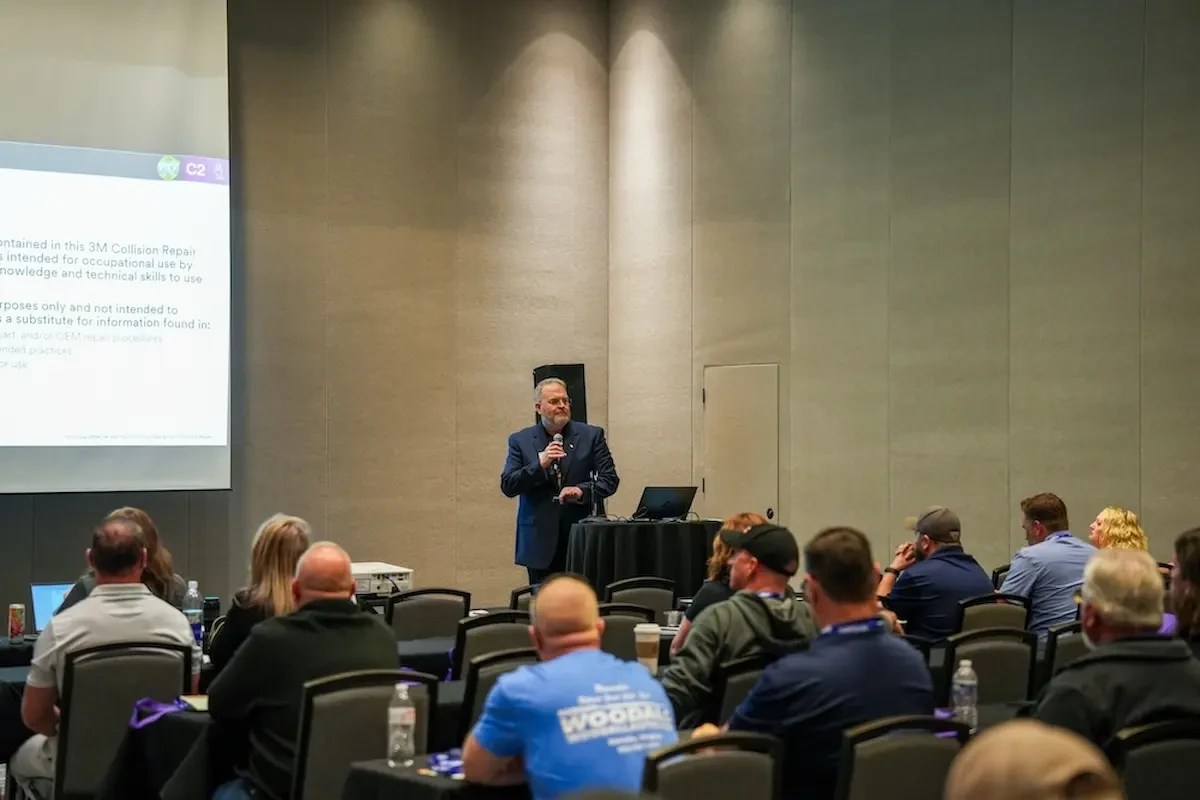
This year’s Southeast Collision Conference (SCC), held in May, provided educational opportunities for every segment of the collision repair industry. The 4th annual event took place in Richmond, Va., and was planned by the Carolinas Collision Association (CCA) and the Washington Metropolitan Auto Body Association (WMABA)
If you missed attending the SCC, highlights from the technical sessions, held as part of WMABA’s Collision Professional Repairer Education Program (P.R.E.P.), are summarized below.
In-house vs. sublet for wheel alignments and ADAS calibrations
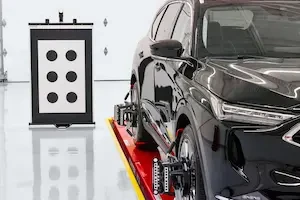
Hunter Engineering Regional Field Trainer Justin Allen discussed a critical make-or-buy decision: whether to invest in in-house wheel alignment and ADAS calibrations or continue subletting. During his presentation, Allen helped attendees analyze real-world challenges, technological disruptions, and the logistical impact these services have on the business’s bottom line and the customer experience.
Market opportunity analysis
To help shops gain clarity on their local market’s specific demand and determine if the volume justifies the investment, Allen recommended making 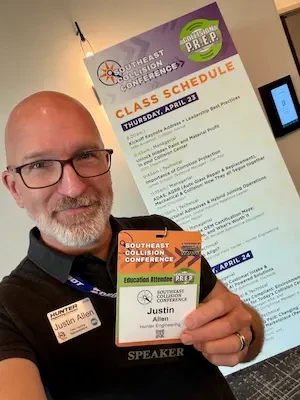 Hunter Engineering Regional Field Trainer Justin Allen guided Southeast Collision Conference attendees through the financial and operational considerations of bringing wheel alignment and ADAS calibration services in-house versus subletting.sense of what is currently taking place in the market area/county and determining where the shop owner/manager would like the business to fall as a resource. He encouraged business owners to decide if they want to be dependent on others to provide wheel alignment/ADAS calibration services, or prefer that other companies are dependent on them.
ADAS technical proficiency
Shops can improve their comfort level with the complex requirements of modern sensor and camera calibration by intentionally pursuing information and training opportunities. Allen suggested looking for podcasts about the topic and watching YouTube videos.
“There are so many great ways to add to your knowledge and vocabulary on this issue that will help you better understand this rapidly evolving technology,” he said.
Implementation strategy
Evaluate available technologies and tools designed to streamline the transition and simplify in-house workflows.
ROI vs. Subletting
Build a framework to decide whether investing the shop’s energy into these services makes more financial and operational sense than outsourcing.
Measuring for success
Spanesi Sales Director Alex Stapleton and Territory Manager Lucas Craft explored how integrating a consistent measuring system throughout every phase of the repair — from initial analysis to final verification — replaces estimation with precise data.
"By leveraging technology to drive structural pulls and repair planning, shops can eliminate costly rework, reduce cycle times, and ensure a high-quality, predictable outcome that satisfies both insurers and customers,” said Stapleton.
The typical outcome is increased profitability, a happier work environment, and loyal customers.
Takeaways
-
Re-evaluate diagnostics and use available technologies in the repair planning process
-
Flag required inspections and procedures
-
Leverage modern technologies to properly cycle cars through the collision center
-
Eliminate costly reworks
-
Limit liabilities
-
Deliver predictable, high-quality repairs
-
Market your process
Structural adhesives and hybrid joining operations
An interactive seminar demystifying the role of structural adhesives in modern vehicle repair and hybrid joining operations was led by Jason Scharton, global industry relations leader for 3M Collision Repair. Scharton guided participants through the lifecycle of a bond— from initial disassembly to final destructive testing. The session also focused on the critical integration of adhesives with mechanical fasteners to ensure restored vehicles handle crash energy as originally engineered.
Importance of adhesive and mechanical fastener integration
As vehicle structures become lighter and stronger, Scharton said those materials/structures are much more stiff/rigid. As a result, they tend to transfer collision energy through them rather than dissipating it by bending/crunching/deforming.
“As there is more collision energy transferring through the structural members, the joints that hold those structural members together must also be stronger,” he explained. There is a limit (space constraints for one) to the number of spots (welds, fasteners, etc.) that can be used to join structural members. Adhesives can “fill in” the areas in between spots to increase joint performance without negative consequences.
Adhesive classification
There are currently two classes of “structural” adhesives as options in collision repair: high shear-strength panel adhesives and impact-resistant or crash-toughened adhesives.
“Despite their designated purpose, OEMs select the type to use based on a variety of factors — not just technical performance, but also commercial availability, repair strategy, and/or standardization,” noted Scharton. “Shop should not attempt to guess — they need to follow the OEM repair procedures.”
OEM standards
Scharton shared the factors that OEMs consider when recommending specific bonding agents. They include the ability to weld through the adhesive without detrimental effects; corrosion-inhibiting chemistry, strength/performance in and through multiple environmental conditions, durations, and load conditions; and work/cure time. In addition, they consider the cure mechanism and failure mode.
“Failure is not a bad thing,” said Scharton. “Everything fails. It is how it fails (the mode) that is important.”
Hybrid joining techniques
Scharton emphasized the importance of following OEM repair procedures and adhesive selection. “Plan for the time and assistance needed to first  James Schupp, technical manager for Car-Rep, outlined corrosion protection best practices at the Southeast Collision Conference, covering the structural and safety risks of improper application across both steel and aluminum substrates. Photo credit: Cyber Eight LLC.dry-fit parts and then assemble the structure (with adhesive) within the ‘work time’ of the adhesive,” he advised. He also recommended performing welding/riveting within the adhesives “work time” window. If the adhesive has cured before welding or riveting, the bond will be compromised.
In a separate presentation, Scharton talked about restoring corrosion protection in an era of post-repair inspections.
“As post-repair inspections become a standard industry safeguard, mastering corrosion protection is essential for liability management and long-term repair integrity,” he said. Scharton focused on the hidden areas mandated by OEMs — such as narrow channels and welded flanges — that are frequently missed yet critical to protect the vehicle owner’s investment and a shop’s reputation.
Addressing corrosion protection
The importance of corrosion protection was also addressed by James Schupp, the technical manager from Car-Rep.
Schupp detailed the critical "dos and don’ts" of corrosion protection throughout the OEM repair process. In addition, he highlighted the vital safety implications of proper application for both steel and aluminum substrates.
Takeaways
- Safety and integrity: Understand the structural and safety risks associated with improper corrosion management.
- Material specifics: Master the nuances of protecting both steel and aluminum to prevent long-term degradation.
- The “Three W’s”: Learn the exact what, why and when to implement professional-grade protection during every stage of the collision repair process.




Stacey Phillips Ronak