



Over the last five years, the collision industry has faced numerous challenges due to the pandemic, supply chain issues and tariff wars. At the same time, the industry is experiencing unprecedented technological changes. A panel discussion was held earlier this year at the Autopromotec show in Bologna, Italy, to highlight some of the innovations taking place in preparation and refinish and how companies are adapting.
The panel, “Driving Transformation in Preparation and Refinish,” was moderated by Michel Malik, CEO and group publisher of BodyShop News International. Panelists included Fabien Boschetti, Axalta’s vice president of Europe, Middle East and Africa; David Gunderson, 3M president of the Automotive Aftermarket Division; Tim Ronak, senior services consultant at AkzoNobel; and Khaled Sorour, international business director of Kapci Coatings Company in Egypt.
Boschetti shared thoughts on how the trade war has impacted the refinish segment of the industry. He said when companies, for example, source raw materials in Asia, produce products in Europe and then export them to North America, it affects the global economy and will likely lead to price increases.
However, he pointed out many international businesses relocated their production facilities after the pandemic to serve their local markets.
With 3M celebrating its 100th anniversary this year, Gunderson shared the company’s approach as a global provider of refinish products. “For many, many years, we've been focusing on having a minimum of 85% of 3M product supplied regionally,” he said.
The company has found this approach convenient for customers while optimizing supply chain challenges.
Sorour has found customers are requesting different types of products than before the pandemic due to supply chain challenges and the tariff wars. To meet their needs, Kapci Coatings Company is seeking more cost-effective solutions, rapid services and maintenance.
“We are looking for products that support the industry to be more effective,” said Sorour.
 Michel Malik, left, CEO and group publisher of BodyShop News International and moderator of the panel discussion, and Fabien Boschetti, right, Axalta’s vice president of Europe, Middle East and Africa.
This includes faster-drying clears, such as those that dry in one hour without baking, and the one-visit application of paint to cut time and cost.
Ronak discussed how technological changes are contributing to a rise in U.S. severity and explained three primary drivers of that increase. One is giga components, which refer to the large, single-piece metal castings made using a process called giga casting, for a car’s front or rear underbody, for example. He said giga casting creates “one very expensive part.”
“If any area of that part gets damaged, it needs to be replaced,” he pointed out.
Rising severity, according to Ronak, can also be attributed to the higher costs of ADAS technology and the raw material costs of the products used to restore the refinish.
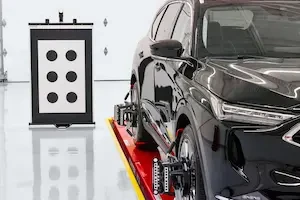
He estimated U.S. severity ranges from $5,200-$5,500 per vehicle, and of that number, $1,100-$1,300 is for the calibration required.
“Many people are really downplaying the calibrations, but the ADAS calibration piece is probably 18% of that massive change,” he said. “Part of the severity going up is that there's new technology, new charges for new procedures — not necessarily that something got more expensive.”
Gunderson discussed how severity involves the decision whether to repair or replace and said 3M has paid close attention to severity over the years.
“For me, this is just an opportunity,” said Gunderson. From a leadership mindset, he advised shop owners and managers to determine how they can work closer with customers and help them to understand how to reduce the cost of severity. He also recommended working with OEMs.
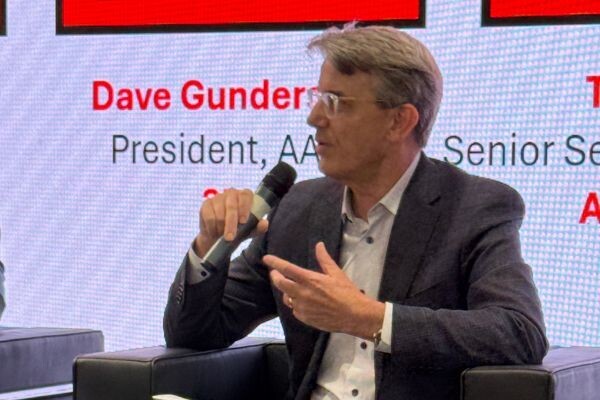 David Gunderson, 3M president of the Automotive Aftermarket Division.
With vehicles becoming more complex to repair, Boschetti said new products are helping the industry address challenges while improving process and quality, as well as the bottom line. He used the example of 100% digital color retrieval, automatic mixing machines and the use of AI and cloud-based solutions.
“Innovation is everything,” Boschetti emphasized. “Our role as paint manufacturers is to make the life of our painters easier, and innovation has definitely helped them.”
Ronak said OEMs are using technology to influence the color palette and create colors that consumers find compelling enough to purchase a vehicle.
“AI and data metrics are being utilized to determine which vehicles sell best with which colors,” he noted.
Ronak provided the example of matte finishes, pastel colors and super-fine brown metallics that can make the colors look “fantastic.” However, there are ramifications.
“What it's winding up doing is creating a significant increase in the labor required to reproduce that finish,” he explained.
When transitioning a non-metallic color, like a pastel, Ronak said, “It's extremely sensitive to the surface sanding and needs to be sanded to a much higher grit.” As a result, it’s creating challenges and extra effort in the vehicle’s repairability.
Sustainability in the Body Shop
The panelists addressed how sustainability is changing the repair industry.
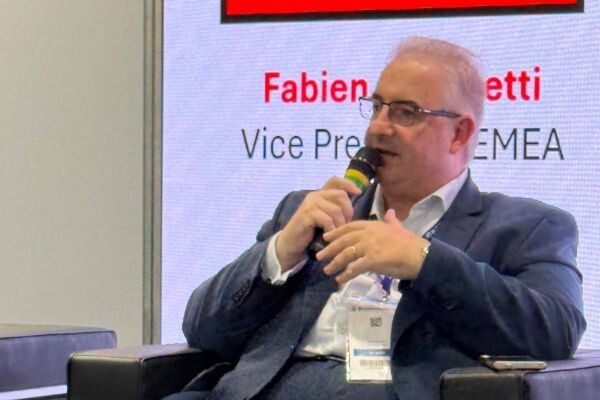 Fabien Boschetti, Axalta’s vice president of Europe, Middle East and Africa.
“Five years ago, 10 years ago, everybody was talking about sustainability,” said Boschetti. “This is something that is now in the body shop.” He recommended the industry look for ways to generate “more with less.”
“We need to do more throughput with more quality with less effort,” he advised. This includes reduced drying time, energy, waste, CO2 and VOCs.
Boschetti said Axalta makes an effort to provide customers with access to the latest technology while respecting the highest standards of sustainability. “We want to offer the best balance between the effectiveness of the product and sustainability,” he said.
Gunderson highlighted how 3M is working with its partners to create more sustainable products and processes.
“It's how we live. It's how we think. It's how we run our plants,” he said. This includes using solar energy to fuel 3M’s plants. Gunderson said the company focuses on developing sustainable practices, such as its inventory management process to improve efficiency for body shops, and new technologies like the 3M performance spray technology.
Impact of Technology
The panelists discussed how vehicle safety systems have evolved and the impact of radar and lidar on the refinishing process.
“Radar and lidar are lasers and radio waves that transmit waves in order to send and receive data,” Sorour explained. He said radar and lidar are affecting the raw materials used and new materials are being developed to be lidar-friendly. In addition, the paint used on these vehicles cannot be too reflective, and painters must ensure they do not overspray the clear coat or the sensors will get damaged.
 Tim Ronak, senior services consultant for AkzoNobel.
Ronak encouraged repairers to determine whether the car component can be refinished more than once and to research the OEM specifications regarding the formulations to determine if the transmissibility can be changed.
“Some of these formulas are very specific to radar transmissibility,” Ronak said. He recommended repairers research the OEM specification regarding the formulations to determine if the transmissibility can be changed.
He also noted the costs of some raw components that are for radar specific coatings or colors can be very expensive.
Gunderson said 3M products are developed with the consumer in mind to help solve problems, enhance productivity, profitability and safety.
He mentioned the company’s use of automation to help improve a body shop’s flow.
In addition to integrating automation, Boschetti suggested all levels of body shops integrate AI and digitalization to make their lives easier in this complex world.
“Everything should be made to make the life of the body shop easier; otherwise, they're going to be overwhelmed by this complexity,” he said.
With advances in vehicle technology, Ronak emphasized the importance of repairing cars correctly for consumers. “We can't lose sight of the fact that the consumer has an expectation that the vehicle is going to perform its job,” he said.
He said all systems need to be functioning as the manufacturer designed to ensure a proper repair. “We don't ‘try’ to fix it. We're either going to fix it or we're not,” he stated.
Ronak shared a video of a vehicle equipped with ADAS technology that suddenly stops when a young girl rides her bike across the street.
“That vehicle did exactly what it was supposed to,” he said. “The little kid was so low, the lady couldn't even see it over the hood of the truck.” He asked repairers to determine how confident they would be that a vehicle they repaired with that type of technology would work exactly as it should if their own daughter were in that situation.
Focus on Training
To help adapt to new topics such as radar concerns and learn how to use emerging products, Sorour noted the importance of training. Looking into the future, he foresees education will encompass a combination of face-to-face, online and virtual reality (VR) training.
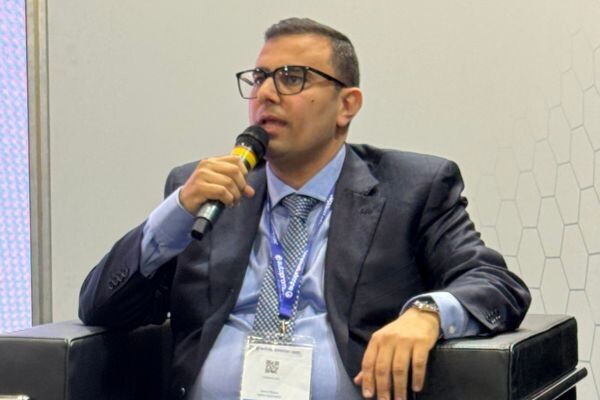 Khaled Sorour, international business director of Kapci Coatings Company in Egypt.
“You cannot do one without the other,” he said.
Kapci Coatings has been actively using VR.
“The most important thing is that you can do it everywhere and it’s sustainable,” he clarified.
Ronak agreed and said training is a “lifelong journey.” One of the benefits he mentioned about VR training is that it allows learning to occur with no material usage.
“There's really zero cost to doing that training, which is very different from in the past,” he said. “That's probably one of the single biggest things we have in our industry that helps people drive down that product usage — the waste generated as they practice.”
Gunderson talked about the evolution of education over the years. “One of the mindsets we've had to change is thinking not about product training, but skills development,” he explained. As a result, 3M opened its 15,000-square-foot skills development center in the U.S. to help customers obtain the proper training. Another center is opening in Europe.
Addressing the Global Talent Shortage
To help prospective employees understand the opportunities available in the collision industry, Gunderson said, “You have to start young — in middle school — and you have to educate the parents that this is a great career.”
What 3M learned early on, according to Gunderson, is the benefit of creating standard operating procedures (SOPs). However, he noted that shops need to take additional steps to assist technicians in adopting SOPs in an environment of rapid change.
“At the end of the day, it’s to make sure that we can attract people to the industry,” he said.
Similar to 3M’s approach of creating SOPs, Boschetti said the process should be as easy as possible to ensure employees aren’t required to have 20 years of experience to perform a task.
Advice for the Future
In light of recent trends, challenges and changes, the panelists talked about how businesses can adapt.
“My mom always said that flexibility is the key to life,” said Gunderson. “In this market and with all the dynamics we've seen, you need to be flexible.”
To continue thriving in the face of obstacles, he advised shops to look at what they can do differently and to challenge the status quo.
“What makes this industry so fun right now more than ever is there's so much rapid change that creates so much opportunity,” said Gunderson. “Change is an opportunity to get creative and to bring in new technologies.”
He foresees the market accelerating. “You can see that here in Europe, with the adoption of Chinese OEMs coming in with a really good value proposition,” he pointed out.
In response, he suggested businesses offer services that support shop processes. “The key to success is a meaningful partnership,” he emphasized.
He also recommended being open to asking questions. “It's OK to say, ‘I don't know,’ because you're surrounded by a lot of people who love this industry, want to repair vehicles the right way, and want you to stay in business.”
“You have to keep up with the pace of change,” advised Sorour. “Do not stop. Just keep learning to learn.”
He noted that doing business now is not like it was 20 years ago. Every year, new terminology is introduced, which Sorour said is important to learn. Training is key. “Know what your qualities are, enhance your learning and pay for your team to get the right information,” he said. He also recommended following the OEM guidelines.
When repairing modern vehicles, Ronak said shops should assume they have no perfect knowledge. “The OEMs have all the information you need before you touch a vehicle,” he said. “If it's newer than 2020, you should ask first by requesting the service information from the OEM.”
He cautioned repairers to understand that “you don't know what you don't know,” and to ask first and make sure the shop prepares the vehicle for its next collision.
“It’s probably the singular best time ever to be in this industry,” said Ronak. “There's so much opportunity.”
To help shops be profitable and sustainable, Boschetti encouraged the industry to be open to innovation. “Don't be scared about the change,” said Boschetti. “Behind every threat, there's an opportunity. The world is changing very fast, and I think we should be open to that innovation.”




Stacey Phillips Ronak