As vehicle technology advances at a rapid pace driven by EV platforms, ADAS systems and OEM repair requirements, collision repair education is under pressure to keep up. To bridge this gap, the I-CAR Principal Business Development Team visited Chicagoland in August to gain a closer look at how advanced processes are being applied in the field by OEM-certified repairers.
The meeting, hosted at JDM Collision, offered a live walkthrough of structural repair methods, calibration procedures, EV-ready infrastructure and advanced paint technology. Each stop on the tour illustrated how I-CAR Gold Class training and OEM standards come together in practical, technical applications that improve both safety and efficiency.
Future-Focused Paint & EV Curing
The visit began in the paint center, where participants examined the role of infrared robotic curing systems in modern refinishing. With a fully programmable robotic arm capable of curing panels quickly and efficiently, shops can meet OEM specifications while reducing cycle times and energy costs an especially critical factor for EV platforms, where thermal management and OEM compliance are non-negotiable.
Structural Repair & OEM Diagnostics
The group then moved to the structural repair facility, where a C8 Corvette was undergoing a rail replacement. Using the Celette fixture bench, technicians secured the car with OEM-specific fixtures to ensure the replacement rail aligned with factory tolerances.
To complement fixture-based precision, the shop also demonstrated:
• 3D CAD measuring systems for verifying alignment.
• Programmable resistance spot welding and glue pulling for advanced joining.
• Direct GM OEM diagnostic access, reinforcing the need for up-to-date factory procedures.
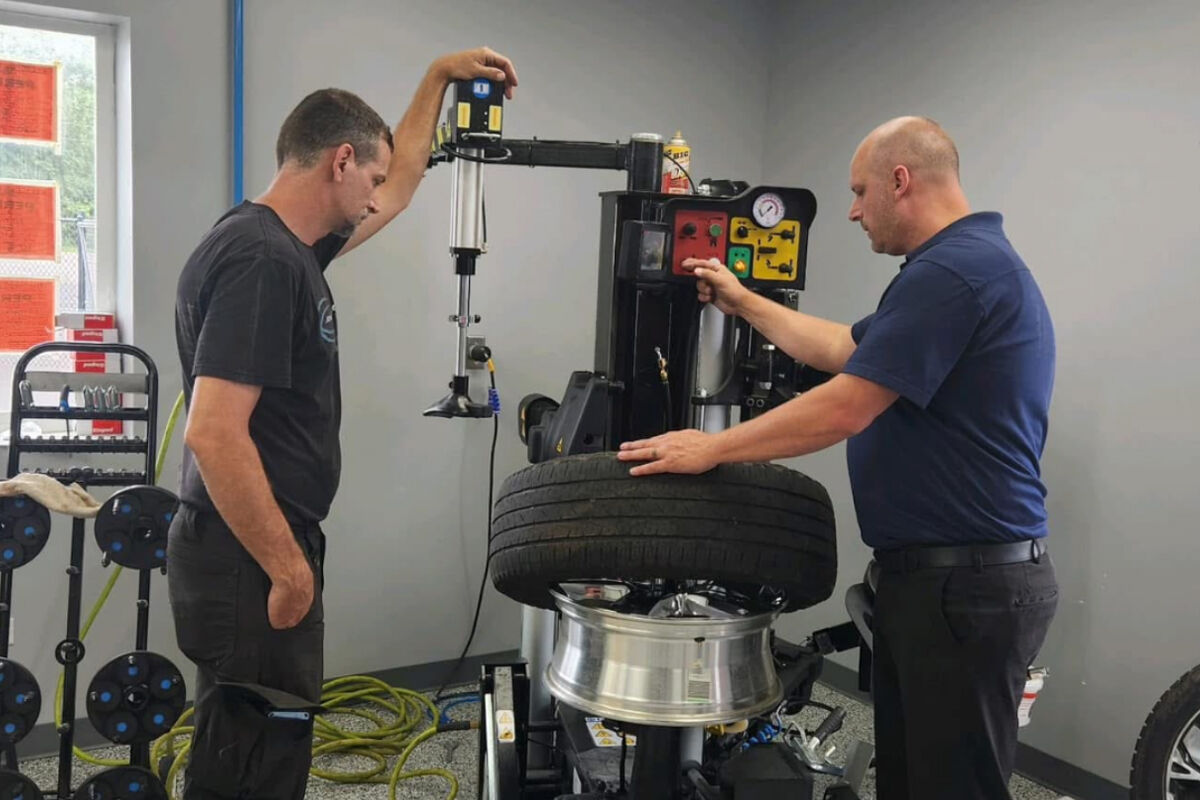
An additional highlight tied structural repairs to wheel and tire diagnostics. Using an advanced laser-accuracy balancing machine, the team saw how subtle collision forces can compromise vehicle safety. In the Corvette’s case, both front tires displayed flat spots from the car having gone sideways during impact — damage that might go unnoticed without precision inspection.
Integrated ADAS Calibration & EV Infrastructure
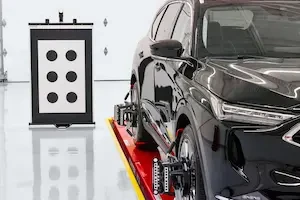
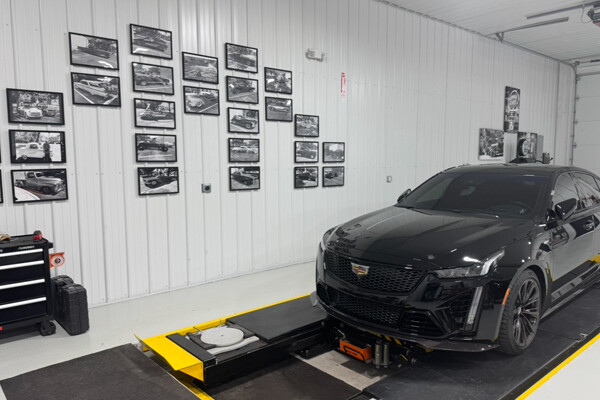
The calibration segment focused on integrating alignment and ADAS procedures. Participants reviewed how pre-alignment checks directly impact sensor calibration, ensuring cameras, radars and steering systems function as designed after collision work.
A new GM BrightDrop EV delivery van was on display, with OEM procedures pulled up live to demonstrate how repairers access structural and calibration guidance directly from the manufacturer. The demo underscored the importance of having factory access for EV and commercial platforms, where repair requirements are evolving rapidly.
The team also toured a dedicated EV repair stall, featuring Level 2 charging and high-voltage safety protocols, and discussed collaboration models with OEM-certified technicians for complex drivetrain removals on performance models.
OEM Integrity & Minimizing Outsourcing
Throughout the visit, the group discussed the growing need to minimize reliance on outside vendors. Examples included in-house tire services, calibration systems and dealer valet programs allowing certified shops to keep more of the repair process OEM-compliant, consistent and controlled.
Closing Discussion & Q&A
The tour wrapped up on a lighter note with a local treat of fresh-made gelato, giving attendees the chance to sit down, enjoy the hospitality and dive into a candid Q&A. Questions ranged from highly technical repair processes to the broader challenges single-shop operators face, particularly the difficulties of competing without up-to-date equipment, OEM support and I-CAR training.
“I was definitely in the hot seat,” said host John Melendez, smiling. “But I enjoyed the dialogue and the company. For me, the value was in showing how I-CAR training and OEM processes translate into safe, precise repairs — and hearing directly what the Principal Business Development Team sees as the future of our industry.”
Takeaway for the Industry
The I-CAR Principal Business Development Team’s visit underscored how OEM-certified repairers are combining Gold Class training, advanced equipment and strict adherence to OEM processes to meet the demands of today’s complex vehicles.
While the meeting was hosted at JDM Collision, the lessons extended far beyond one facility: the visit offered a roadmap for how independent operators can integrate training, technology and OEM collaboration into their daily operations ensuring safe, precise and future-ready repairs.
Key Themes from the Visit
• Robotic infrared curing supports EV-safe, OEM-compliant refinishing.
• Fixture-based structural repair demonstrated with a C8 Corvette rail replacement.
• Advanced tire inspection revealed hidden collision damage — flat-spotted tires from side impact.
• ADAS calibration tied directly to alignment procedures.
• OEM access highlighted through a GM BrightDrop EV demonstration.
• Reducing outsourcing protects OEM integrity and repair consistency.
• Open Q&A showed the shared challenges and opportunities for single-shop operators.
John Melendez is the owner and master GM Certified principal of JDM Collision in Thornton, IL, a Gold Class I-CAR shop serving Chicagoland with OEM-certified repair expertise.