



Crash Champions recently brought together more than 1,000 team members from across the U.S., from body technicians to corporate executives, in San Diego, CA, for its Champions Summit, a three-day event designed to empower attendees to take ownership in their roles as the MSO continues to pursue its growth and customer service goals.
The last time Crash Champions held the summit was in 2022, after it merged with Service King. This year’s event, themed “OWN IT,” offered a vendor expo, a lineup of influential keynote speakers, and information about new tools coming to optimize shop operations across Crash Champions’ 650+ locations.
The summit is one of several in-person learning and development events hosted by Crash Champions; it also brings together team members for its Montana Experience, GM Boot Camp, and Dale Carnegie leadership courses.
“We invest a lot in the team, because we can't do it without them,” said Matt Ebert, CEO and founder, in an exclusive interview with Autobody News before the summit opened Aug. 6. “That's why we're here this week. Building the culture, advancing our people, we think is a big key to our success.”
The summit was attended by about 650 store managers and 75 directors of operation, and — for the first time — about 50 body technicians and 30 service advisors.
“The theme of the conference is ‘own it.’ We want them to go back and own the results, take pride in it, like an owner would, and create value,” Ebert said. “Happy customers are valuable, happy team members are valuable. Happy insurance partners are valuable. Relationships are valuable. So beyond, say, the numbers on the bottom line, we think there's a lot of ways to own it and create value, and we want them to take those things back with them and kick ass.”
Ebert said transparency is crucial in building trust among not only Crash Champions’ customers and insurance carrier partners, but also among its employees.
“Day three [of the summit] is about the vision of what we want to do next and some of the new things that we've been working on, and so they'll get to hear that message directly from me or other executives,” Ebert said.
 Ebert, far left, with a senior leadership panel.
That eliminates some of the game of “telephone,” Ebert said, when news filters down to the store level with a spin on it.
Second, “they'll learn some great life skills,” Ebert said, and third, “it will get them excited about where the company's going and what we’ve got coming next.”
What’s coming next are tools to “simplify the business as much as possible,” Ebert said.
“It's a very difficult business. Whenever you can use technology to make the day to day easier, we're doing that,” he added.
The collision repair industry has an “abundance of data,” Ebert said, and so Crash Champions is developing tools to keep employees focused on the metrics that matter most.
“A lot of things can be broken down to just that basic level of how many cars are we out to fix this month, or this week, or tomorrow?” Ebert said.
The Value of In-Person Events
While other companies haven’t returned to in-person training since COVID, Crash Champions sees the value in it, said Bill Davidson, chief human resources officer.
“Matt [Ebert] just looks at it very differently, Davidson said. “It's so important, and I think a lot of companies are noticing that.”
It’s especially important for a company that’s growing as quickly as Crash Champions is, Davidson said, “to get everybody rowing in the same direction.”
There’s a place for remote learning, Davidson acknowledged, but in-person events like the summit do a better job keeping people present and paying attention. It also provides the opportunity to learn from peers.
Taking techs, service advisors and general managers out of their shops for a few days can cost in terms of shop production, but Davidson said Crash Champions believes it would cost more in the long run to not invest in their employees.
“You always see those things online where it's like, ‘What if we train them and they leave?’ and then there's the CEO that says, ‘Well, what if we don't train them and they stay?’” Davidson said. “And [Ebert] is to the T, ‘If they leave, they leave, but let's train them and let's create a really good environment to make them want to stay.’”
Crash’s Montana Experience — in which team members go through a leadership development program in Three Forks, MT — has an 85% retention rate.
“You have these technicians who, some of them are brought to tears, because nobody has ever invested in them personally,” Davidson said. “Yeah, you can go make a paycheck wherever you want, but they line up do it where people actually care about you more than just a number or a cog in the wheel.”
Crash Champions’ Founder as the Brand
Danny Briones, chief marketing officer, said consumers are “more willing to engage when they see a person’s face versus a brand,” so the company has positioned Ebert as the brand. He has recently been featured in profiles in Fortune and Enterprise magazine.
“Having Matt at the helm, being the only founder-led MSO in the space, it just gives it a different feel, a different vibe, in regards to what we're trying to accomplish, and that's the ‘people first’ approach,” Briones said.
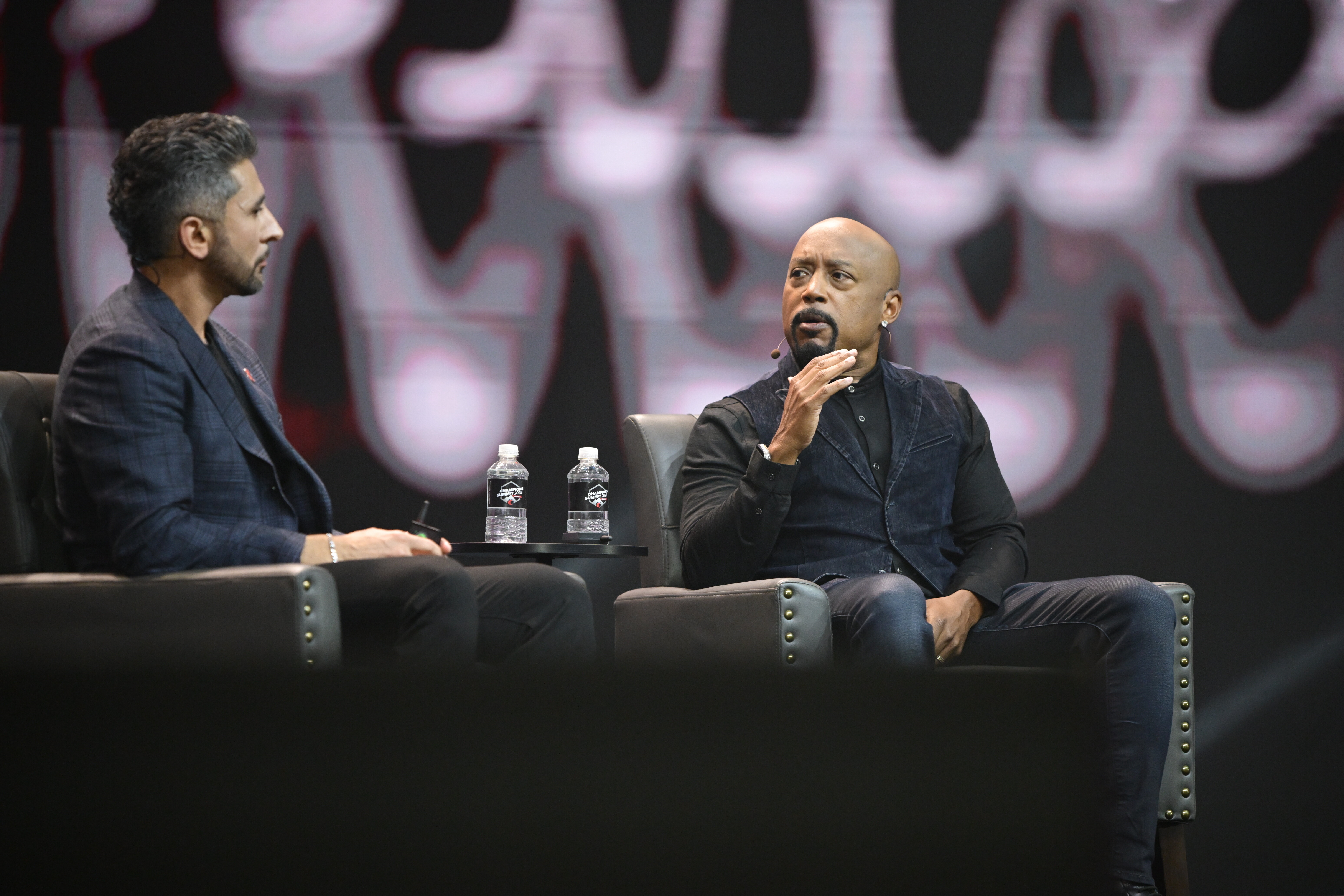 CMO Danny Briones, left, with keynote speaker Daymond John, right.
Ebert has grown Crash Champions from the single shop in Illinois he opened in 1999 to the third-largest MSO in the U.S. today, but he is far from the only example in the company of the growth potential in the collision repair industry.
Briones, for instance, was a General Motors technician for 10 years before finishing his college degree and joining Crash Champions.
Chief Client Officer Rachel Hutfless got her start in her dad’s shop. Chief Strategy Officer Ryan Downs started as a detailer. John Panagopoulos, COO of Automotive Technology Experts (ATE), also started in a shop. Heidi Foster began her career with Auto Club of Southern California as a claims consultant and is now senior vice president of operations for the West region.
“The examples are countless,” Briones said. Crash Champions offers a way into the industry with its STEP and ASAP apprenticeship programs, for technicians and service advisors, respectively.
Briones said focusing marketing efforts on Ebert as the “brand” also helps with hiring.
“They're out there looking for information on Crash Champions,” Briones said of prospective employees, “and they start learning about the CEO immediately. So the hiring process just got that much easier for us because they're like, ‘Hey, I know your CEO. He seems like a down-to-earth person. I like what he stands for. Where do I sign?’”
Vendor Expo, Keynote Speakers Round Out Summit
The Champions Summit kicked off with a vendor expo, featuring more than 30 automotive and collision repair vendors, including LKQ, 3M, ATE Enterprise and Sony-Honda Mobility’s AFEELA 1 concept.
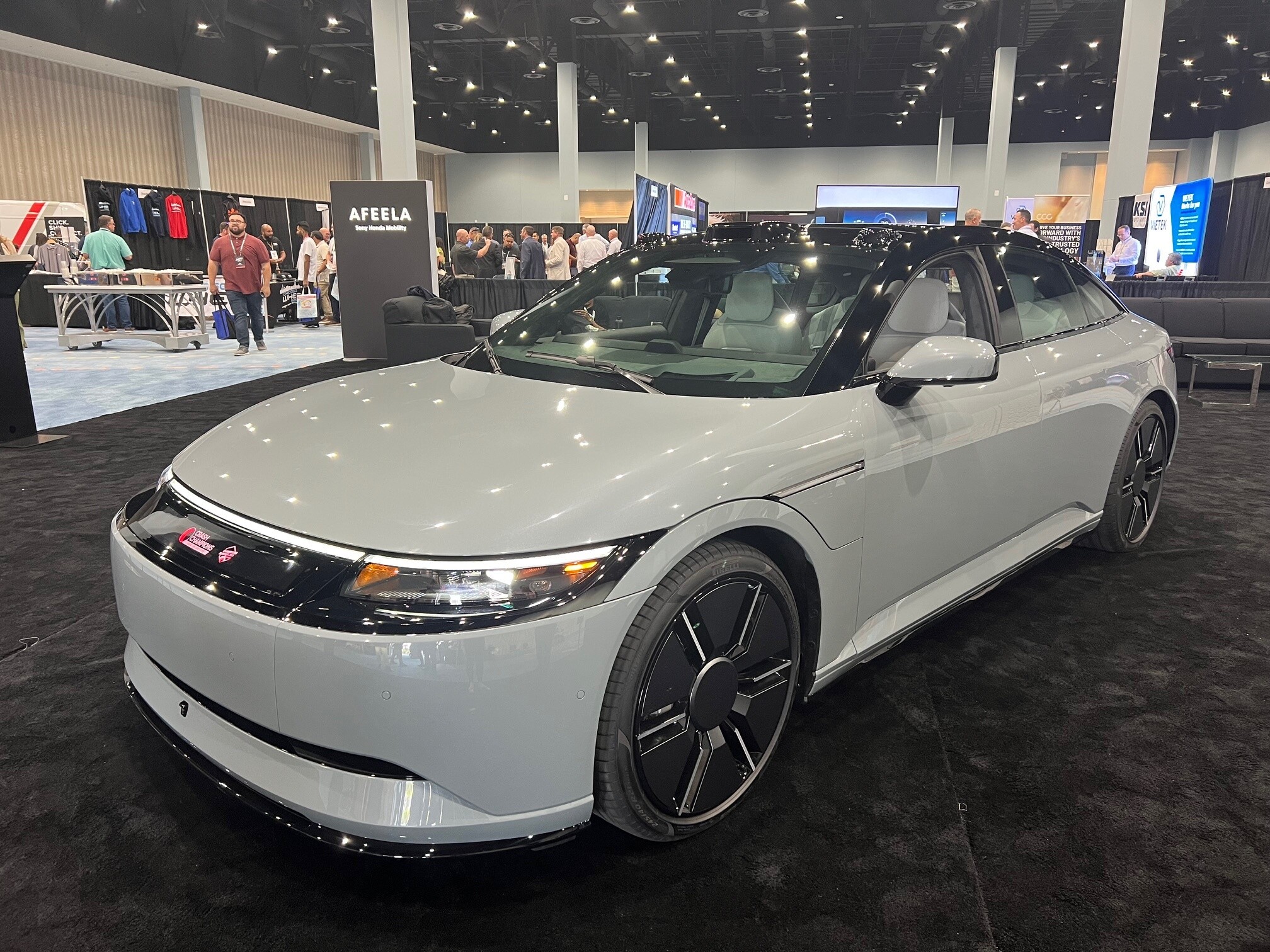 Sony Honda Mobility's AFEELA 1 on display at the vendor expo. Photo by Abby Andrews.
Downs, Crash’s chief strategy officer, said the vendors were those whose products and services are already used in Crash Champions’ shops.
“It's about building relationships with the products and suppliers that we use every day,” Downs said.
It’s a chance for those in the shops to provide direct feedback to the vendors. “There's so many layers of communication that sometimes things can get lost in translation,” Downs said.
It’s also a chance for vendors of a new product, like a software system that’s being pushed out to shops, to talk directly to shop employees about how it works.
“It's a really good one to one connection,” Downs said.
The summit’s keynote lineup featured serial entrepreneur and New York Times bestselling author Jesse Itzler; former NFL Pro Bowler Jon Dorenbos; president and founder of The Center for Retention, Clint Pulver; and headliner Daymond John, founder and CEO of FUBU and “Shark Tank” star.
Other prominent business leaders who presented included Yvette Burke of Enterprise Mobility, Ryan Mandell of Mitchell International, Ryan Taylor of BodyShop Booster, and Dennis Steele of Podium.


Abby Andrews