

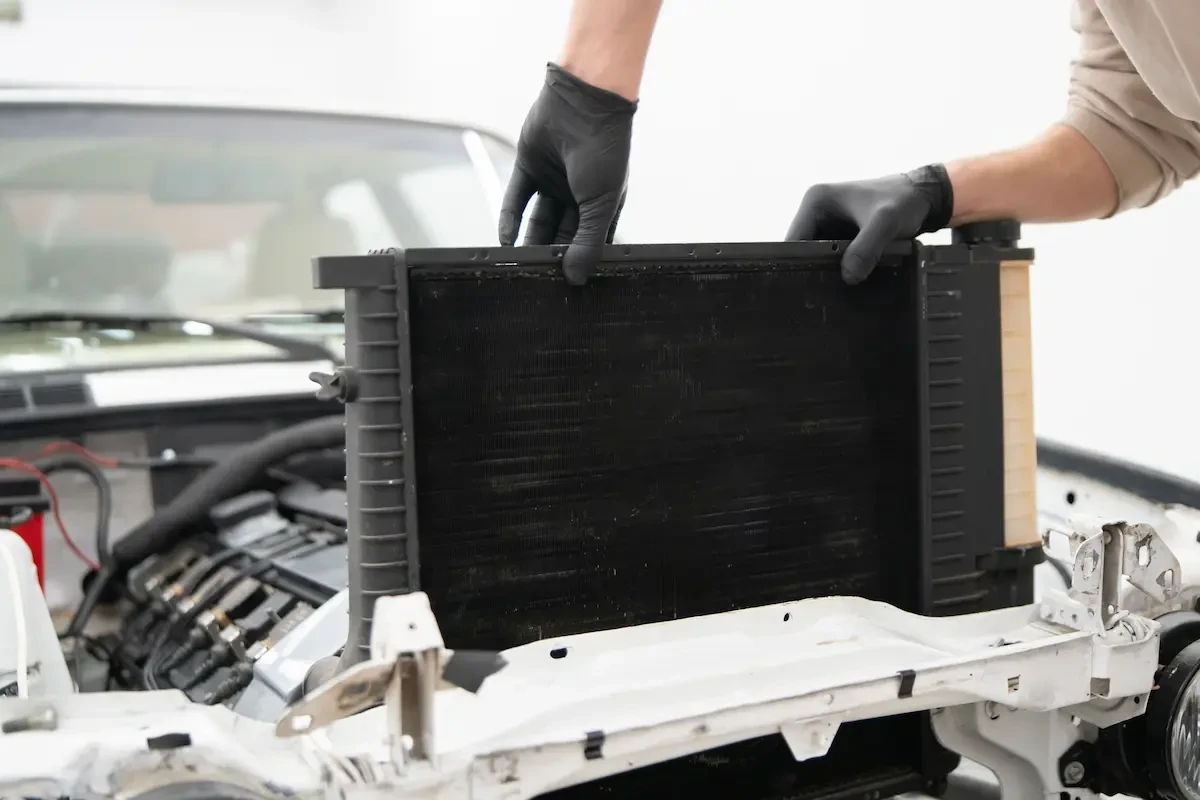
U.S. Customs and Border Protection officers in Norfolk, Virginia, seized two shipments of automotive radiators and dehumidifiers Aug. 25 worth about $292,000 combined. Authoriries concluded the shipments had entered the country under two people's stolen identities, the agency said in a news release.
The seizure adds to a broader pattern of auto parts fraud enforcement at the port, one that parts industry groups have separately been addressing as counterfeit and fraudulently documented parts continue to reach the automotive supply chain.
The shipments arrived in Norfolk from China and were first inspected by CBP officers in mid-August, when officers noticed inconsistencies between the paperwork used to import the goods and the identification behind it. The shipments were held, and officers asked the brokers involved for more documentation and proof of identity.
One shipment held 1,043 automotive radiators, listed on the paperwork at $5,775 and addressed to a recipient in Cheyenne, Wyoming. The other held 420 high-capacity, 70-pint dehumidifiers, listed at $10,080 and addressed to a recipient in Artesia, California. Once CBP's Center of Excellence and Expertise reviewed the shipments, its trade specialists valued the radiators at $110,176 and the dehumidifiers at $181,847.
CBP tracked down the two people named as importers of record on the shipping paperwork. Both said they had not placed the orders and did not operate companies that import goods commercially. The agency said it determined both were, in its words, "subjects of identity fraud."
CBP said both cases remain under investigation.
Part of a pattern of auto parts fraud at the port
The radiator and dehumidifier case follows a similarly structured seizure at the same port on June 23, 2026, when officers seized a shipment of automotive struts and shock absorbers appraised at $169,489, according to a separate CBP news release.
CBP's release on the radiator and dehumidifier seizure did not identify who ultimately would have received either shipment beyond the addresses listed on the paperwork, and it did not state whether the parts themselves were counterfeit, as opposed to genuine parts moved through fraudulent import documentation.
Parts industry groups have flagged the broader trend
Nationally, CBP's counterfeit seizures included more than 211,000 automotive parts in fiscal year 2024 alone, roughly double the prior fiscal year's total, according to figures from the National Intellectual Property Rights Coordination Center. Automotive Anti-Counterfeiting Council President Bob Stewart advised repairers to source parts from reputable dealers or wholesalers rather than e-commerce listings, particularly for back-ordered items.
The Certified Automotive Parts Association has also warned that some collision replacement parts sold on e-commerce sites are being falsely marketed as meeting its certification standards, misusing the organization's trademarked name and logo.
In a related development this month, eBay said it will remove airbag and airbag-inflator listings from its marketplace entirely starting Sept. 24, a change disclosed the same week NHTSA confirmed the banned counterfeit inflator had been linked to 11 deaths.





Lisa McArdle