


As the collision repair landscape evolves, industry leaders are looking for new ways to grow their businesses and engage employees.
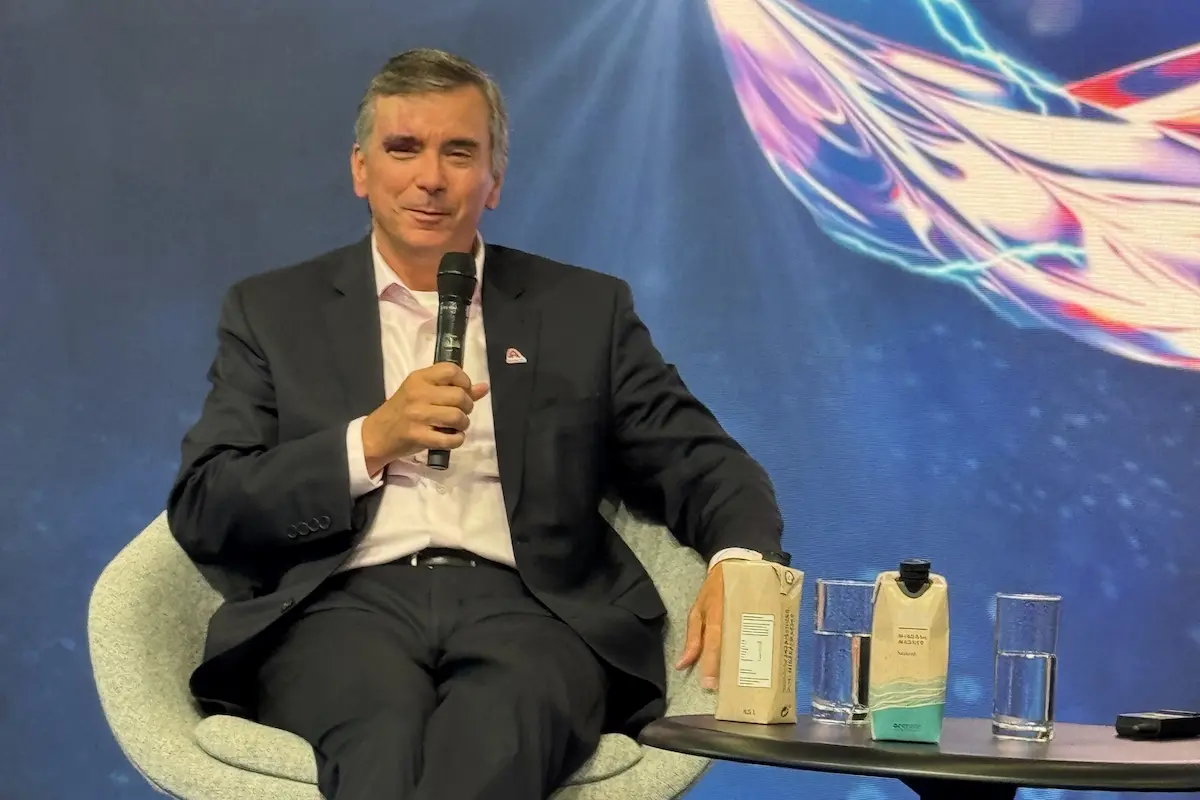
To help business owners and managers navigate the road ahead, Axalta President of Global Refinish Troy Weaver shared leadership strategies in a fireside chat with IBIS Worldwide’s Conference Director Robert Snook. Held in September during Automechanika Frankfurt, in Germany, their discussion was part of the International Bodyshop Industry Symposium (IBIS) program themed “Connecting Changemakers.”
1. Let go of a legacy mindset
Weaver began by addressing the velocity of industry change, driven by advances in vehicle software and artificial intelligence (AI), new legislation, supply chain disruptions, affordability issues and evolving car designs.
What keeps him up at night is thinking about the growing automation in the industry, whether that’s related to autonomous vehicles or advanced driver-assistance systems (ADAS).
“It is going to impact all of us and it’s happening at a pace that we've never seen before,” said Weaver.
Snook agreed. “Our skills have never aged as fast as they are aging today.”
In response, he encouraged the industry to let go of its legacy mindset.
“We tend to react to things that we've seen before,” Snook noted. “This is how we handled what we thought we did the last time a situation happened.”
Although it may have worked in the past, he pointed out that it might not in the future.
2. Be forward-thinking
With technology moving so fast, Snook asked Weaver if it’s impossible to keep up or if humans have the power and capability to be changemakers.
“I absolutely believe we have the ability to reshape what is in front of us, although there are a lot of new technologies coming at us,” said Weaver.
He advised the industry to look ahead 10 or 20 years, determine where it envisions itself and then take steps to move toward that goal.
“I don't think it's just a faster and more efficient way of fixing cars, selling paint, distributing paint, or whatever your specialty is,” said Weaver. “If that's the goal, that will only get us so far.”
“We need to be a changemaker, not a change watcher or a change victim,” observed Snook.
3. Communicate your vision to employees
To be a changemaker, Weaver said business owners and managers need to communicate their vision and explain why it’s better than the status quo.
He recommended adopting a TTCCC style: Think big, think bold, communicate, collaborate and celebrate.
Snook shared that people love leaders but will only ever tolerate managers.
“People will always follow a leader who can articulate a vision of where they want to be too,” he said.
“You need to have a belief and a team that’s willing to give more than they think they have to reach an objective,” Weaver said.
Ideally, everyone should be working toward one unified vision and goal.
4. Show you care
As a child, Weaver was taught early on about the importance of caring about others. He stressed that truly caring about employees is essential to effective leadership.
“Everything that you do every day as a leader should be making them better, not advancing your own career,” he emphasized.
Over the years, Snook has found that individuals become like the five people they associate with the most. “If you want to continue to grow, surround your life with five people who can help you grow,” he advised.
Weaver also challenged business leaders to view their employees as teammates.
“I have no employees,” he said. “I have 3,686 teammates.”
5. Encourage employees to speak up
Weaver mentioned that organizations whose employees just defer to a leader will not be the winners in this rapidly changing environment.
“No good leader blindly tells people where to go and they just do it,” he explained. “A good, high-performing, high-functioning organization has people pushing back and asking clear, good questions.”
As a result, he said leaders must create an environment where their employees feel comfortable speaking up.
“You can't do it alone and you don't have all the answers,” Weaver reminded attendees. “No matter how intellectual a leader thinks or wishes they are, they don’t have the intellect of a group that can think and provide that feedback,” he said.
“Stop being the smartest person in the room or you are not going to grow,” added Snook. “You're going to be [a] constraint of the business.”
Large teams have a strategic advantage because they can generate more ideas.
“Somewhere there is an idea that is a breakaway solution in an organization to make that company so much better,” he shared. The goal is to find a way to implement that idea and foster its growth.
6. Champion new ideas

Weaver said change starts with an idea from any level of the organization. “Whether it's your idea or someone else's, it shouldn't matter,” he commented.
However, he cautioned leaders that there will likely be 500 reasons why it can't be done.
“When someone tells you it can't be done, they're talking about their limitations, not yours,” Snook pointed out. “Just because they can't do it, it doesn't mean to say you and your team can't.”
“As soon as I hear it can't be done, I want to do it more,” added Weaver. Snook concurred.
“There's nothing more fun than doing what your people, your team or competitors told you couldn't be done,” he said.
7. Do things differently
In the past, Weaver said businesses strived to be better, faster and cheaper and were content if they achieved two of the three.
“Now, better, faster, cheaper is absolute table stakes,” he said. “You better deliver all three of those.”
To do that, businesses will need to think and act differently, according to Weaver.
He acknowledged that it can be challenging, even for currently successful companies, because they want to do more of what they have been doing.
“No matter how successful you are, you better be changing nonstop to stay number one,” he stressed.
“Have the courage to go beyond doing the same things differently and do different things,” Snook added.
8. Grow your team
Snook highlighted that 95% of what a leader typically achieves during their career comes from effectively utilizing the resources available.
“The largest resource is your team,” he said. “If you want to grow the business, grow the team and they'll grow the business for you.”
Weaver said the best way to build a high-performing team is to hire someone who doesn't think like you. “If they think like you, you're going to get what you already know; you're not going to get a new idea, a new way of thinking, a new way of approaching things,” he said.
Looking ahead, Snook said the industry will require people who have different skills.
“One of the big things we can start doing to get some traction is to stop just filling the vacancy,” he advised.
He used the example of “Bob” leaving after 15 years. “We go out and look for another Bob,” he commented. “Instead, we should be building a team for the next 15 years, not filling a vacancy from the last 15 — that world won’t exist anymore.”
9. Collaborate
Weaver described a changemaker as someone who not only has good ideas, but can also get the most out of a group.
To get the team on board and remove barriers to success, Weaver said collaboration is key.
“No one company or section of the repair industry is going to solve the problem on its own,” he emphasized. “It's going to take deep collaboration across all industry stakeholders to create a vision of what this industry can look like 20, 30 years from now and the steps we're all taking to get there.”
The better the industry is as a whole, he said it creates opportunity for more people and ultimately will create a healthy competition.
10. Be adaptable
Over his career, Weaver has found that the best leaders adapt to the individuals they lead, not the other way around.
“It’s really important for people to challenge themselves in how they are thinking about adapting to this new environment that we live in,” he emphasized.
Snook said that years of experience don’t necessarily prepare you for where the industry is headed.
Weaver agreed. “Those who ultimately adapt to this rapidly changing environment are the people who are going to ultimately win in the end,” he noted.
In three to five years, Weaver said the industry won’t be the same as it is today.
“It's no secret that volumes are declining almost everywhere around the world, with maybe a few exceptions,” he said. “We're all having to adapt to a changing environment, which is creating a lot more competition and a higher expectation of our customers.”
11. Be transparent
Weaver acknowledged that one of the toughest decisions a leader must make involves restructuring and letting someone go.
When sharing bad news, Weaver stressed the importance of not making up stories.
“People know it and they'll see right through it,” he said. “People don't respect fake people.”
Instead, he said to be honest and straightforward, and explain the reasons behind making the decision.
“Anything other than the truth will always undermine not only the people, but also the organization and a leader’s credibility for the people that are left,” he said.
Snook addressed this by adding, “A brutal truth is still the truth. If you argue with the truth, you lose your integrity with everyone who knows it was the truth.”
12. Continue to develop
Top of mind for Weaver in the current environment is ensuring leaders not only challenge their teams but also challenge themselves.
Early in his career, Weaver was fortunate to have strong leaders who invested time in helping him develop his skills. Thirty-five years later, he still has a coach today.
“We never stop developing as a person or a leader,” he noted. “You can't lead an organization if you're not constantly challenging yourself.”









Stacey Phillips Ronak