



Massachusetts body shops are hoping the third time’s the charm for a legislative bill designed to give residents a voice on the state’s auto damage appraiser licensing board.
Massachusetts General Law 26, Section 8G currently sets the five-member board under the division of insurance: two representatives from body shops, two from insurance, and a chair appointed by the insurance commissioner.
“The board should be like any other professional licensure,” said Evangelos “Lucky” Papageorg, executive director of the Massachusetts Auto Body Association.
Papageorg also emphasized that it’s not about money. Complaints to the board don’t revolve around cost; they address whether appraisers follow state laws and regulations.
“Had the appraiser followed regulation, there ought not to be a dispute,” he said.
A decade of one-sided rulings
In the Code of Massachusetts Regulations, 211 CMR 133.00 sets repair standards and 212 CMR 2.00 covers appraisal and repair. Papageorg said licensed appraisers follow these when writing an estimate.
Complaints can come from body shops, insurance, or vehicle owners. Examples are disagreements over parts or paint. The complaint (not on cost, but on licensing and following the regulations) goes to the board.
In the last decade, the board has ruled in favor of insurers 367-0. The board can vote 3-2 if needed, but often it’s not. Papageorg said parliamentary procedure means aa 2-2 vote kills a complaint. “The chairman doesn’t even have to vote.”
Similar bills have moved through committee in the last two sessions, making this a third formal attempt. The current bill most recently made it out of committee, Papageorg said, and was sent to its third reading. The prior two attempts never got a vote, but this time it’s possible before the session ends June 30.
H.4806 has about 40 co-sponsors, most from Commonwealth representatives, with a handful of senators, and bipartisan backing. The bicameral Massachusetts General Court has 200 members, 160 and 40, respectively; Democrats rule from a 7:1 house majority ratio, more than 5:1 in the senate.
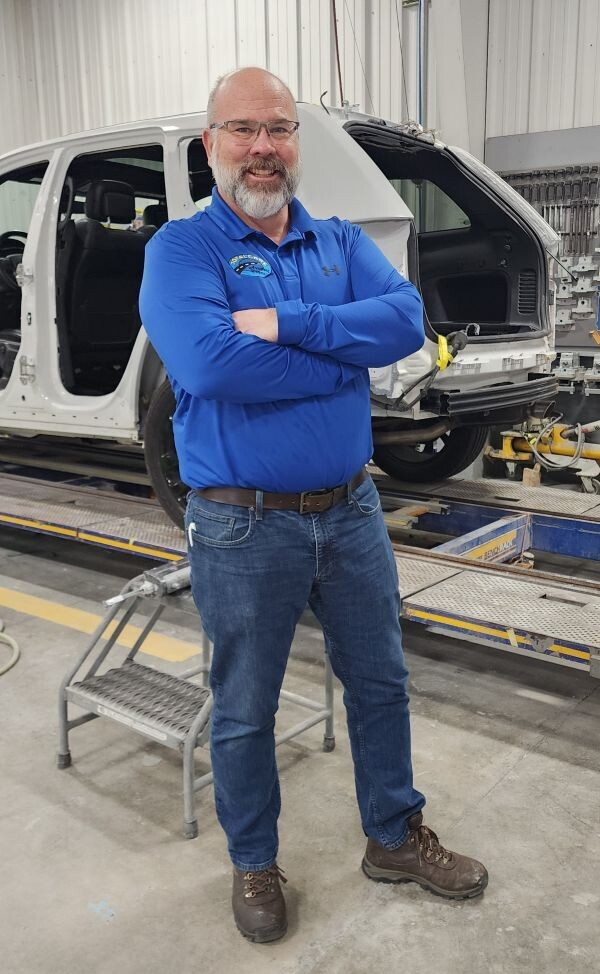 Brian Bernard of Total Care Auto Repair“We’ve had a lot of legislators co-sign,” said Brian Bernard, who owns Total Care Accident Repair in Raynham. “It’s bipartisan support on a small business issue. But it’s not easy.”
In the past, they’ve tried different ways to reach legislators: meeting them at functions or in Beacon Hill, the Boston neighborhood where the statehouse and General Court are located. In early January, AASP MA board members emailed legislators repping districts for their homes and shops.
Looking ahead
The bill aims for “meaningful consumer representation [and] reimbursement for safe and proper repairs performed in accordance with OEM repair procedures,” according to one copy reviewed by Autobody News. It also seeks to stop board complaints from being “routinely delayed, dismissed, or closed without substantive review,” asserting this harms vehicle owners, shops, and the state government itself.
This time, they also asked legislators to contact the insurance commission for “immediate corrective action to stabilize the board, restore balance, and ensure consumers are adequately protected.”
What can that do without the law, and why would Michael Caljouw, the commissioner appointed in October 2024, back a move that cuts his authority?
“They do pay attention,” Bernard said, about the government. “Their job is to solicit feedback; it’s what they need.”
Accordingly, Caljouw could “speak to legislators, the [licensure] division, look into the legislation. Seek first to understand … do the due diligence, turn over all the rocks. They know auto body guys are out here, they’ve begun to respond.”
So Massachusetts collision repair — which has advanced recently in other areas — is hopeful.
“26 8G was to ‘protect the public’ but they don’t even have a say on the board,” Papageorg said. He noted that if the bill becomes law, one of the new indie members would not just be a public voice but a consumer protection element appointed by the attorney general, currently Andrea Joy Campbell.
A small political quirk adds a hopeful note: the session ends four days before July 4, the 250th anniversary of American independence. Advocates may hope that giving people in the state more voice over repairs may fit the spirit of the times.
But Papageorg said it’s also simply one step to improving an industry.
“We need someone advocating for consumers to get a quality repair.”



Paul Hughes