


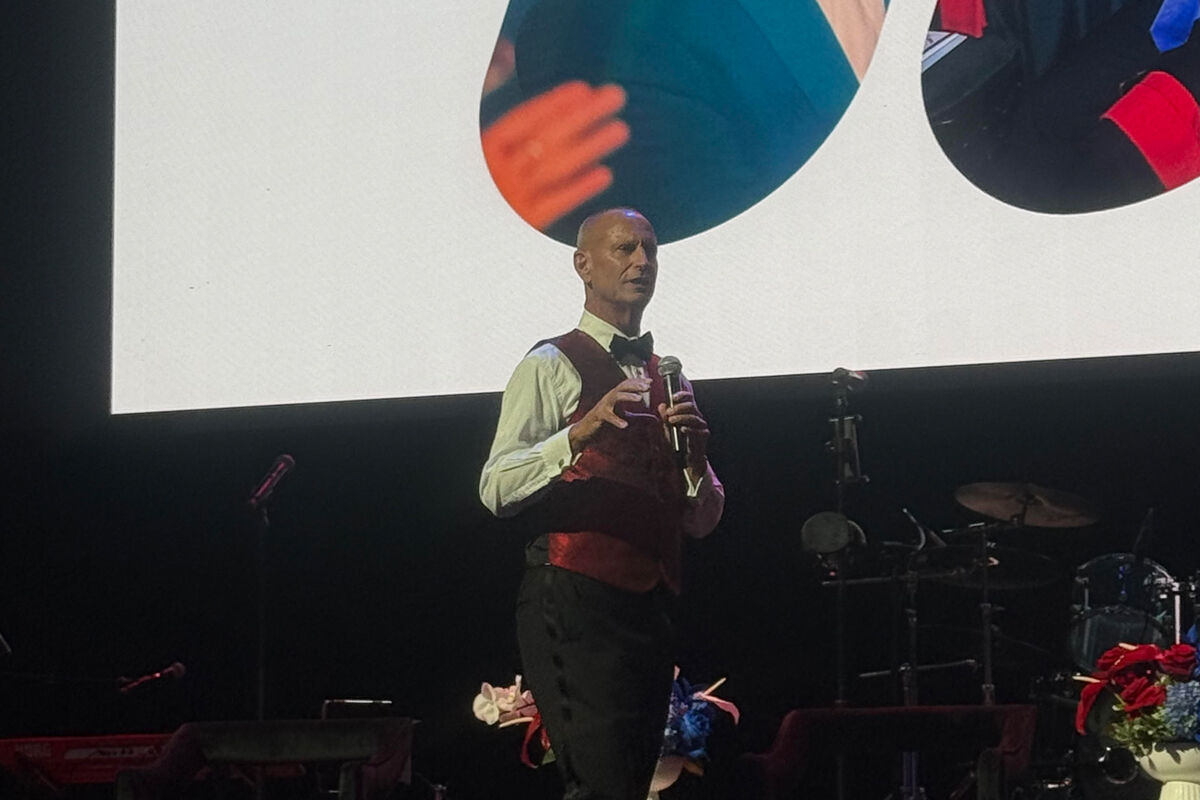
Despite a $1.5 million revenue shortfall in fiscal year 2026 (FY26), a Maryland-based nonprofit that trains justice-involved individuals to become auto mechanics is on track to graduate 14% more students this fiscal year compared with FY25, without deleting any of its course content.
Halethorpe, MD-based Vehicles for Change is on track to train 110 individuals and place them in jobs during FY26, which in Maryland runs July 1, 2025, to June 30, 2026, according to company President Marty Schwartz. That’s 16 more people than FY25, and 34 more than FY24.
“We didn't close any facilities,” he said. “We didn't let any staff go, and we did not reduce the number of people that train.”
In addition to its Halethorpe headquarters, Vehicles for Change employs 32 staff members and has training facilities in Baltimore, along with the Washington, D.C., suburb of Hyattsville, MD, and in Salisbury, on Maryland’s Eastern Shore.
Maryland state budget legislation enacted in May 2024 authorized the governor to appropriate $1 million annually between FY26 and FY28 for Vehicles for Change. However, facing a $3 billion budget deficit for FY26, state legislators started cutting various programs, and zeroed out Vehicles for Change’s expected funds in Maryland’s yearly budget bill for FY26.
Moreover, the nonprofit lost $500,000 in federal funds, translating to a total FY26 revenue loss of $1.5 million, composing one-third of the nonprofit’s training budget, according to Schwartz. The shortfall is disappointing for the company, whose staff were optimistic following the first-ever $500,000 state budget grant dedicated to the nonprofit in FY25.
Retaining Skill and Staff
How did the company maintain its course offerings even while facing such a shortfall?
It had equity in its headquarters building, so it sold the building and is leasing it through June 30, before it must find a new location by July 1. The nonprofit also eliminated its $10-$15 student stipends; cut its training day from 7.5 hours to five while removing morning and afternoon breaks; and started using more virtual reality (VR) in its training, according to Schwartz. The company plans to vastly expand its VR offerings and customer base outside Vehicles for Change in the near future.
Students now train from 7 a.m. to noon, which allows them to work part-time mechanic jobs in the evenings and pick up real-world experience, he said.
“It's a little more intense while they're there,” he said. “I think the training is better, and basically, we told our team, ‘You cannot use the fact that we went from an eight-hour day to a five-hour day. That's not an excuse to not graduate the same level of student.’”
Vehicles for Change trains students for all 10 Automotive Service Excellence (ASE) entry-level exams, including electrical/electronic systems, and maintenance and light repair, for instance.
Jaden Church, who graduated from Vehicles for Change’s training program in May, said he didn’t notice any degradation in the quality or performance of his education following the announced cuts. As Vehicles for Change’s 2025 “graduate of the year” for the Salisbury location, his perspective carries weight.
“I was actually in the class that was still getting stipends, and we actually were forced to graduate early due to the stipends being cut,” he told Autobody News during Vehicles for Change’s annual gala at Maryland Live! Casino in Hanover, MD. “Nothing changed on the teaching or the performance or anything like that.”
Even though his cohort graduated slightly early, Church still learned enough to earn his maintenance and light repair, engine repair, engine performance steering and suspension, and electrical/electronic systems ASE entry-level certifications.
While he aspires to become a master mechanic, Church is working as a service tech at the Pohanka of Salisbury car dealership, which sells Toyota, Nissan, Honda, Hyundai, Jeep, Dodge and other brands. Pohanka is a mid-Atlantic chain of dealerships.
Church has persevered to rise to the position of a rising star in the repair industry. Fixing cars started out as a hobby for Church, who described himself as a “backyard mechanic” before starting with Vehicles for Change.
Before he was certified, people would “come to me saying they want a part swap. I can do that. But now somebody comes to me and says, ‘Oh, I have something going on with my car.’ I'm better able to assist them, and actually point them in the right direction,” he said. Vehicles for Change “gave me the credentials to actually push to the next level.”
VR Helps Fill the Funding Gap and Expands to New Regions
Even amid the cuts, Vehicles for Change is redesigning its VR-based training, with the new version set to launch in October, Schwartz said. The technology has broad applicability, from helping students train for the ASE entry-level brakes and general maintenance exams to offering real-time verification of repair quality.
VFC-VR, as the platform is called, will expand its training in the areas of lift safety, battery maintenance and replacement, and fluid flushes, and will shift from a lecture-based format to a more hands-on user experience, Schwartz said. In January, the platform will add steering, suspension and alignments.
“Now, you can grab the engine and you can take the oil filter off of it,” Schwartz said. “You can look at the oil filter and you can pull the engine apart, because there's all these 3D models in there that allow you to be more interactive with the program.”
The platform is also partnering with tire equipment manufacturer Hunter Engineering to offer interactives featuring virtual tire balancers, tire changers, and alignment machines that mirror the manufacturer’s actual shop equipment.
The applicability of VR to real-life repair has come so far that trainers pull students off the headset and say, “’OK, take those brakes apart and put them back together,’” Schwartz said. “And they can do it.”
In the past, employers may have had to hire people who had credentials but not much tangible evidence of performance. VR creates a helpful bridge for employers and their staff’s careers that wasn’t possible decades ago, according to Schwartz, who compared the budding world of VR repair technology to his experience as an entry-level finance professional.
“When I graduated from Maryland, I had a degree in accounting. I was ready to go, right? So, I got a job as an auditor. They didn't let me go do an audit. I don't think I did an audit for like four or five months,” Schwartz said. “Somebody else was showing me, ‘This is how you do this. This is how you do that’….The employer has to have some skin in the game.”
In a repair industry “desperate for technicians,” VR helps ingrain skills in trainees’ heads, while giving them instant performance feedback, a benefit that real-world training doesn’t always provide, Schwartz added.
“Unless they watch you the entire time that you're doing it, you could make a mistake and they may not even know, because you get the brakes put back together, but nobody knows that you didn't put that brake back together correctly and then drive down the road,” he said.
Vehicles for Change offers VR training in seven states, and is “getting ready” to start in Michigan, he added, after the Detroit Department of Juvenile Justice recently purchased the VFC-VR system. Vehicles for Change will train the department on how to use the VR, but that department will administer the actual training.
The company is also working with “national employers and showing them the virtual reality training that we have to get them bought into giving these individuals as they graduate an opportunity for an interview,” Schwartz said.
High schools, community college training programs, and workforce development programs across the country are among VFR-VC’s other customers. In addition to its use in Maryland and its upcoming expansion to Michigan, VFR-VC currently boasts customers in Washington state; Washington, D.C.; Virginia; Texas; and, Indiana, according to Schwartz.
“Our goal is to train future technicians using virtual reality,” he added. “In the next two years, we'll be training 5,000 to 10,000 individuals a year using virtual reality. It's just people are starting to realize that this is the way that you can do training.”
Schwartz’s pitch is that VR is cost-effective. It costs $3,000 for a VFC-VR license, covering 120 hours of training, and the low price can help new mom-and-pops to scale up, he argued.
“To open up an automotive training facility that would train 30 to 40 people a year, you're looking at $750,000 to $1 million just to launch it, and then it's $700,000 a year. You can do the same thing with virtual reality for $30,000,” Schwartz said. For example, customers may purchase 10 VFC-VR licenses for $30,000 and train as many as 40 individuals, he said.
Internally at Vehicles for Change, VFC-VR is also somewhat helping to fill the ensuing dearth of used car donations that the nonprofit has seen in the post-COVID era. While Vehicles for Change received about 200 monthly donations before the pandemic, it now receives only about 70 per month. That’s about 10 more per month than a year ago, but “nowhere near where we were,” Schwartz said.
Schwartz and his team continue to advocate with Maryland state delegates and senators, as well as the office of Maryland Gov. Wes Moore, to secure the $2 million in total authorized funding for FY27-FY28 for Vehicles for Change.
The nonprofit’s argument is simple: If the state doesn’t fund training for formerly incarcerated individuals, it will pay for prison time due to recidivism.
“It costs the state somewhere around $50,000 a year to keep someone incarcerated,” Schwartz said. If Vehicles for Change trains 80 people, and 60 of them go back to prison, “that's $3 million a year for each and every year, right? That's not just $3 million this year; that's $3 million again next year and the following year and the following year and the following year that we're going to save the state.”






Brian Bradley