



As state lawmakers around the country return to session in January, collision repairers hoping to enact new laws might benefit from the experience of two state associations that posted legislative victories in 2025.
Justin Lewis and Jill Tuggle, whose autobody associations successfully lobbied this year for “right-to-appraisal” requirements in their states (Washington and Texas, respectfully), offered some advice during a Collision Industry Conference presentation to those working on legislation in their states.
Tuggle, who recently spoke with Autobody News about goals the Auto Body Association of Texas (ABAT) has set for 2026, said a big legislative lesson for her was the importance of collision repairers visiting with their state representatives regularly.
“If I could go back in time, I would empower our members to be consistently talking to their legislators,” Tuggle said, noting this should happen even when there isn’t a particular piece of legislation pending.
“Once a year, reach out to your local legislator and say, ‘Hey, I’d love to come in and talk to you. I’m a local business owner or someone who works at a company locally here, and these are the problems we have in our industry.’ Just talk to them about what it looks like to be a collision repairer or whatever segment of the industry you’re in. That kind of lays the groundwork. Then, when things start coming across their desk: ‘Oh yeah, aren’t you the guy who has been in here talking to me about this?’ All of a sudden, it’s a lot more of a personal and a real issue.”
Don’t wait for a bill to start the conversation
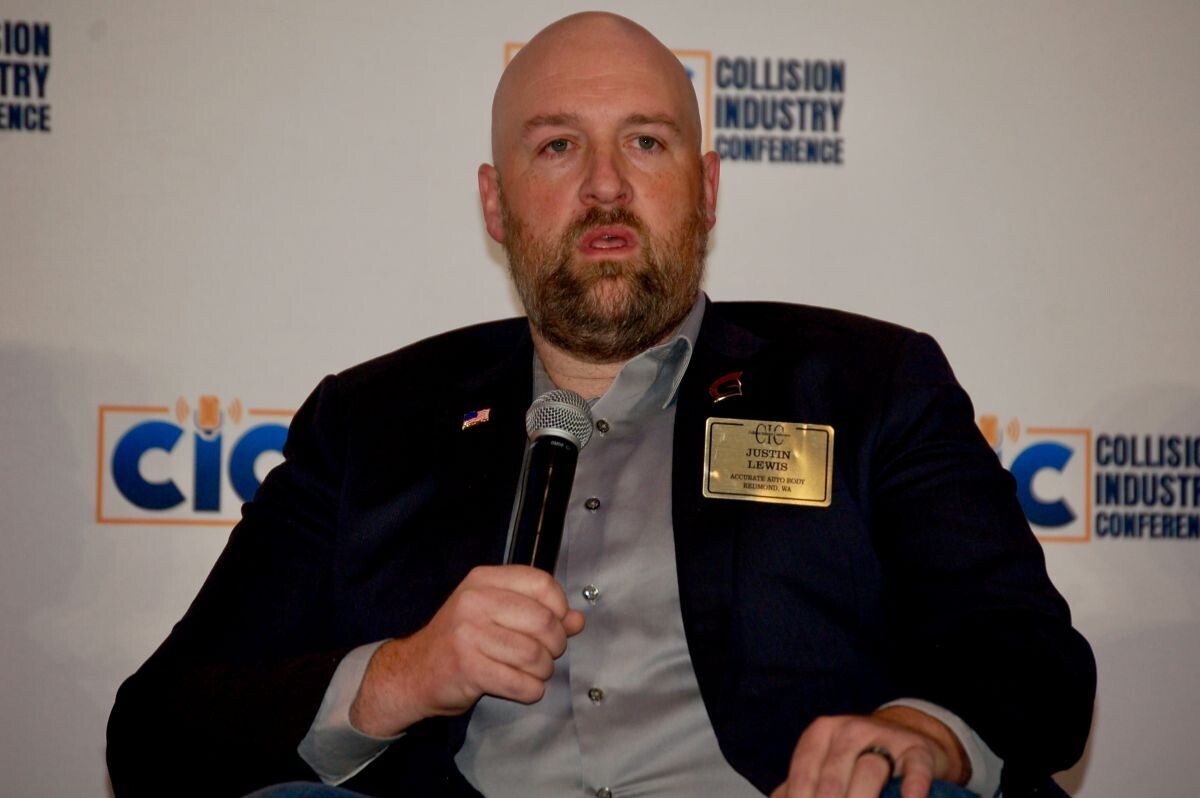 Justin Lewis of the Washington Independent Collision Repairer’s Association said working with a lobbyist helped his group navigate the legislative process.Lewis, a shop owner representing the Washington Independent Collision Repairer’s Association, agreed, noting that many shop owners may have multiple lawmakers they can visit: those representing the district where they live, and those representing the district where their business is located.
“‘Hey, I live here. I’m your constituent. This is important to me,’” Lewis suggested saying. “Or, ‘I run a business in your district. This is what’s happening.’ Just having that conversation once a year, like Jill said, bringing this stuff to them and saying, ‘Here’s the current trends we’re seeing. We might bring some [legislation] about this later.’ Legislators get hundreds, if not thousands, of bills coming across their desks every session. If they come across something that you’ve been talking to them about, that your customers have been talking to them about, they’ll go, ‘Wait a minute, I’ve heard something about this. Let’s look more into this.’ It’s a trigger for them to try to help fix the problem.”
“Having phone calls and letters from constituents is really more powerful than I ever thought it was,” Tuggle said. “One of the things that was initially a little discouraging for us as an association was that we were going up against some really powerful lobbies, and we didn’t have a whole bunch of money in the bank. So one of the things that we knew we had that some of our opposition who resided in another state did not have were local constituent voices. We had a landing page where [members] could easily type in their address and it would pull up who all of their legislators were, and it had a preformulated letter that they could tweak and make it their own and send it in to voice their opinions. And those things made a difference. They really did.”
On finding a lobbyist
Lewis said this year’s bill was not the first time his group had pushed for such legislation.
“When we first started, it was just a couple of us handling a lot of it,” he said. “We were making flyers to put on the back of our computers. We wrote estimates with QR codes to try to get people fired up. It was not easy, and it was not super successful. Even getting association members to buy in and do something was extremely difficult. This year, we had a lobbyist, which was very, very huge for us. We never had that before. We got really lucky because our lobbyist was actually one of my customers who came in and saw my flyer and asked about it. I explained to him what it was, and he said, ‘I’m actually a lobbyist for an OEM here in Seattle. Let’s talk.’ We had that conversation and brought him on, and it was night and day how much further we got with this bill.”
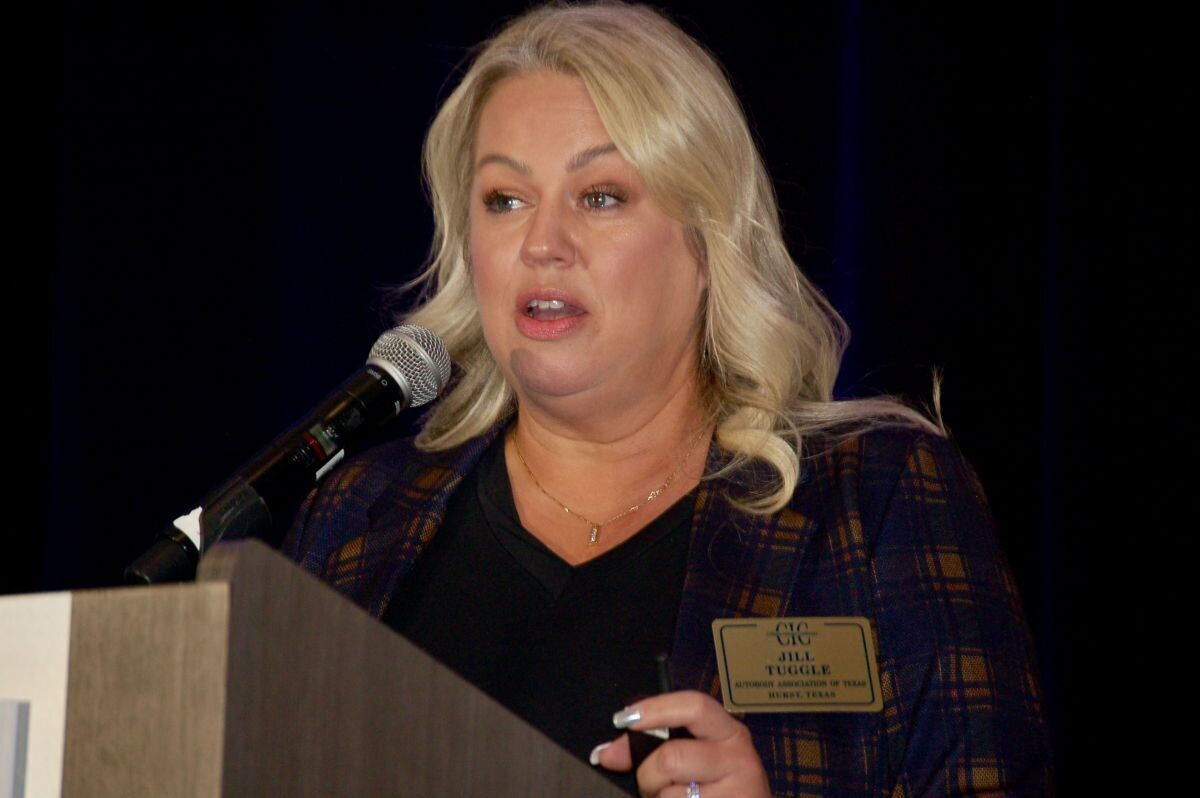 Jill Tuggle of the Auto Body Association of Texas said collision repairers should visit their state representatives regularly to talk about the industry.Tuggle said her group also recognized that it needed the help of a lobbyist after its prior legislative efforts had failed.
“We submitted legislation through a local House representative and tried to go that route without a lobbyist the first year,” Tuggle said. “When we realized we were at the point that we needed a lobbyist, we started asking around. I think that’s a great way to do it. Ask people who are involved at the Capitol. They know who the good ones are; they know who’s going to be on our side. Some have lobbied for or against insurance companies, or sometimes have lobbied for or against auto manufacturers. So it’s important to find somebody who sort of understands our industry a little bit because they’re going to be in charge of explaining to all of the legislators what the issue is.”
Impact of party control
The political makeup of Tuggle’s and Lewis’ states could hardly be more different. Republicans hold a majority in both legislative chambers in Texas; Democrats control both chambers in Washington state. The two discussed what that meant for their efforts to enact right-to-appraisal legislation.
“When we came into it, we had strictly Democratic support,” Lewis said. “We didn’t have a single Republican that was looking at it. They would talk about it, but it wasn’t until we had both parties involved, with the insurance lobby and us mostly in an agreement of where we were, that everybody was able to buy into it. So it was extremely difficult to get to that point. That was our challenge, was reaching out to Republican districts. I live in a Republican district, so reaching out to my senator and my representatives, it was extremely difficult.”
Tuggle said the legislative effort differed in her state.
“Because our state is largely Republican, so are a lot of our members,” she said. “So because they had already been doing some grassroots work and had relationships with their local legislators, we almost had the support that we would’ve had to work twice as hard for from the Republican Party, just because the Democratic Party just gets behind this issue a little bit easier.”
The rulemaking process, which occurs after a law is enacted, is very important to making the appraisal process work effectively, Tuggle noted.
“That’s a big part of it,” she said. “We didn’t just need the right to appraisal included in policies. We needed some of these parameters and guardrails on it. The time triggers were a really big one because we were seeing [the process] dragged out over a year sometimes. So some of the rules around right to appraisal are very important pieces of the legislation.”




John Yoswick