



As vehicle technology continues to advance at a rapid pace, the collision repair industry faces a clear reality: yesterday’s skills are no longer enough to ensure safe, proper repairs. Advanced driver assistance systems (ADAS), electrification, new materials, and increasingly software-driven vehicles are raising the bar for technical expertise — and reshaping how the industry approaches training, workforce development, and collaboration.
 Kyle Thompson, president and CEO of I-CAR. (Photo courtesy of I-CAR)According to I-CAR President and CEO Kyle Thompson, that growing complexity is directly influencing I-CAR’s priorities as the organization looks ahead to 2026.
“Simply put, today’s vehicles demand more technical expertise,” Thompson says. “Vehicle complexity increases the need for education and training.”
Three Priorities Driving I-CAR’s 2026 Strategy
As I-CAR plans for the coming years, Thompson points to three key areas of focus: increasing industry participation in education and training, delivering instruction that reflects real-world repair complexity, and building sustainable pathways for long-term workforce development.
At the core of those priorities is safety — both for consumers and for the technicians performing repairs.
“In 2026, we’re focused on attracting more shops to education and training in pursuit of driver safety,” Thompson explains. “That means offering courses that address complex repair methodologies, particularly around ADAS, EVs, and advanced materials, while also ensuring the industry has sustainable solutions for a long-term talent pipeline.”
Evolving Training for Software-Driven Vehicles
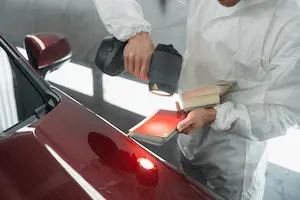
To keep pace with modern vehicles, I-CAR continues to expand and refine its curriculum. Training now places increased emphasis on electrical diagnostics, EV systems, ADAS calibration considerations, and the use of advanced materials — all areas that demand precision and up-to-date technical knowledge.
 Hands-on training is essential as repair complexity continues to grow. (Photo courtesy of I-CAR)But it’s not just what technicians are learning; it’s also how they’re learning.
“In 2026, we’re making it easier to train on-demand using advanced learning technology like virtual and mixed reality,” Thompson says.
I-CAR’s credentialing model also reflects the industry’s reality that learning can’t stop after a single class or certification.
“Our credentialing structure emphasizes ongoing education because technology advancements are constant. It’s not a one-and-done proposition,” he adds.
Partnerships play a key role in that approach. Thompson points to I-CAR’s collaboration with Ford on On-Target training courses as an example of bringing OEM-specific instruction directly to technicians. Meanwhile, the I-CAR Repairability Technical Support (RTS) Mobile App allows technicians to access repair procedures and technical bulletins at the vehicle, reducing downtime and uncertainty on the shop floor.
Addressing Workforce Challenges with Structure and Scale
Workforce development remains one of the most pressing challenges facing collision repair — and one that Thompson says requires a long-term, coordinated response.
“Attracting and retaining qualified technicians is a challenge that impacts every corner of our industry,” he says. “Addressing it demands a long-term, structured approach.”
Programs like I-CAR’s national Registered Apprenticeship Program and I-CAR Academy are designed to provide that structure. By combining paid, hands-on experience with industry-recognized training and credentials, these initiatives create clearer entry points for new talent and more defined career pathways within the industry.
In addition, I-CAR continues to expand entry-level training opportunities and connect individuals to careers through Collision Careers, helping shops build teams while strengthening the industry’s overall talent pipeline.
“The shops that invest in workforce development today are securing the future of collision repair,” Thompson notes.
What Shop Owners Should Be Doing Now
From I-CAR’s perspective, Thompson says shop owners who want to remain competitive must treat training and technology adoption as core business strategies, not optional expenses.
“Shop owners need to make training, technology adoption, and a learning culture core parts of their business strategy,” he says.
Pursuing Gold Class recognition, Thompson adds, remains a tangible way for shops to demonstrate that commitment.
“It’s a competitive advantage,” he says. “It signals to insurers, OEMs, and customers that a shop has invested to provide proper repairs that keep families safe.”
Today, more than 11,000 shops nationwide have achieved Gold Class status — a number Thompson says continues to grow as shops recognize the value of investing in their technicians.
Collaboration as the Industry’s Foundation
As vehicle technology becomes more complex, Thompson believes collaboration across the industry is no longer optional — it’s essential.
“I-CAR serves six segments: OEMs, insurers, educators, suppliers, information providers, and collision repairers,” he says. “Vehicle complexity means no single entity can solve these challenges alone.”
That collaborative model underpins I-CAR’s long-term vision: ensuring that every person involved in collision repair has the information, knowledge, and skills required to perform complete, safe, quality repairs for the benefit of the consumer.
“With our Gold Class shops leading the way,” Thompson says, “we’re deepening relationships across the industry to make that vision a reality.”




Leona Scott