



Al and Rachel Thomas closed up their body shop on a late September evening in 2024, expecting to wait out the wind and rain from approaching Hurricane Helene and resume business the next day.
Taking in the damage
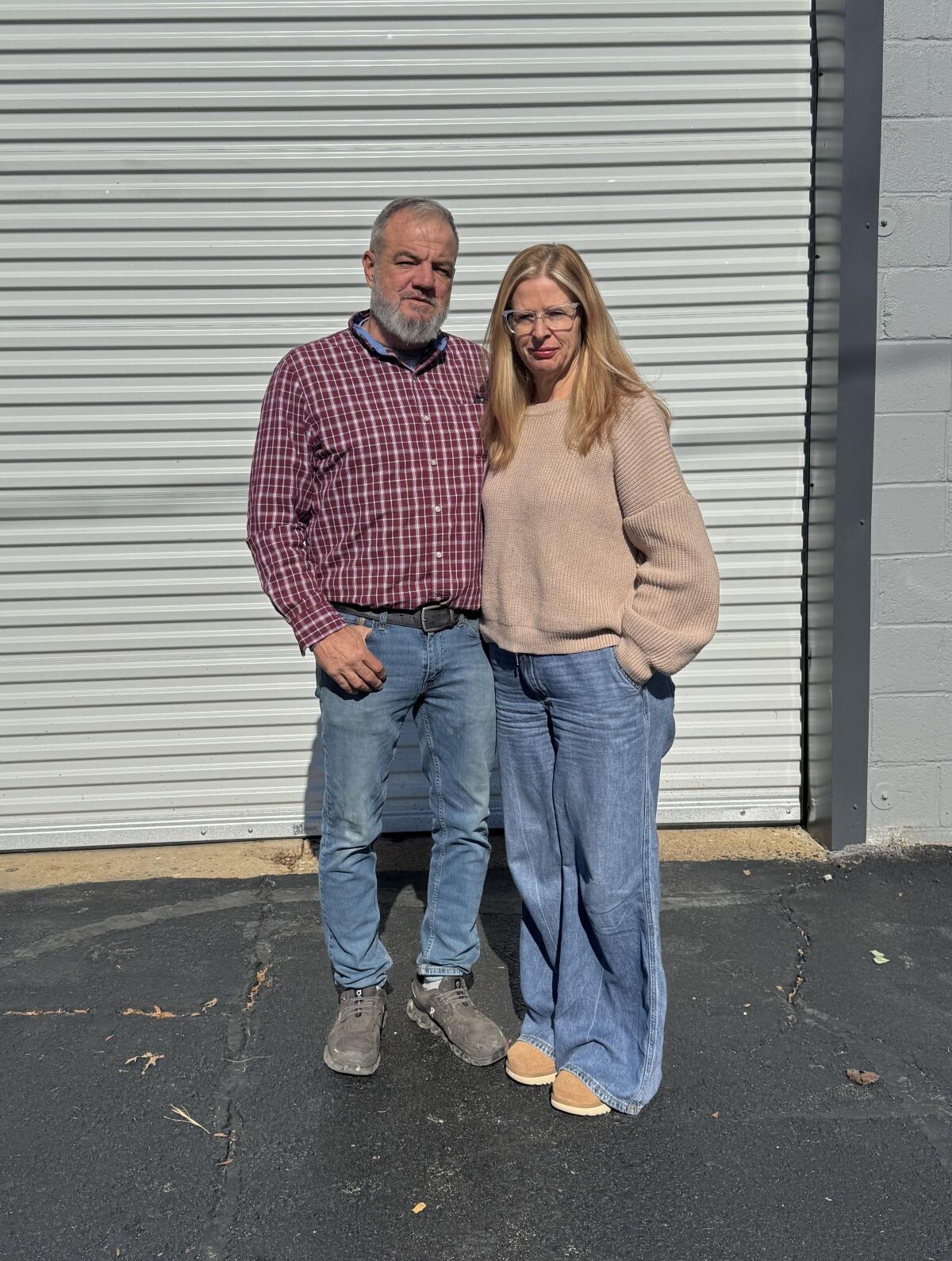 : Al and Rachel Thomas, owners of Al’s Paint & Body in Douglas, GA.Their independent shop in rural Douglas, Georgia, had supported their family for the past 20 years, and the community depended on them to keep their daily drivers on the road. Al ran the shop, and Rachel handled insurance; Al’s Paint & Body had been at its Irwin Street location for the previous 14 years. Rachel had plans to get payroll for their four employees wrapped up for the week, but as she attempted the short drive from home to the shop that morning, she took in Helene’s detritus. What was usually a 15-minute trip took two hours, and she had already gotten a view of the community’s efforts to make the roads passable.
“I could hear chainsaws already outside when we got up because there’s only one way in and one way out of our neighborhood. They were already cutting and moving trees and had tractors out,” she told Autobody News, audibly emotional more than a year later. “I made the corner down the road, and I could see the side of the shop. The whole back of the shop was gone. All the roll-up doors were out of the building. At that time, cellphones were working. They only worked a couple of hours that morning. I went ahead and called Al to let him know it was bad.”
Picking up the pieces
Helene had hit the Florida coast and pummeled its way through Georgia, Tennessee, and the Carolinas. The trail of fatalities and injuries and damage to homes and businesses the storm left in its wake made it hard to forget.
The Thomases arrived at their shop to find that the back of the concrete block building had collapsed onto their rollback truck. Equipment and tools were strewn everywhere, and 18 of the 19 vehicles on the property were damaged, thanks to fallen roof trusses and blown-in roll-up doors. Fallen blocks had crushed a paint booth, and half the roof lay in the field next door.
They asked their employees to come in to help locate missing equipment and car parts.
“There were hoods over here and doors over there and fenders over here. So, we all got together and found, ‘OK, this vendor goes to this car, this door goes to this car, and I compiled everything together,” Al said. “We had generators up here — no power.”
Meanwhile, community members started appearing.
“The community was pulling up, too, at the same time,” Al said. “You know, ‘My roof is caved in on my truck,’ wanting me to look at the cars.”
There was a lot of broken glass, so the staff began wrapping damaged windows and windshields in adhesive plastic — all free of charge. They even advertised the service on social media. When they ran out of plastic, they bought more.
‘We didn’t know if we were coming back’
As those first days passed, the Thomases took stock of the damage, helped their neighbors where they could, and began to turn their attention to their own predicament. They hesitated to predict the shop’s future; they even considered selling the property.
“We didn’t know if we were coming back or not,” Al said. “We really contemplated, ‘This might be the end. It might be over for us.’”
But the community encouraged them to rebuild, so they began taking steps, working with their insurance company, to determine what they could replace or repair and how they could take care of employees and customers.
“We had a good insurance policy, a good agent. And we learned a lot through that. We know a lot about collision insurance. We educate customers about that every day. But we didn’t know much about buildings and about the process of repair,” Rachel said.
Things didn’t go back exactly the way they had started. The two paint booths they had before the storm decreased to one as they maxed out their policy, but they upgraded the new one to a heated unit.
They found they had benefits that facilitated employee retention, allowing them to pay their technicians and receive partial reimbursement while the shop was down. They had actually begun writing employees’ checks before this discovery to hang on to them. Insurance also allowed them to pay a portion of the deductibles on the damaged cars. A donation from the Georgia Collision Industry Association helped them pay off the rest. The Collision Industry Foundation sent relief fund money, too, which helped with other expenses.
Strong policies and relationships
It’s important, Rachel said, to truly understand your policy when planning for an instance like this. The Thomases have a yearly sit-down with their agent at renewal time to go over theirs; they’re glad they kept a certain amount of coverage in place, even when it seemed unnecessary.
“We were actually, two months before the storm, wanting to change our policy — like, ‘How can we cut dollars?’ And he was like, ‘Rachel, you really need to keep this here and here and here,” she said. “Just really to know what’s on your policy and make sure you have every piece of equipment on there. Even if you think it’s insignificant, just think about what it would cost to replace it.”
Relationships were also important as the couple began moving forward.
There were eight cars on the premises that the Thomases felt they could finish the repairs on. So, they called a fellow shop owner about 30 minutes away in Alma. Reggie Screws with Reggie’s Paint and Body allowed them to repaint and remove scratches using his shop’s paint booths and materials. They reassembled the vehicles there before returning them to customers.
“It worked out,” Al said. We still communicate back and forth quite often in relation to insurance stuff. He’ll call me, ask me, ‘How do you do this? How do you handle that?’”
Customers factored into the relationship picture, too. While Al was in Alma, Rachel painstakingly handled the process of releasing vehicles and information to those who wanted to pick them up and begin dealing with storm damage to their cars. She had to do all of this without internet, which was down for months after the storm.
“Our customers were very understanding. They were like, ‘Hey, I know,’” Al said. “We didn’t really have too many problems with complaints.”
Coming full circle
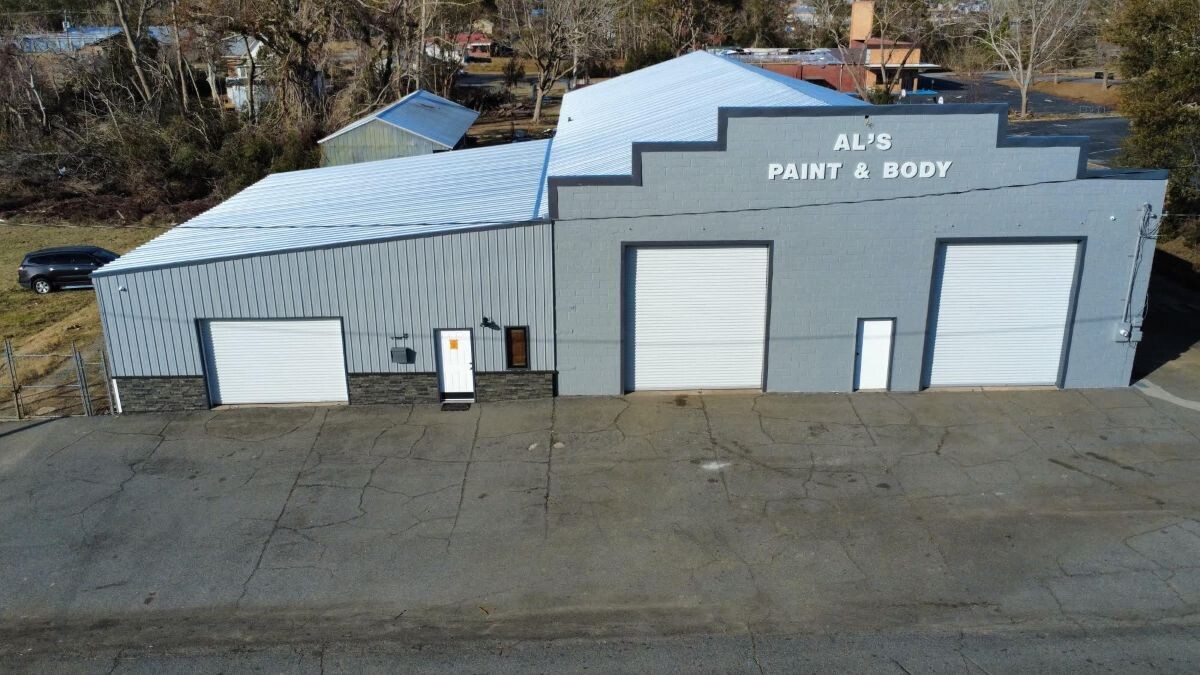 The final result of the rebuild at Al’s Paint & Body after storm damage from Hurricane Helene.They’re still finding things — small tools, paint guns — that were heaped into the debris during cleanup. They reopened on Aug. 15, a Friday. They figured they could ease back in that way. The community soon found out and surrounded them with cars they’d waited to have repaired until the Thomases could handle them. They currently have a three-month backlog, and well wishes are ongoing.
“We’re writing estimates every day, and people are still stopping in, and they’re all like, ‘Man, I’m glad to see y’all back, and your building looks great,” Al said.
A full-circle moment occurred when a customer, whose truck had been damaged by one of the shop’s roll-up doors during the storm, came back to have the vehicle fixed.
“It did $13,000 worth of cosmetic damage,” Al said. “He waited for us. And we just got done with his truck. … When he came back, we got to fix it all, and he was one of the first ones we took in.”

Elizabeth Green