

It’s been a challenging year for many in the industry, with claims counts down, total losses up, and more customers struggling to afford the higher deductibles they switched to as auto insurance premiums soared in recent years. But there have also been indications in 2025 that these trends have stabilized or even improved modestly, boosting expectations for a better 2026.
As one year ends and a new one begins, here’s a collection of some of the most interesting, important, or entertaining quotes heard within the collision industry over the past 12 months.
Rising premiums chill claims
“Customers are afraid to turn in claims due to rising premiums.”
—Nikki Anderson, owner of D&B Auto Body in Sauk Rapids, MN, in January, adding that she expected to see more customer-pay work in 2025.
GM Fleet plans shift quickly
“Recently, we added what we call ‘Fleet’ [certification], which is essentially a medium-duty delivery van that we call BrightDrop, so that’s making a big splash. It’s now badged as a Chevrolet, and we’re working to grow that network as well.”
—Kelli Doherty, speaking at an industry event in January when she managed the certified collision repair network for General Motors; by late this past fall, GM had halted production of the vans after slower-than-expected demand, and announced it would instead co-develop a commercial van with Hyundai that will launch in 2028.
Aftermarket faces compliance gap
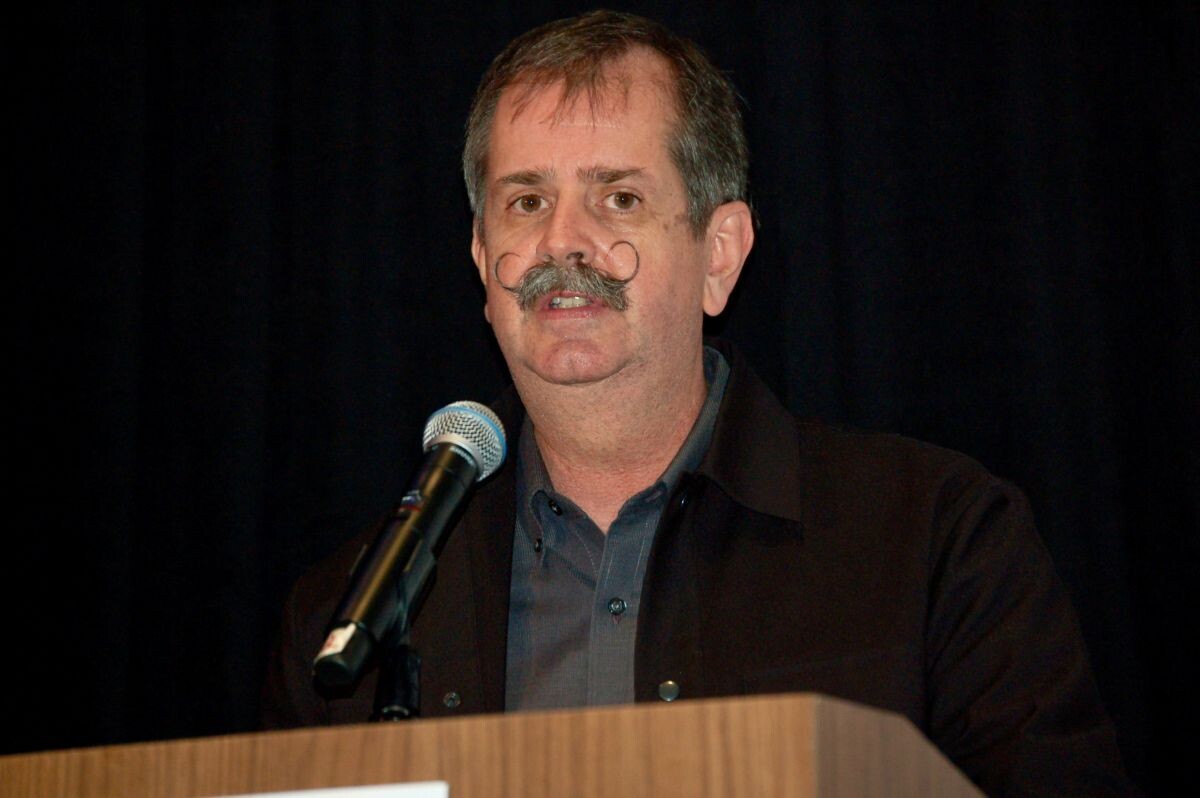 SEMA’s Mike Muller said more information is needed from automakers about ADAS tolerances and functionality for those repairing or modifying vehicles.“So basically, whatever work you do on the vehicle, you have to put it back into the same compliance that the OEM had intended during its original manufacturing. This is going to be really hard for the industry to achieve. We don’t have all the information and data we need to do that.”
—Mike Muller of the Specialty Equipment Market Association (SEMA), speaking of federal regulations that could by 2030 obligate anyone altering or repairing a vehicle to ensure its ADAS and other safety systems are operating as intended; SEMA is supporting proposed federal legislation introduced at the end of 2025 that would require the National Highway Traffic Safety Administration to ensure that the aftermarket has access to tolerances of ADAS and other information needed to properly validate functionality.
Right to appraisal advances
“If insurers are acting in good faith now, there should be no reason for them to have any fear of this bill passing because it’s not going to affect them.”
—Justin Lewis, shop owner from Redmond, WA, testifying in February on behalf of the Washington Independent Collision Repair Association in favor of legislation that would require auto insurance policies sold in the state to include a “right to appraisal” clause; the bill was passed and signed into law by this past spring.
Industry backs repair access bill
“The bill will give consumers confidence their vehicles are safely repaired, in well-equipped shops, by well-trained technicians using the repair information made available by automakers.”
—From a written statement by the Alliance for Automotive Innovation, the Automotive Service Association (ASA), and the Society of Collision Repair Specialists (SCRS), jointly announcing their support for federal legislation that would enshrine into law their existing voluntary agreement that independent repair facilities will have the same ability to perform diagnostic and repair services as franchised auto dealers.
Crackdown on deductible rebates
“Unfortunately, there are instances where disreputable autobody shops have overbilled the insurance company to make up the discounted deductible. In other cases, autobody shops have cut corners when making the repairs to make up the deductible discount, putting customer safety at risk.”
—Justin Smith, lobbyist for the South Dakota Auto Body Association, testifying in favor of legislation, eventually enacted and signed into law this year, that prohibits shops in that state from advertising or promising to pay or rebate all or some of an insurance deductible, or from actually providing such a payment or rebate.
Late calibrations drive supplement growth
“About 56% of those calibrations are showing up in supplements. So those are happening later in the process, and this is driving a lot of that supplement activity that we’re seeing.”
—Kyle Krumlauf of CCC Intelligent Solutions, explaining in February that calibrations on repairable Direct Repair Program (DRP) claims were up by almost 30% year over year, but fewer than half of those were included on initial estimates, contributing to the rise in the average number and dollar amount of supplements.
Tariffs seen as revenue neutral or positive
“We’re in a list price environment, so if list prices [on parts] go up, the inflationary environment actually serves to create same-store sales for us. We work on discounts off of list [prices] to drive our gross margin and our business from a parts perspective. The other side of the inflationary or the tariff environment [is that] it could push new car prices higher, which increases demand for used cars, and in turn pushes used car prices up as well, which then pushes total losses down. So I think, generally speaking, the tariff environment is neutral or positive for us, from an average ticket and a work perspective.”
—Brian Kaner, months before he became CEO of The Body Group (parent company of Gerber Collision & Glass), speaking on the company’s quarterly earnings call in March about the possible impact of new U.S. tariffs.
3D-printed headlight repairs near market
“We’ve already started making repair tabs for headlights. Headlights that have two or three broken tabs off of them, as long as the rest of the housing is intact, can be repaired. These [3D-printed] materials have equivalent properties that are as good, we’re finding, as the original properties. We are going through testing and validation on that to prove that to everyone right now.
—Harold Sears, former technical manager for Ford, who now heads the Auto Additive advisory council, explaining that tabs for headlights are likely among the first 3D-printed aftermarket replacement parts that will be available to collision repairers.
I-CAR Academy pays off
“We have guys who have been in the business a long time, who are great instructors, but we needed that curriculum. The curriculum was the game-changer. We even have a couple guys that we decided to put through the Academy who already had three, four years in collision, and they walked away learning things.”
—Trish Ostrander, training manager for Gustafson Brothers, a mechanical and collision repair shop in Huntington Beach, CA, on shops’ opportunity to use the I-CAR Academy apprentice training program and curriculum.
Missing software doesn’t eliminate calibrations
“I think if you hear anybody saying out in the industry that if a calibration is not [listed] on one of these software provider tools, you don’t have to do it, you need to stop them dead in their tracks and correct them. Just because it’s not on there, that doesn’t mean that vehicle doesn’t have any calibrations that are required.”
—I-CAR’s Scott VanHulle, co-chairman of the Collision Industry Conference (CIC) Emerging Technologies Committee, speaking of third-party tools being used to identify the ADAS calibrations that may be necessary on a given damaged vehicle.
ADAS drift without collisions
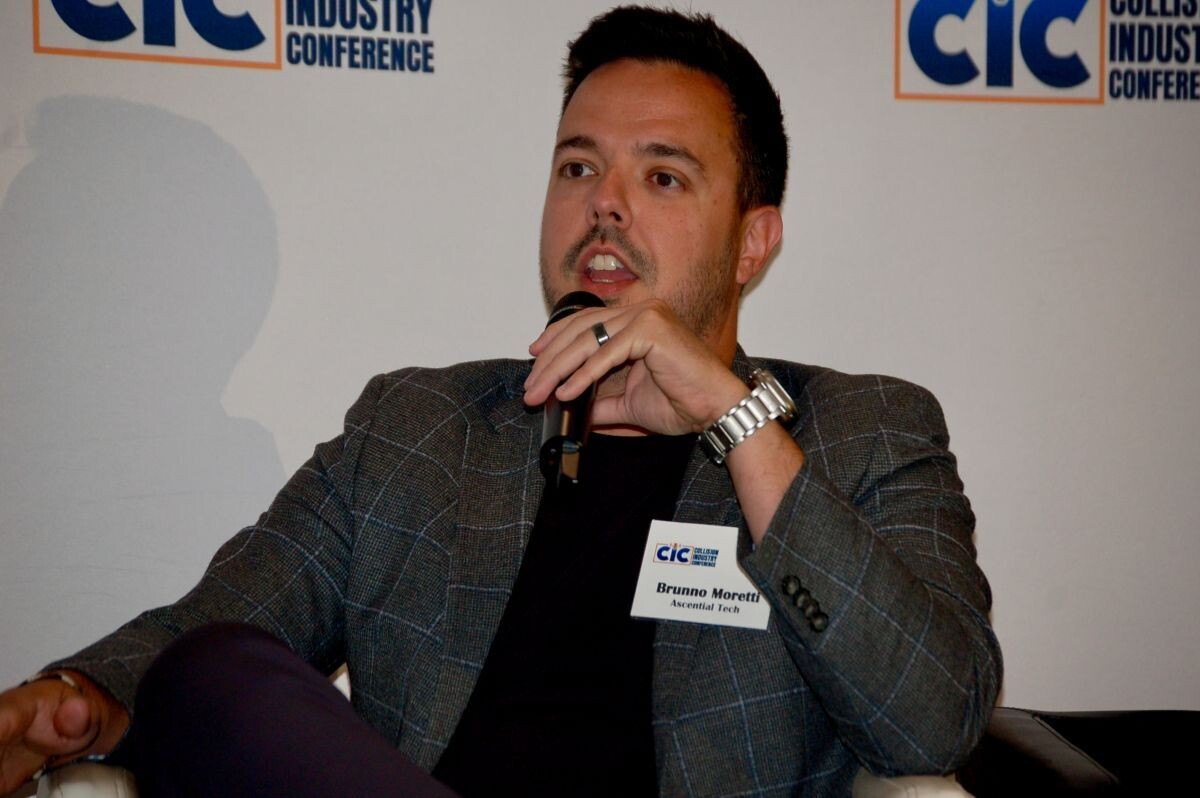 Brunno Moretti of Ascential Technologies said there are indications that general wear and tear on a vehicle is enough to disrupt ADAS functionality.“To me, that tells you that there’s enough wear and tear on a vehicle after 13,000 miles that there is drift in the brackets or something. That opens the door to talk about calibrations as a maintenance item. Because, as these systems are on the road, there are things that are happening — that are not collisions — that are knocking these systems out of whack.”
—Brunno Moretti of Ascential Technologies, on his company’s finding that some of a vehicle’s ADAS systems were not functioning properly even though the vehicle had not been in a collision.


John Yoswick