Glenn Morello has been running Bridgewater Collision in Bridgewater, NJ, since he was 19 years old. His father started the business, built it on quality work and customer relationships, and when he passed suddenly in 1981, Morello stepped in with the skills to fix cars but no playbook for running a company.
More than four decades later, the shop he inherited has grown into a high-end operation with 21 OEM certifications, nearly a dozen dealer partnerships, and roughly 30 employees working out of a recently expanded facility. Morello credits that growth to a simple principle: the collision repair business is a hospitality business, not just a service transaction.
But a few years ago, a change in the paint department started working against those efficiencies instead of supporting them.
Five Years of Fighting Dry Times
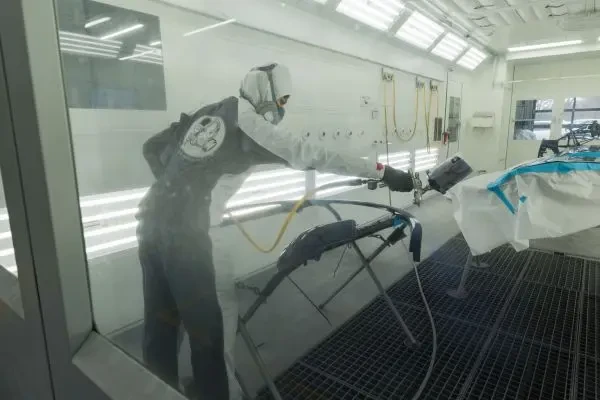 After five years of fighting slow dry times with fans and workarounds, Bridgewater painters now move cars through the booth at the pace the shop needs.Bridgewater Collision had used AkzoNobel products for roughly 20 years when a distributorship change prompted Morello to try a different paint line. At first, the switch seemed manageable. But when the shop transitioned to the new supplier's waterborne basecoat, problems surfaced fast.
"We were using fans, we were trying this, we were trying that, and we just couldn't get that product to dry efficiently," Morello said.
The slow dry times cut directly into booth throughput. Cars sat longer than they should have, which backed up reassembly and pushed delivery timelines out. Painters and technicians grew frustrated. And customers noticed when their vehicles weren't ready on time.
"It just kind of trickles down and that creates more stress than anybody needs," Morello said. "The business is hard enough."
For about five years, Morello and his team worked around the issue. But workarounds aren't solutions, and the inefficiency was costing the shop hours it couldn't afford to lose.
A Two-Day Demo Settled the Question
When Morello decided to re-engage with AkzoNobel, the company set up a demo of its Sikkens Autowave waterborne basecoat at the shop. Within a day and a half, the answer was obvious.
"It was clear as a bell that it was a much better product," Morello said. "It performed in the way that we wanted it to perform and changed our efficiencies and got us back to where we needed to be."
The Autowave basecoat dried significantly faster than what the shop had been using, performing nearly as fast as solvent-borne products. That speed translated directly into more cars moving through the booth each day.
Throughput Jumped 15-20% Once Painters Hit Their Stride
After the switch, Bridgewater Collision saw a 15 to 20 percent improvement in paint booth throughput. The gains came from faster dry times, better coverage, and fewer jobs that needed to be reworked.
For Morello, those results reinforced how he's always evaluated a paint line. It's not about any single line item. It's about what the product does for your operation as a whole.
"If a product helps me turn more hours out of the spray booth, that's the one I want," he said. "Labor is a bigger part of the bill than the material side, so anything that saves time in the booth saves money across the board."
A product that dries faster, covers better, and reduces rework compounds those savings on every job. For Bridgewater, the Autowave system delivered on all three.
Support That Shows Up the Next Day
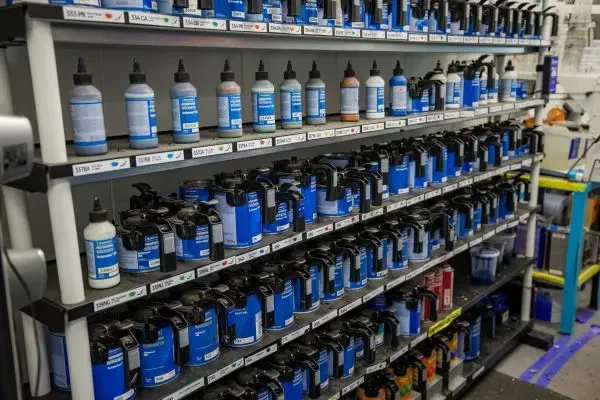 Bridgewater Collision used AkzoNobel for roughly 20 years before a brief detour to a different paint line — and the Autowave system is what brought the shop back.Beyond the paint itself, Morello points to AkzoNobel's service and support as what truly separates the company from competitors. When Bridgewater was with another supplier and ran into issues, he said the response was often that the shop needed to figure it out on its own. With AkzoNobel, someone was there the next day.
That support extended well beyond troubleshooting. When Bridgewater Collision planned its recent facility expansion, AkzoNobel contributed to the layout design, helping Morello put together a plan that doubled the shop's footprint while meeting the town's requirements.
The company's Acoat Selected 20 Groups program has been another long-term asset. Morello has participated for years and considers the peer networking and business benchmarking among the most valuable parts of the relationship. The meetings bring together shop owners from across the country to share what's working, troubleshoot what isn't, and push each other to improve.
"Hope Is Not a Strategy"
For shop owners weighing a paint line change, Morello's advice is direct: look at the full picture. A product's real value shows up in how it performs in the booth, how it affects your cycle times, and what kind of support stands behind it when something goes wrong. And don't assume that going it alone is a viable long-term plan.
"Hope is not a strategy," he said. "I'd much rather have as much input from knowledgeable people as I can and then take nuggets here and there that I can apply to my business versus saying, I know it all."