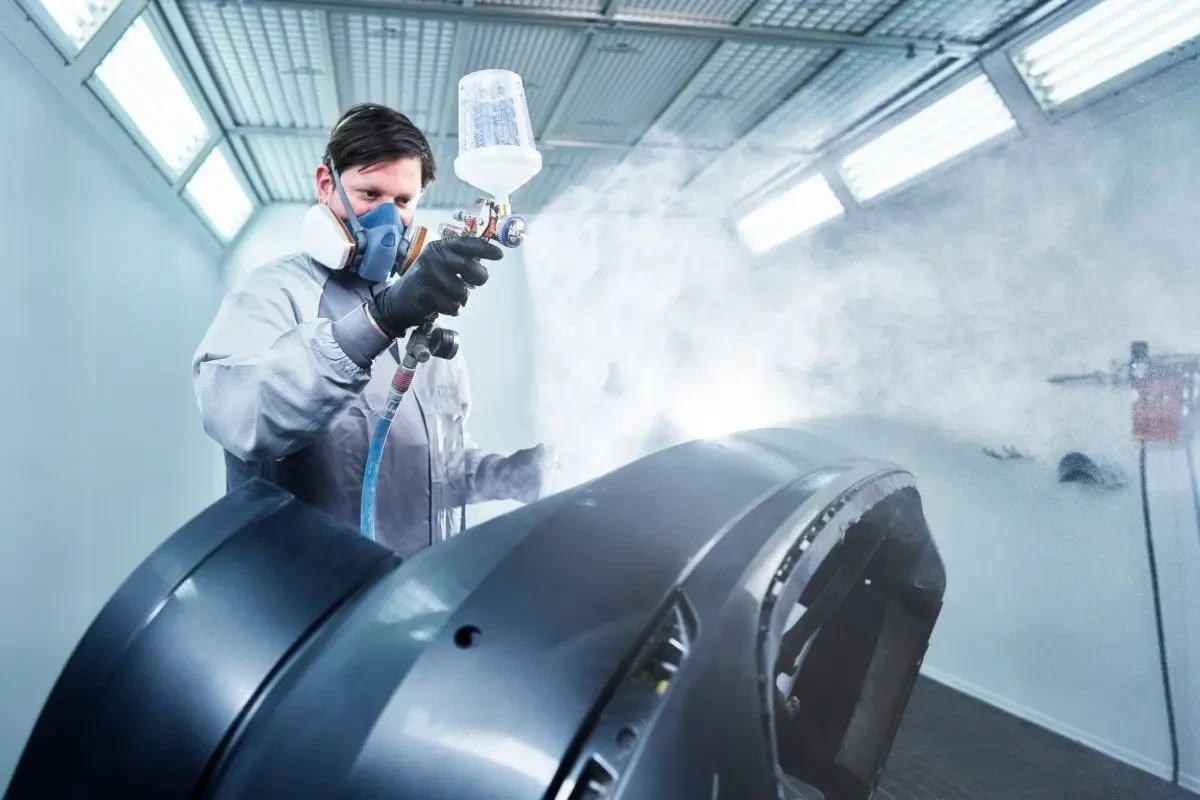
The paint booth is where quality, speed, and profitability all converge in a collision repair shop. It's also where problems in any one of those areas ripple through the rest of the operation.
Painters know the pressure. Get cars out the door faster. Don't sacrifice finish quality. Train new techs quickly because experienced painters are getting harder to find. And do all of it while managing variables that change with the weather, the job, and the day.
Shops don't have to accept these trade-offs as permanent. Many of the most common booth bottlenecks come down to a handful of recurring problems, and each one has practical solutions painters can start applying today.
Solving the Speed vs. Quality Dilemma
Ask any painter what they want from a clearcoat, and you'll get some version of the same answer: it needs to look good, and it needs to dry fast. The problem is that those two things have historically been at odds with each other.
Fast-drying clearcoats have been around for a while, but they've come with compromises. The finish often isn't as deep or glossy as a slower-curing glamour clear. And in many cases, what you save on bake time, you spend on buffing. A clearcoat that's out of the booth in 10 minutes but needs 30 minutes of cut-and-polish to look acceptable isn't really saving anyone time. It's just moving the bottleneck.
On the other side, glamour clears that deliver a showroom finish can take 45 minutes or more to bake. That's 45 minutes where the booth isn't available for the next job. Multiply that across a full week, and the lost throughput is significant.
Newer clearcoat technologies are starting to close this gap. Speed clears that also deliver premium appearance are entering the market, and some are eliminating the need for heavy buffing entirely. That changes the math.
When evaluating any clearcoat, the number that matters most isn't bake time alone. It's the full cycle cost: spray time, plus flash time between coats, bake time, cool-down, buffing, and polishing. That's the real measure of how long a job ties up your booth.
Energy costs matter too. A booth running at 140 degrees for five minutes uses far less energy than one running for 45, and those savings compound over time.
The takeaway: don't evaluate clearcoats on a single spec. Look at the full picture. Talk to shops that are using the products you're considering and ask about real-world cycle times, not just what's on the data sheet.
Taking the Guesswork Out of Mixing
Color matching is one of the most time-consuming parts of a painter's day, and it's getting harder. OEM finishes are more complex than ever, with tri-coats, pearls, metallics, and special-effect pigments that didn't exist a decade ago. Getting the right color on the first mix is the goal, but it doesn't always happen.
A lot of what drives that inconsistency traces back to the mixing process itself.
For years, many paint systems relied on powder pearls as part of their mixing bank. Powder pearls work, but they're messy. They're dusty. They're hard to pour accurately. And because powder doesn't integrate into liquid the way a liquid does, the mix is inherently less consistent. Some painters have spent years working around these limitations through experience and technique, but the limitations are still there.
The industry has been shifting toward liquid pearls, and the difference is meaningful. Liquid pearls pour cleanly, mix uniformly, and produce more reproducible color from batch to batch. It's a straightforward upgrade that removes a variable from the process.
Mix ratio complexity is another factor. Some paint systems require different ratios for different products, which creates more opportunities for error. A system that uses a simple, standardized ratio across its basecoat line, like a 1:1 base coat to reducer mix, is easier to learn, easier to repeat, and easier to get right, especially for newer painters still building their skills.
Automated mixing systems take this further. The Mix'n'Shake system, for instance, lets a painter add the components and walk away with a perfect mix in about two minutes. No mess, no guesswork about whether pigment is fully incorporated, and no variation between one painter's technique and another's. It's thorough, it's fast, and it produces the same result every time. For shops with newer techs or high daily volume, that kind of repeatability is one less thing to worry about.
Digital color tools help too. PPG's LINQ™ Color platform and spectrophotometers like DigiMatch™ read the actual color on the vehicle rather than relying on a painter's eye under shop lighting. Cloud-based formula software gives shops access to continuously updated color libraries, reducing reliance on sprayout cards. The size of that library matters, too. Paint systems carrying the same pigments and special-effect toners used by OEMs deliver closer matches out of the gate.
Here's what shops can do right now:
- If your system still uses powder pearls for certain formulas, ask your supplier about liquid alternatives. The consistency improvement is significant.
- Use a spectrophotometer whenever possible instead of visual matching alone.
- Keep your color software updated. Formula libraries expand regularly, and running outdated software means missing formulas that could save you time.
- Pay attention to mix ratios. If your system requires different ratios for different products, that's a complexity tax you're paying on every job.
Streamlining Complex Applications
Some paint jobs are inherently more complex than others, and that complexity costs time.
Vivid colors are a good example. Candy reds and certain deep, saturated hues have historically required a tinted clearcoat step — spray the ground coat, apply a tinted clear, then follow with a standard clear. It works, but it's finicky. Each additional step adds flash time, drying time, and another opportunity for something to go wrong.
Modern paint chemistry is simplifying this. Highly pigmented toners can now achieve those same vivid colors through a standard three-coat process: base coat, mid coat, and regular clear. No tinted clear required. That's one fewer step, with all of the time and risk that comes with it.
Environmental variables add another layer of complexity that affects every job. Temperature and humidity change throughout the day, between seasons, and by region. A shop in Alabama in August is dealing with very different conditions than a shop in Oregon in January.
Reducer selection is the primary tool painters have for adapting. But if a paint system only offers two or three reducer speeds, painters are forced to compromise. Having access to a full range, from fast thinners for cool conditions to ultra-slow options for extreme heat, lets painters dial in for actual booth conditions rather than settling for "close enough."
Reducer choice also directly affects metallic and mica orientation. A reducer that evaporates too quickly in warm conditions can cause mottling even if everything else is set up correctly.
Finally, there's the human factor. With experienced painters increasingly hard to find, anything that helps newer technicians get up to speed faster pays off.
Color-coded labeling on product cans sounds minor, but it prevents mistakes. When a color band or sticker tells a painter at a glance whether they're reaching for a toner, a primer, a clear, or a reducer, there's less chance of grabbing the wrong can. That's especially valuable for newer techs who haven't memorized dozens of product codes yet.
Here's what shops can do right now:
- If your process for vivid reds or candy colors still involves a tinted clear, ask your paint supplier whether newer toner options can simplify that to a standard three-coat process.
- Check your reducer selection. If you only have two or three options, you may be limited in how well you can adapt to extreme conditions. Look for expanded options with recommended temperature ranges printed on the label.
- Create reference guides for your mixing room. A laminated sheet showing which reducer to use at which temperature range, posted where painters can see it, pays for itself in avoided rework.
- Invest in training. Even if your supplier offers it free, make sure your team is attending. The knowledge gap between a trained painter and an untrained one shows up in cycle time, rework rates, and material waste.
Less Complexity, Better Results
 The common thread across all of these bottlenecks is complexity. Complex clearcoat trade-offs. Complex mixing processes. Complex application steps.
The shops pulling ahead right now are finding ways to simplify without sacrificing quality. They're choosing products and systems that take variables out of the process, making it easier for every painter on the team to produce consistent, premium results.
These aren't problems that require massive capital investments. They're problems that can be addressed through smarter product choices, better processes, and a willingness to evaluate whether the way things have always been done is still the best way to do them.
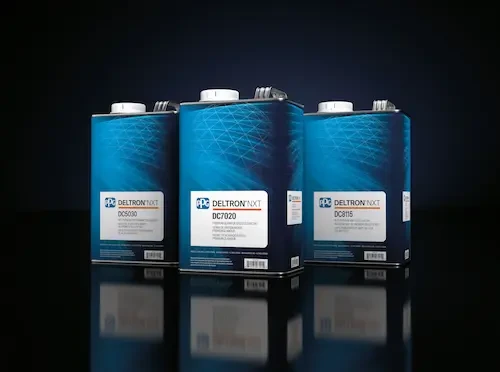
For shops looking to simplify their mixing process, achieve faster bake times, and maintain a premium finish, the PPG Deltron NXT line was designed with exactly these challenges in mind — from liquid pearls and an expanded color library to temperature-specific reducers and premium speed clearcoats that don't sacrifice appearance for throughput.
To see how these solutions work together as a complete system, or to connect with a PPG representative who can walk through what a transition would look like for your shop, visit PPGDeltronNXT.com.